(YourDigitalWall Editorial):- Zhangjiagang, Jiangsu Mar 8, 2026 (Issuewire.com) – The cargo securement–a factor that directly impacts public safety, corporate liability, and operational profitability. As international trade routes become more congested and regulatory bodies tighten their oversight, the demand for high-performance tie-down solutions has surged. This shift has placed the Top Ratchet Strap Manufacturer in China at the forefront of the global supply chain, transforming these essential tools from simple commodities into highly engineered safety components.
The Global Cargo Control Industry: Navigating a New Era of Trends and Challenges
The global cargo control market is currently navigating a period of significant structural evolution. Historically characterized by a fragmented marketplace of local suppliers, the industry is now consolidating around manufacturers who can offer high-volume production paired with sophisticated technical compliance. This transformation is driven by several macro-economic and regulatory trends.
The Escalation of Regulatory Compliance
In major markets such as North America and the European Union, the Department of Transportation (DOT) and the European Committee for Standardization (CEN) have increased their focus on load securement. Inspectors are no longer looking just for the presence of a strap; they are inspecting the Working Load Limit (WLL) tags, checking for webbing abrasion, and verifying that the hardware meets specific mechanical standards. This heightened scrutiny has forced logistics companies to abandon uncertified, low-cost alternatives in favor of products from manufacturers with proven track records.
Material Science and Sustainability
Modern logistics demands more than just strength. There is an increasing trend toward materials that offer specific performance profiles:
Elongation Control: Advanced polyester webbing is now engineered to have a stretch factor of less than 7% at its breaking strength, ensuring that once a load is tightened, it stays tightened.
UV and Weather Resistance: With global warming leading to more extreme weather events, straps must endure prolonged exposure to intense UV radiation and temperature fluctuations without losing tensile strength.
Eco-conscious Manufacturing: Large corporate clients are increasingly evaluating the carbon footprint of their suppliers, pushing manufacturers to adopt more energy-efficient weaving processes and sustainable sourcing of raw polymers.
The Shift Toward Professionalization
As logistics fleets become more professionalized, there is a growing emphasis on Total Cost of Ownership (TCO). While a cheap strap may save money upfront, its high failure rate and short lifespan lead to higher long-term costs. Professional buyers are now seeking “Reliable & Responsible” partners who provide products that last longer, perform better in the field, and reduce the risk of catastrophic insurance claims.
The Pillars of Global Trust: Decoding ISO 9001, BSCI, and GS TUV Certifications
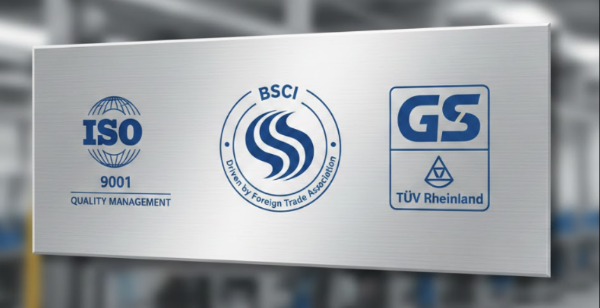
In an industry where a single point of failure can lead to road closures, property damage, or loss of life, authority is built through independent verification. For Zhangjiagang SMK MFG. Co., Ltd., the pursuit of ISO 9001, BSCI, and GS TUV certifications is the cornerstone of their “Reliable & Responsible” identity. These certifications serve as a tripartite guarantee of quality, ethics, and safety.
ISO 9001: The Foundation of Quality Management
The ISO 9001 certification is far more than a certificate on a wall; it represents a commitment to a repeatable, documented process. In the context of ratchet strap manufacturing, this means:
Traceability: Every roll of webbing and every batch of steel buckles can be traced back to its raw material source.
Process Consistency: Standardized tensioning and heat-setting processes ensure that the first strap off the line is identical to the ten-thousandth.
Continuous Improvement: A feedback loop that identifies potential defects before they leave the factory floor, ensuring a near-zero failure rate in the field.
BSCI and SMETA: The Ethical Mandate
In the modern world, how a product is made is as important as how well it works. The Business Social Compliance Initiative (BSCI) and SMETA audits provide global distributors with the peace of mind that their supply chain is free from exploitation. For a top-tier Chinese manufacturer, maintaining these standards involves:
Ensuring safe and ergonomic working conditions for all facility staff.
Adhering to strict environmental regulations regarding chemical usage in dyeing and finishing webbing.
Providing transparent labor practices that satisfy the most stringent ESG (Environmental, Social, and Governance) requirements of Western partners.
GS TUV: The Engineering Gold Standard
The German GS (Geprüfte Sicherheit) mark, verified by TUV, is arguably the most prestigious safety mark in the cargo control industry. Unlike self-certified products, a GS-certified ratchet strap has undergone rigorous testing by an independent third party to verify its Breaking Strength (BS). This certification ensures that when a strap is rated for 5,000 kg, it will actually hold that weight–and more–under stress. It is a vital mark for any manufacturer aiming to serve the European market, where safety standards are among the highest in the world.
Corporate Excellence: Zhangjiagang SMK’s Strategic Advantage
Established in 2002, Zhangjiagang SMK MFG. Co., Ltd. has spent over two decades evolving from a regional factory into a global powerhouse in the cargo control sector. Their success is a result of a multifaceted strategy that combines manufacturing depth with logistical agility.
Global Footprint and Logistical Efficiency
The company operates a sophisticated global network designed to minimize lead times and mitigate geopolitical risks. With a 30,000-square-meter facility in China, the company leverages advanced automation and economies of scale. However, recognizing the need for regional flexibility, they also operate ZJH Prowin (Cambodia) Industrial Co., Ltd. and Beacon Products LLC in the USA.
Dual-Manufacturing Strategy: This allows the company to optimize production based on global trade dynamics, ensuring a stable supply for international clients regardless of shifting tariffs or regional policies.
US-Based Warehousing: By maintaining a warehouse complex in the USA, SMK can provide “just-in-time” delivery to North American distributors, a critical advantage in an industry where stock-outs can halt transportation projects.
Technical Innovation and Core Competencies
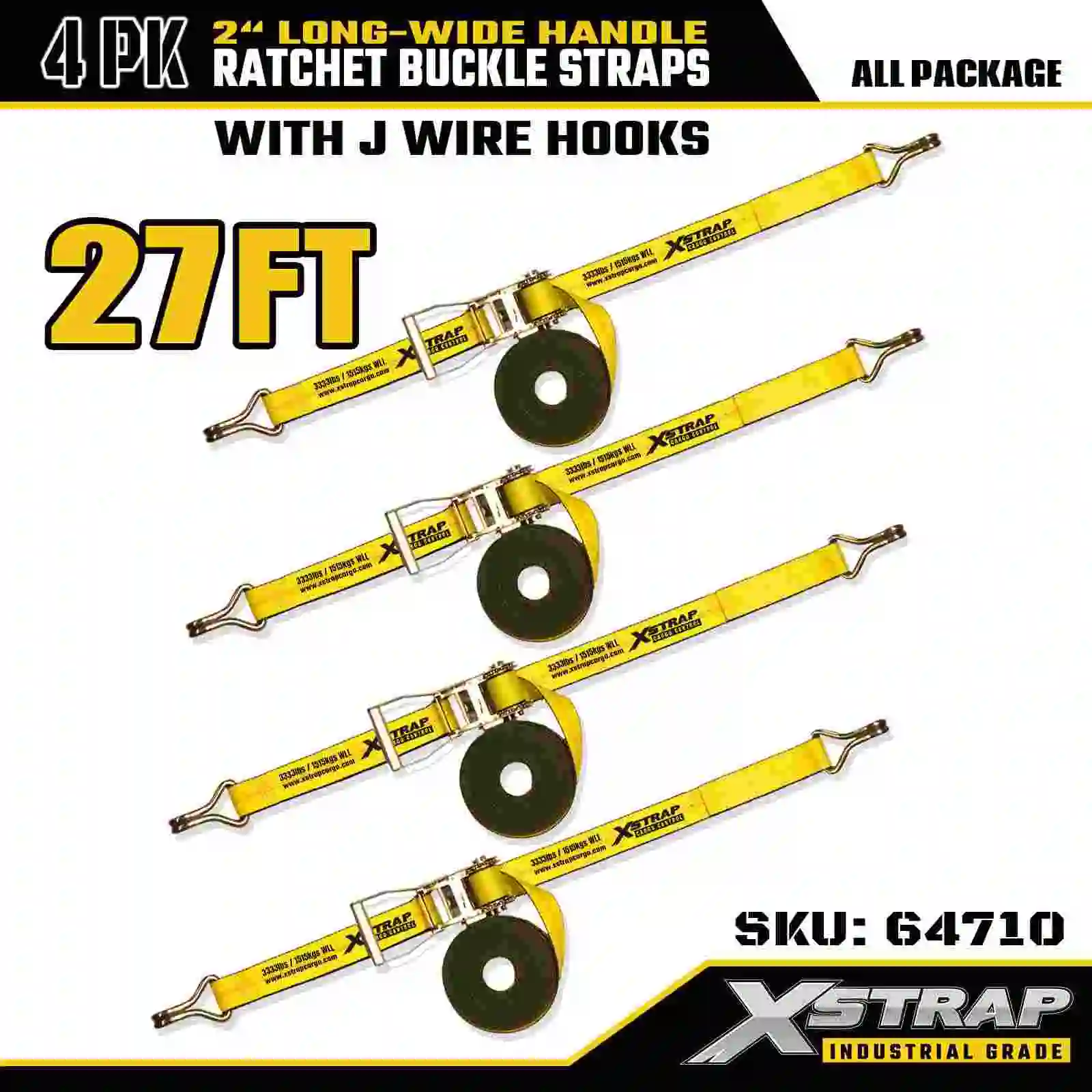
Ergonomic Wide Handles: Designed to allow the operator to apply maximum tension with minimum hand fatigue, particularly useful in cold weather or when wearing heavy gloves.
Edge-Guard Technology: High-density weaving on the edges of the polyester straps to prevent fraying when used against rough cargo surfaces.
Corrosion-Resistant Hardware: Zinc-plated or powder-coated steel components that exceed salt-spray testing requirements, ensuring the mechanical ratchet remains functional even after exposure to road salts and moisture.
Market Impact
The competitive advantage of Zhangjiagang SMK lies in this holistic approach. By combining the authority of ISO, BSCI, and GS certifications with a robust global distribution network and a relentless focus on technical innovation, they have redefined the role of a Chinese manufacturer. They are no longer just suppliers; they are architects of global cargo safety.
In a world that never stops moving, the “Reliable & Responsible” approach of top-tier manufacturers ensures that the backbone of global trade remains secure, efficient, and safe for everyone on the road.
For more information on professional cargo control solutions and to explore the full range of certified products, please visit the official website: https://www.xstrapcargo.com
This article was originally published by IssueWire. Read the original article here.