(YourDigitalWall Editorial):- Changsha, Hunan Jun 2, 2026 (Issuewire.com) – In the modern landscape of industrial power distribution, safety and reliability are no longer just operational goals; they are the fundamental pillars of infrastructure integrity. Central to this reliability is the adoption of international safety protocols, most notably the UL 857 standard. As a China Top Rated Busbar Trunking Supplier, RENYUN has integrated these rigorous benchmarks into its core manufacturing philosophy, ensuring that its Busbar systems provide seamless, high-capacity power delivery across demanding global environments. A busbar trunking system acts as the “artery” of a building’s electrical system, replacing traditional heavy cabling with a modular, space-efficient, and low-maintenance solution designed to handle massive electrical loads with minimal energy loss.
Deciphering UL 857: The Gold Standard in Busway Safety
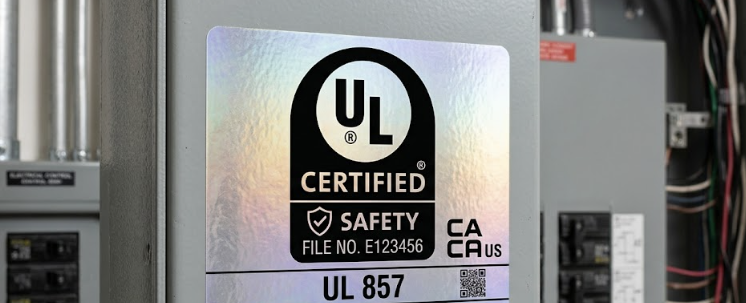
The UL 857 standard, developed by Underwriters Laboratories, is the definitive safety requirement for busways and associated fittings. It governs critical factors including temperature rise, short-circuit withstand strength, and mechanical durability. For a manufacturer, adhering to UL 857 means subjecting products to extreme stress tests to ensure they do not become fire hazards or fail under peak loads. Specifically, it regulates the temperature rise of conductors to prevent insulation degradation and mandates strict clearances between phases to avoid electrical arcing.
In the context of RENYUN‘s manufacturing process, UL 857 serves as the baseline for engineering innovation. By meeting these conditions, the products guarantee that even during a fault, the housing remains grounded and the internal structural integrity is maintained. This is particularly vital in high-density environments like data centers or high-rise commercial complexes, where power continuity is non-negotiable. Furthermore, UL 857 compliance ensures that the joint structures of the busway can withstand the mechanical stresses of thermal expansion and contraction without compromising electrical conductivity–a critical factor for long-term installations in fluctuating climates.
Engineering for Extremes: Fire-Resistant Dense Busway Design
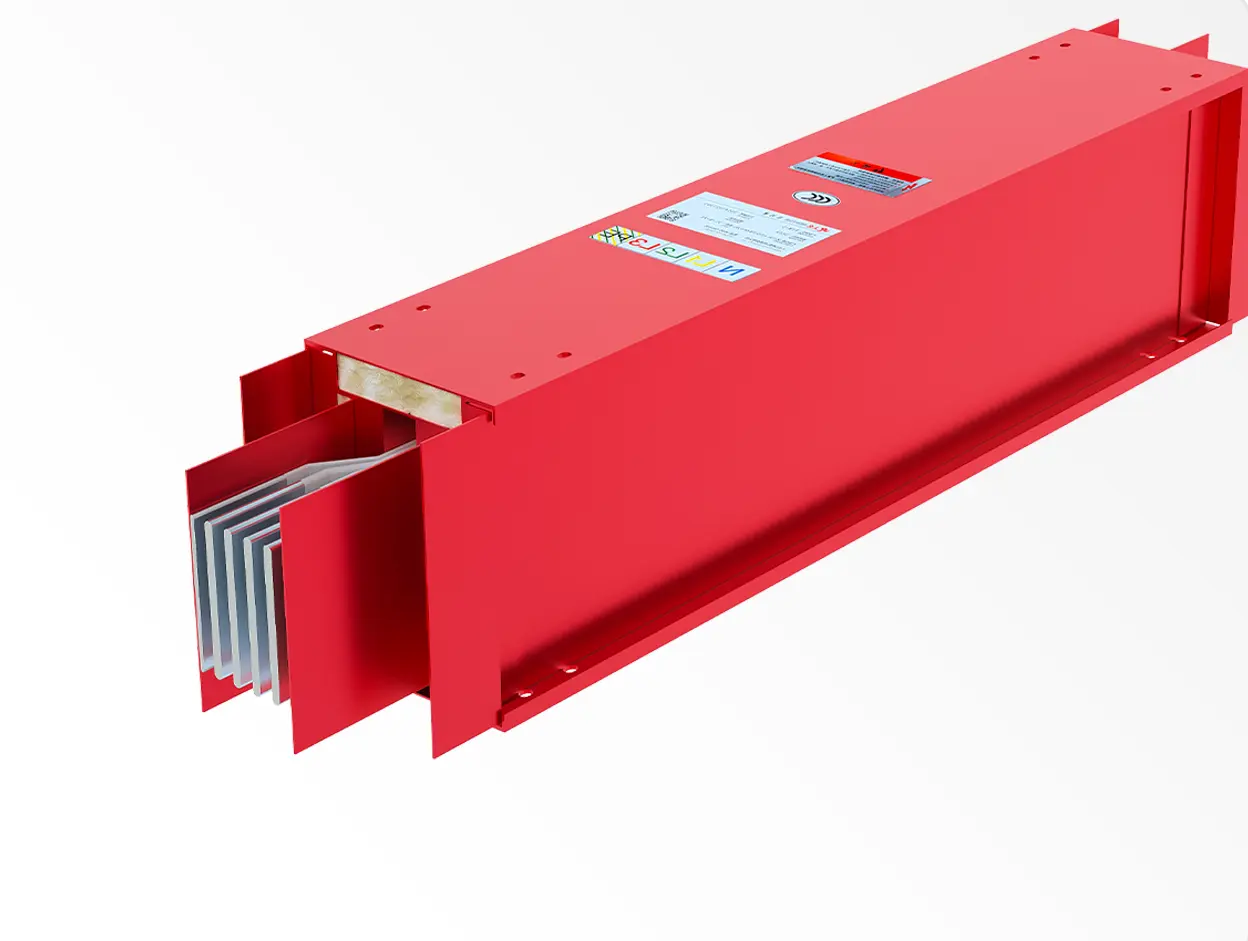
Meeting UL 857 is the first step, but engineering for life-safety applications requires exceeding standard benchmarks. The fire-resistant dense busbars developed by the company are specifically designed to meet the dual challenges of power density and thermal endurance. Unlike standard busways, these fire-rated systems utilize a sophisticated multi-layer barrier strategy. The core conductors are wrapped in high-purity mica tape–a material renowned for its exceptional dielectric strength at extreme temperatures–complemented by a 30mm thick aluminum silicate fiber insulation layer.
This design is not merely theoretical; it is engineered to satisfy the stringent requirements of fire-safety codes globally. The dual-layer housing, constructed from reinforced galvanized steel and coated with specialized intumescent fireproof paint, creates a thermal shield. This advanced material layering aligns with experimental findings published in the IEEE Electrical Insulation Magazine, which confirm that the synergy between high-purity mica tape and aluminum silicate fiber maintains an exceptionally stable dielectric breakdown voltage even when continuously exposed to thermal stresses exceeding 900°C, effectively halting localized arc propagation. In the event of a catastrophic fire, this shield expands to prevent the internal temperature from reaching critical levels, allowing the busbar to maintain operational integrity for over 180 minutes at temperatures exceeding 950°C. This specific design ensures that emergency life-safety systems, such as smoke extraction fans and pressurized stairwell pumps, remain energized when they are needed most.
Technical Excellence and Material Innovation
A primary differentiator for RENYUN lies in its commitment to high-purity material science. The company utilizes 99.95% oxygen-free copper busbars, which exhibit a minimum conductivity of 57 MS/m. This choice reduces electrical resistance to as low as 0.0005 /m, significantly lowering heat generation during operation. To further enhance performance, each conductor undergoes a dual treatment of nickel underplating and a 5m tin topcoating, which prevents oxidation and reduces contact resistance at joints by 15%. This specific electroplating configuration is strongly supported by research in the Journal of Materials Science: Materials in Electronics, which demonstrates that a nickel underlayer acts as an absolute diffusion barrier to prevent copper-tin intermetallic compound formation, drastically reducing contact resistance degradation over decadal lifecycles and suppressing connection hot-spots well within the strict limits defined by UL 857 and IEC 61439 benchmarks.
For projects located in humid or chemically corrosive environments, such as offshore platforms or chemical processing plants, the busway’s external finish is treated with high-durability epoxy resin powder coating. This ensures an IP66 or higher protection rating, preventing the ingress of dust and high-pressure water jets. The “Sandwich” dense structure further eliminates the “chimney effect” found in traditional ventilated busways, preventing the rapid spread of fire or smoke through vertical shafts in high-rise buildings.
Detailed Case Studies: UL 857 Compliance in Action
The effectiveness of these engineering principles is validated by their performance in complex real-world applications. Each project presents unique environmental stressors that require specialized UL 857-compliant solutions.
Heavy Industrial Demand: Sany Group & Zoomlion
For global heavy industry leaders like Sany Group and Zoomlion, the primary challenge was handling high-frequency, massive electrical surges from industrial machinery. Under UL 857’s short-circuit withstand testing, the busway must survive the electromagnetic forces generated during a fault. By utilizing a high-strength aluminum alloy housing and optimized conductor cross-sections, the brand provided a system that maintained mechanical integrity even under peak surge conditions, preventing costly production downtime in 24/7 manufacturing environments.
Urban Infrastructure: Changsha Metro & Huanghua Airport
Transportation hubs like the Changsha Metro and Huanghua International Airport demand compact footprints and extreme vibration resistance. To meet the vibration protocols defined in UL 857, the busway joint bridges were redesigned with reinforced locking mechanisms to prevent loosening caused by constant rail traffic and aircraft activity. The dense sandwich design maximized power density, allowing 5000A capacity systems to fit within the restricted overhead clearances of subterranean tunnels and terminal maintenance floors.
High-Rise Resilience: Commercial Skyscrapers
In high-rise commercial complexes, the “chimney effect” in vertical shafts poses a severe fire risk. By implementing the fire-resistant dense busway design–featuring the 180-minute 950°C endurance rating–the company fulfilled the stringent local fire codes. The combination of mica tape and aluminum silicate insulation ensured that while the building’s exterior might be compromised, the electrical “spine” remaned intact, allowing the safe operation of emergency lifts and fire-fighting systems.
Industrial Scale and Global Reach
Established in 2008, Renyun (Hunan) Busbar Co., Ltd. has grown into a technology-driven manufacturing powerhouse. Operating from a 50,000-square-meter facility with eight automated production lines, the company maintains a high annual capacity of 500,000 sets. This massive scale is supported by a network of 12 international offices, ensuring that UL 857-compliant technology is accessible to clients in Southeast Asia, the Middle East, and beyond.
The company’s ability to adapt its product design to the specific needs of diverse sectors–from offshore oil fields to wind power bases–demonstrates its role as an industry leader. Whether facing salt-mist corrosion at sea or extreme thermal loads in industrial furnaces, the focus remains on delivering an advanced, safe, and energy-saving power supply system.
Conclusion: A Vision for Safe Power Distribution
As global energy demands continue to rise and building safety regulations become increasingly stringent, the need for standardized, high-performance distribution systems becomes paramount. By aligning with UL 857 and IEC standards, RENYUN not only secures its position as a leader in the Chinese market but also as a trusted partner in the global transition toward smarter, safer electrical infrastructure. The integration of cutting-edge fireproofing, superior conductivity, and automated manufacturing ensures that every installation is an investment in long-term operational security.
Official Website: https://www.rybusway.com/
This article was originally published by IssueWire. Read the original article here.