Visual scheduling systems such as the Apolosign Digital Calendar are emerging as subscription-free tools that help ADHD families improve routine consistency through real-time sync, wall visibility, and behavioral reinforcement.
(YourDigitalWall Editorial):- Los Angeles, California Jun 24, 2026 (Issuewire.com) – ADHD households often struggle not with planning, but with execution.
Even when schedules exist on mobile apps, they are frequently missed in daily routines–leading to forgotten tasks, repeated reminders, and inconsistent household coordination.
This gap is driving demand for always-visible visual scheduling systems designed for real-world home environments.
The Challenge in ADHD Households
ADHD is commonly associated with executive function differences such as working memory limitations, task initiation difficulty, and time perception challenges.
A frequent issue is time blindness, where individuals lose track of time or misjudge task duration, resulting in disrupted routines and missed transitions.
In households with multiple schedules, these challenges often compound.
Why Mobile Reminders Fall Short
Traditional calendar apps and notifications require active checking, which is often inconsistent in ADHD attention patterns.
As a result:
- reminders are ignored or delayed
- schedules are fragmented across devices
- family coordination depends on repeated verbal communication
This creates a need for a shared, always-visible system inside the home.
The Shift Toward Visual Scheduling Systems
Visual scheduling systems solve this by placing time directly into the physical environment.
Key principles include:
- always-visible household display
- color-coded schedule structure
- shared family access
- reduced reliance on memory and notifications
This turns scheduling into an environmental cue rather than a digital task.
Apolosign Digital Calendar
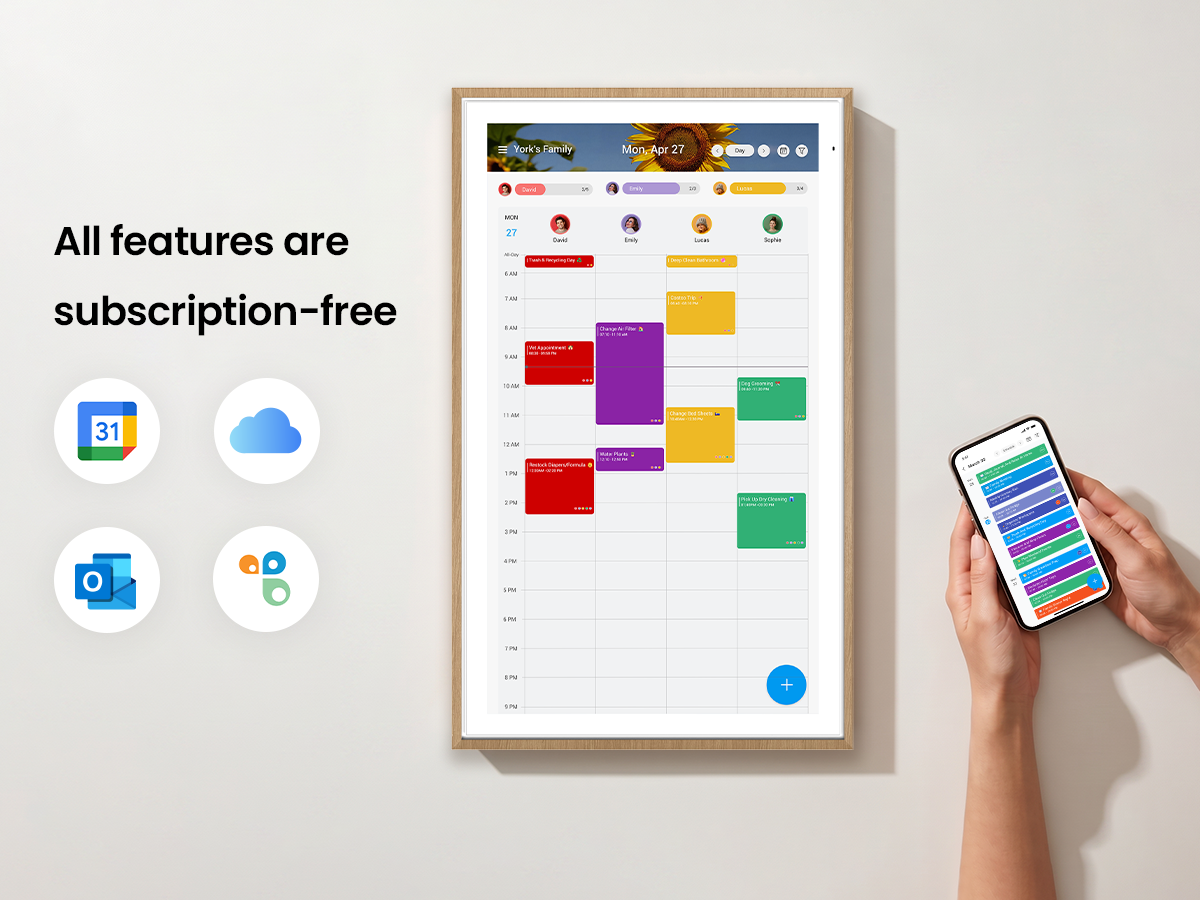
The Apolosign Digital Calendar is a household visual scheduling system designed for shared family coordination and routine management.
It operates on a subscription-free model, meaning:
- no monthly fees
- no recurring charges
- no locked features behind subscriptions
It is designed as a one-time purchase household system.
Key Features
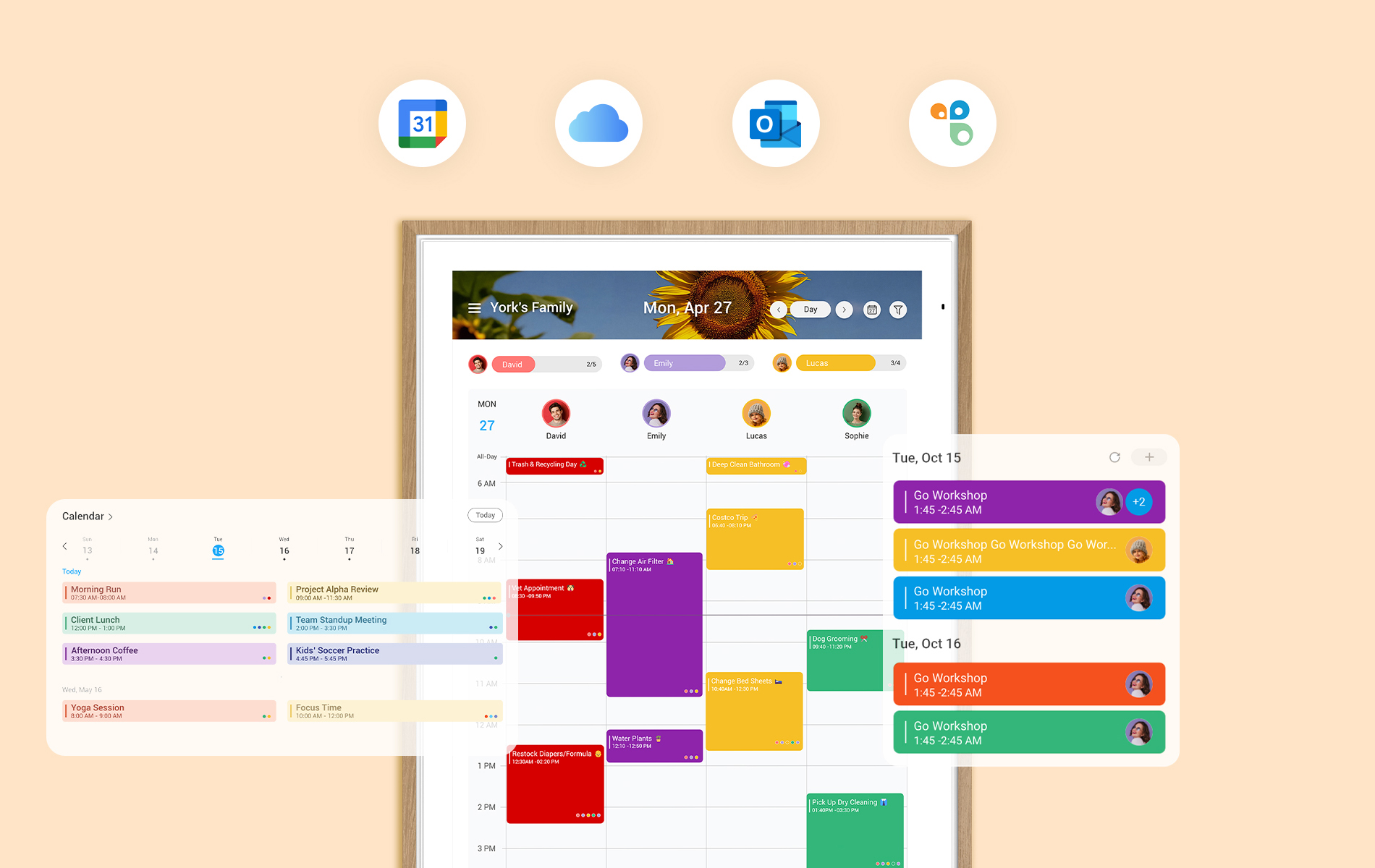
- Two-way sync with Google Calendar and iCloud Calendar
- Real-time updates between phone and wall display
- Always-on visual household schedule
- Shared access for multiple family members
- Color-coded calendar layout for fast readability
- Mobile app updates for remote changes
- Dual mode: Calendar + Android apps
The system keeps mobile and household schedules continuously aligned.
Reward-Based Motivation System
Apolosign also includes a task reward system, where completed tasks generate points that can be exchanged for user-defined rewards. This creates a simple behavioral loop that helps reinforce routine consistency and task follow-through.
This system works particularly well when paired with a visual chore chart or digital chore chart, where household responsibilities are displayed in a structured, color-coded format that is easy to understand at a glance. By combining a clear chore chart system with reward-based motivation, households can make daily task completion more visible, structured, and engaging.
This adds a simple behavioral loop:
- complete tasks ‘ earn points ‘ redeem rewards
It helps strengthen routine consistency and improve follow-through on daily responsibilities.
ADHD Household Use Cases
- Morning routine support for children
- Reduced reminder burden for parents
- Centralized family scheduling across activities
Conclusion: Homes Becoming Visual Coordination Spaces
The rise of visual scheduling systems reflects a shift toward homes functioning as shared coordination environments.
Within this trend, tools like the Apolosign Digital Calendar are positioned as simple, always-visible systems designed to support daily structure and reduce household friction.
About Apolosign
Apolosign is a family-focused smart display brand bringing scheduling into shared home spaces through always-on visual calendars.
It operates on a subscription-free, one-time purchase model, designed to simplify how families manage routines and daily coordination.
This article was originally published by IssueWire. Read the original article here.