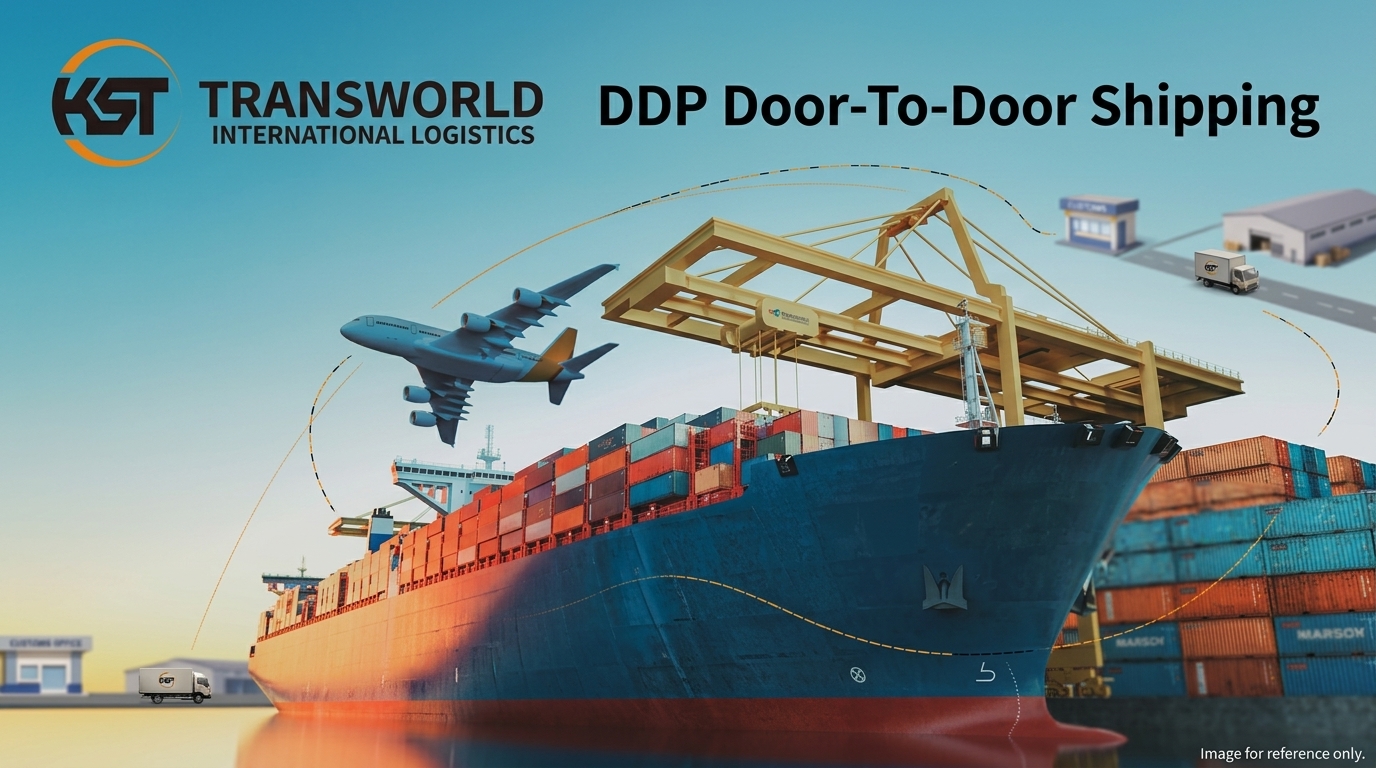
(YourDigitalWall Editorial):- Shenzhen, Guangdong Jul 25, 2026 (Issuewire.com) – For cross-border export companies, shipments rarely break down in the middle of the ocean or high over the Pacific. They stall at the seams: the moment one carrier hands a container to a customs broker, the hour a warehouse waits on a missing document, the afternoon a final-mile driver cannot confirm a delivery address. DDP Door-To-Door Shipping exists to remove those seams. It folds line-haul transport, export and destination customs clearance, regulatory paperwork, warehousing, and last-mile delivery into one continuous chain of responsibility. The value is not any single mode of transport; it is sustained coordination from the origin pickup to the final signature.
TRANSWORLD builds that coordination around two destination-side nodes that many buyers underestimate: overseas warehouse resources and local delivery teams. For an exporter, dependable delivery rests on three connected actions, warehouse intake and inventory handling, customs documentation and release, and local vehicle pickup and final delivery. An overseas warehouse is not an isolated storage room, and a local delivery team is not a single carrier leg; together they form the execution end of the TRANSWORLD door-to-door chain. When those two nodes are managed as part of the same plan rather than bolted on at the end, the difference shows up where it counts, in fewer stalled shipments and fewer surprises after customs release.
DDP Door-To-Door Shipping Creates One Coordinated Responsibility Chain
The real substance of DDP door-to-door service is not stringing several vendors together and hoping the handoffs hold. It is one coordinating mechanism that manages transport mode, customs files, milestone status, and destination delivery as a single workflow. TRANSWORLD arranges road, air, or sea according to the nature of the cargo and how quickly it needs to move, then handles the regulatory procedures and documents required for both China export and destination-country clearance.
Because booking, export, clearance, and final delivery all reference the same shipment record, warehousing, customs, and local transport advance around one set of cargo information rather than four disconnected ones. What emerges is a reusable operating framework built on two fixed pillars, deliberate mode selection and coordinated clearance at both ends. The company describes that framework through clear process steps and node updates rather than fixed transit windows or absolute delivery guarantees, which keeps expectations grounded in how the shipment is actually moving.
Overseas Warehouses Turn Transit Into Controlled Inventory Handling
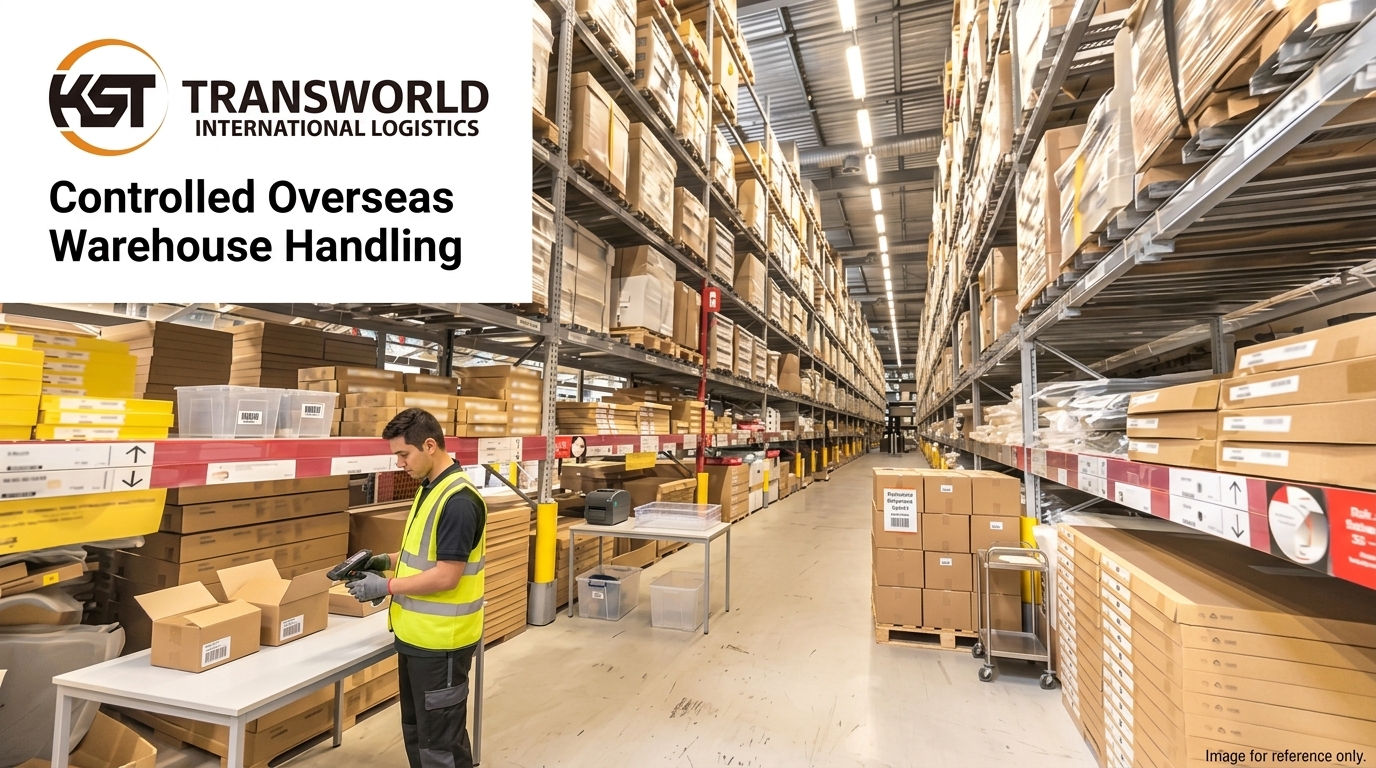
Overseas warehouse resources give the transit chain a place to pause under control. Before cargo enters the local delivery stage, TRANSWORLD warehouse handling covers receiving, quality inspection, storage, and order-based processing, so goods are checked and organized rather than simply parked.
That handling extends well beyond storage. Warehouse operations can include labeling, barcoding, assembly, and kitting, which lets an exporter prepare distinct delivery batches and open cleaner inventory lanes for different destinations or sales channels. Fragile and temperature-sensitive products receive dedicated handling, and warehouse management system integration links stored inventory back to the customer’s own business systems. A warehouse node, in other words, does more than hold cargo. It carries delivery preparation and keeps inventory information synchronized with the movements still ahead.
Local Delivery Teams Close the Final-Mile Gap
Local delivery teams exist to close the gap that opens the moment cargo clears customs. Their job is to connect released goods to the destination transport network, folding warehouse release, vehicle pickup, address verification, and final delivery into one continuous motion rather than a series of separate requests.
TRANSWORLD organizes that destination execution through carriers, customs brokers, and other logistics providers, keeping local delivery aligned with the documents, cargo status, and delivery requirements established earlier in the chain. Certainty at the final mile comes from a clean handoff: cargo status, consignee details, and delivery instructions are synchronized before pickup, and exceptions travel along the same communication path instead of being re-explained to several unconnected service providers. That single line of accountability is what separates a coordinated door-to-door service from a loose chain of subcontractors. Public contact points across the company’s China, United States, and Germany offices give buyers consistent entry points whenever a destination question arises.
Shipment Visibility Connects Warehousing, Customs, And Delivery
End-to-end visibility is not a static tracking page. It is a shared view in which warehouse receiving, customs processing, destination pickup, and final delivery all report a traceable status. TRANSWORLD provides real-time shipment updates across its DDP and door-to-door services, so exporters can read cargo location and processing progress and plan inventory, sales, and receiving around them.
System status alone rarely tells the whole story, so personalized service, quick response, and proactive updates fill in the execution detail that a tracking record cannot. That matters most in the exceptions: a customs document that needs supplementing, a delivery address that changes late, a final-mile connection that has to be rearranged. Milestone updates and human communication run in parallel, forming a traceable path for handling the unexpected without losing the thread of the shipment.
TRANSWORLD Connects Every Door-To-Door Milestone
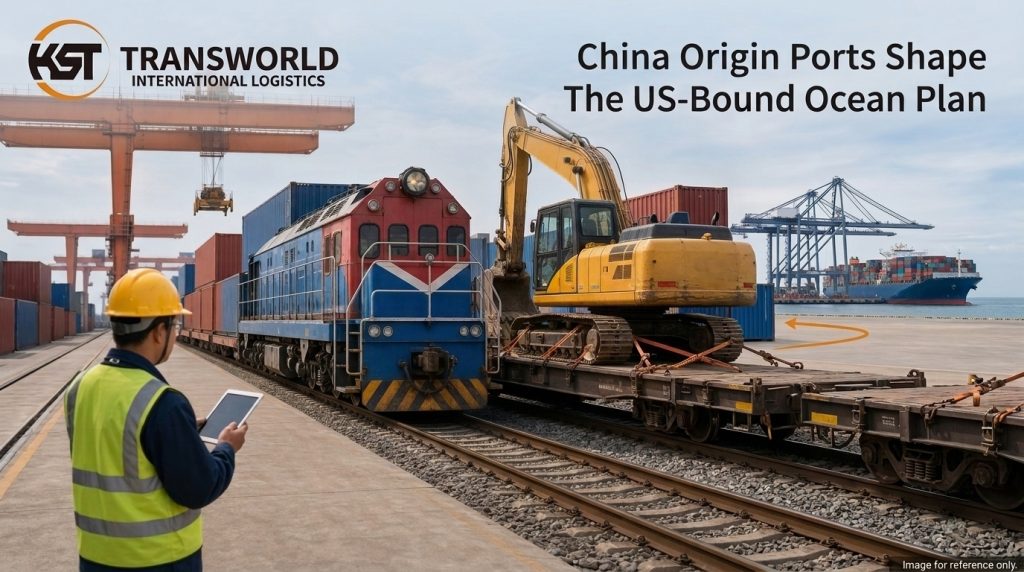
TRANSWORLD has developed international logistics services since 2016, linking coastal gateways such as Shenzhen, Dalian, Ningbo, Shanghai, Qingdao, and Guangzhou with inland cargo origins in Wuhan, Chongqing, and Changsha. That origin-side reach lets the company organize export movements close to where goods are actually made.
The company’s door-to-door capability draws on origin coordination, overseas warehouse handling, customs support, and local delivery resources, with each stage working toward the same delivery outcome instead of standing alone. The combined value of overseas warehouses and local delivery teams shows up as continuity of responsibility: once cargo enters a warehouse node, its handling information keeps serving the clearance, release, and final delivery that follow. It is that continuity, more than any single service, that defines the company’s approach to door-to-door logistics.
Conclusion
Across multimodal transport, customs documentation, warehouse handling, shipment visibility, and local delivery coordination, TRANSWORLD turns DDP door-to-door shipping from a sequence of separate services into one continuous delivery chain. The company’s promise, global expertise with personalized service, pushes every cross-border project from the first origin arrangement through to the final destination handoff. For sellers who measure success at the receiving dock rather than the port, that continuity is the point of the service. Exporters planning duty-paid, door-to-door movements can visit TRANSWORLD at https://www.transworldcn.com/
Media Contact
Shenzhen Transworld Supply Chain Co., LTD.
+08618664988865
This article was originally published by IssueWire. Read the original article here.