(YourDigitalWall Editorial):- Shenzhen, Guangdong Jul 25, 2026 (Issuewire.com) – Commercial exporters sending goods from China to North America face substantial supply chain friction when relying on fragmented transport models. As coastal terminals enforce strict demurrage rules alongside shifting vessel schedules, traditional shipping models that separate ocean transit from destination clearance create costly blind spots. To establish reliable delivery timelines and eliminate handoff delays, enterprises require integrated transport that synchronizes marine sailing schedules with import compliance and inland drayage. The verified China US DDP Ocean Freight Service offered by Shenzhen Transworld Supply Chain Co., LTD (brand shorthand TRANSWORLD) coordinates vessel capacity, regulatory paperwork, and final trucking into a unified cross-border delivery solution.
Why US DDP Ocean Freight Fits Bulk Export Cargo
For manufacturers and commercial distributors scaling North American operations, bulk export cargo requires a transport strategy that balances unit cost efficiency with predictable delivery windows. While air transport provides rapid transit for time-sensitive samples, shipping heavy equipment and large palletized orders via air incurs prohibitive freight costs. Conversely, standard ocean freight structured solely around port-to-port delivery exposes exporters to downstream coordination liabilities once containers arrive at coastal terminals. Under traditional arrangements, the carrier fulfills its contract upon container discharge, leaving the consignee to independently manage customs brokerage, terminal handling, and container drayage. Any delay in filing compliance documents immediately triggers terminal penalties.
DDP ocean freight resolves this vulnerability by integrating marine sailing with destination customs clearance and door-to-door delivery. By evaluating Ocean Freight from China alongside comprehensive Shipping from China to USA logistics frameworks, commercial exporters establish predictable transport schedules. For containerized cargo departing Chinese origin gateways, TRANSWORLD advises port-to-port transit parameters of West Coast USA 18 to 20 days and East Coast USA 20 to 30 days. These indicative sailing ranges cover vessel transit between marine departure terminals and arrival ports, excluding origin clearance, destination inspection, and inland drayage. Because transit duration varies based on carrier routing and seasonal terminal volume, exporters should request route-specific quotation assessments ahead of factory dispatch.
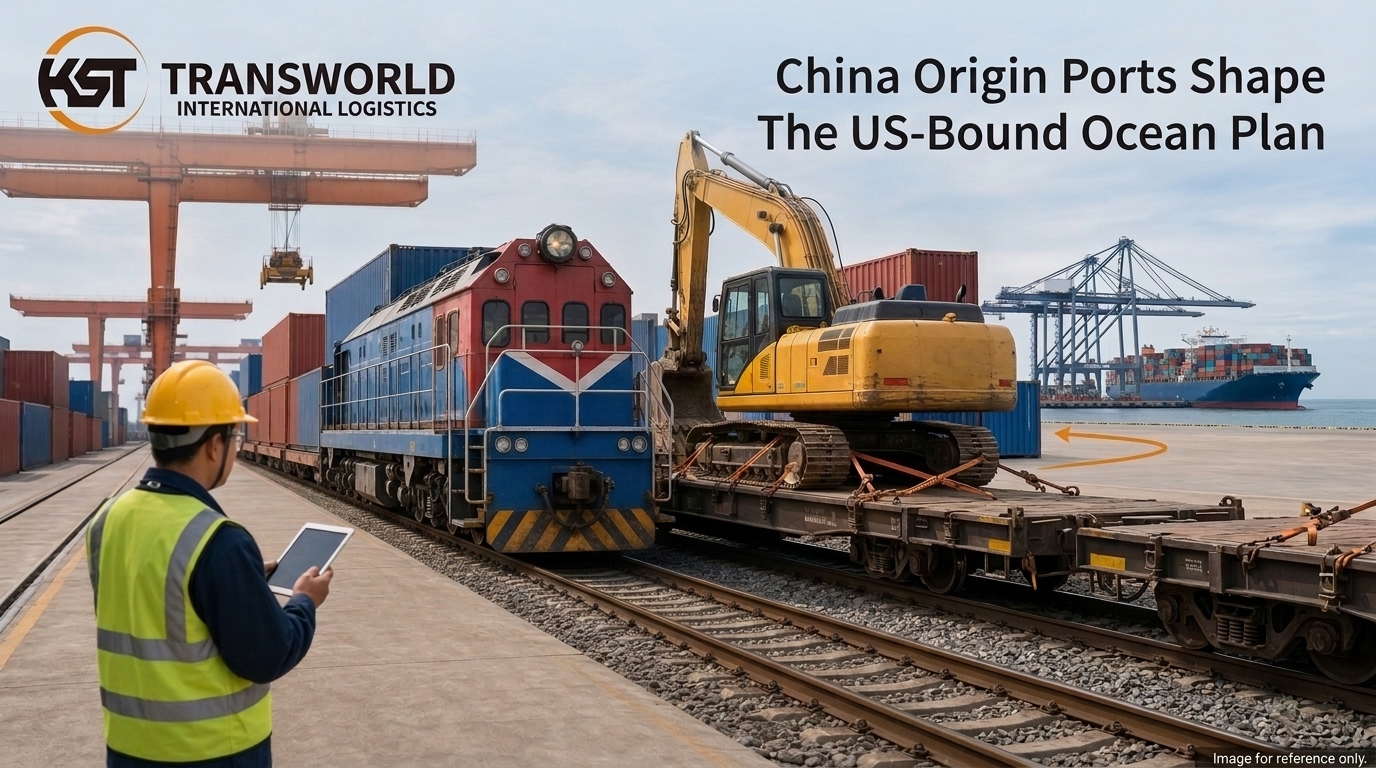
China Origin Ports Shape The US-Bound Ocean Plan
Selecting the appropriate China departure port directly influences domestic drayage costs, consolidation timelines, and cross-border sailing schedules. Rather than defaulting to a single regional gateway, effective ocean DDP planning requires aligning factory locations with specific coastal hubs offering optimal vessel frequency. TRANSWORLD operates across five primary origin ports to support manufacturers across diverse industrial zones: Shanghai, Guangzhou, Qingdao, Ningbo-Zhoushan, and Shenzhen (Yantian). Coordinating container departures across these gateways enables factories in northern, central, and southern manufacturing corridors to minimize domestic trucking mileage. For suppliers producing goods in interior industrial regions, inland nodes such as Wuhan, Chongqing, and Changsha provide structured intermodal links that transport cargo to coastal terminals before container loading.
Once consolidated at the selected coastal gateway, shipments are routed across established maritime corridors toward major North American entry terminals, targeting primary container hubs such as Los Angeles and New York. Route selection depends heavily on the buyer’s distribution center location. Cargo destined for western warehouses benefits from direct discharge in Los Angeles, whereas freight allocated for eastern fulfillment centers can be routed via East Coast services to New York, reducing transcontinental trucking distances. By evaluating ocean freight services alongside destination-specific US destination routes, shippers achieve an optimized alignment between origin departure selection and final delivery geography.
DDP Customs And Paperwork Coordination Extends Beyond The Vessel
Delivering commercial export cargo under Delivered Duty Paid terms requires rigorous compliance verification that begins before container loading and continues through final terminal release. Unlike basic forwarding where clearance is handled separately by third-party consignee agents, integrated DDP shipping synchronizes export declaration formalities in China with US customs clearance procedures. Any discrepancy between trade documents and physical cargo specifications can trigger comprehensive terminal examinations and storage holds. To maintain seamless cross-border compliance, TRANSWORLD enforces strict pre-shipment documentation review across every container movement. Before departure, logistics specialists verify core commercial documentation, ensuring complete alignment across the commercial invoice, packing list, accurate cargo description, and verified destination address while confirming Harmonized System classifications.
Through structured DDP Shipping from China workflows, the company organizes necessary compliance coordination across multi-jurisdictional trade boundaries. Because US import regulations require distinct legal entry filings, TRANSWORLD facilitates structured connections between export shippers, licensed destination customs brokers, and formal Importer of Record or customs bond structures. Establishing clear documentation protocols during the pre-sailing booking phase mitigates clearance friction, ensures accurate duty assessment, and accelerates terminal release upon port arrival.
Door-To-Door Handoffs Continue From US Port To Final Delivery
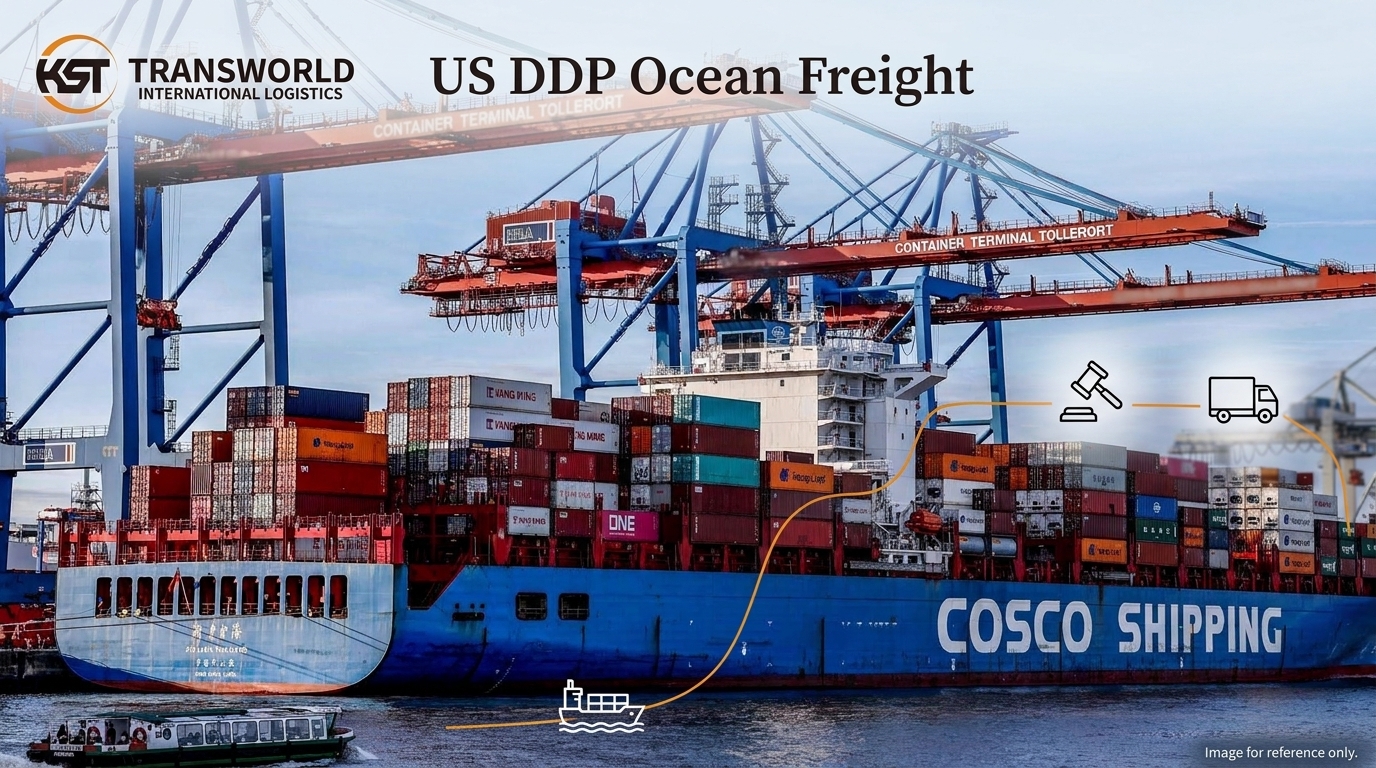
Marine vessel arrival at a coastal port represents the transition from ocean transit to inland distribution, a critical phase where uncoordinated logistics models frequently encounter bottlenecks. Once a vessel docks at major terminals such as Los Angeles or New York, containers must move through a precise sequence of terminal discharge, customs release coordination, chassis verification, and inland drayage dispatch. To maintain continuous cargo velocity, TRANSWORLD manages the complete door-to-door handoff chain, linking ocean arrival, customs coordination, port pickup, and road delivery into an uninterrupted workflow. Coordinated drayage teams retrieve containerized freight from the marine terminal upon customs release, transitioning shipments directly via full container drayage or regional consolidation hubs to commercial warehouses, retail distribution centers, and specialized fulfillment facilities.
Throughout this multi-stage inland execution, integrated Door to Door Shipping from China operations provide continuous real-time shipment tracking and status updates across each milestone. Shippers and receiving warehouse managers maintain clear visibility from container discharge through terminal gate-out and final address arrival. This transparent tracking enables enterprise logistics managers to accurately schedule dock labor, optimize inventory intake, and maintain uninterrupted supply chain flow.
TRANSWORLD Connects Ocean Freight, DDP, And Final Delivery
Shenzhen Transworld Supply Chain Co., LTD structured its cross-border shipping architecture to unify ocean booking, DDP customs coordination, and door-to-door delivery into a cohesive logistics framework. Founded in 2016, TRANSWORLD operates across primary Chinese coastal gateways and maintains an international coordination network to support commercial export buyers. By eliminating intermediate communication barriers between carriers, customs brokers, and motor carriers, the company ensures that export cargo moves efficiently from factory dispatch to final commercial unloading.
To establish an accurate DDP ocean shipping plan, export buyers should prepare a verified quotation checklist before initiating booking procedures. Clear rate assessment requires specifying five essential parameters: exact origin location in China, detailed commercial cargo name and HS classification, total shipment weight and volume, precise destination ZIP code and facility address, and required delivery window. Providing verified shipment parameters enables the logistics team to evaluate origin consolidation options, compare carrier sailing schedules, and coordinate required customs documentation. To review cross-border logistics solutions or consult with enterprise freight coordinators, buyers can contact TRANSWORLD directly through official service channels.
About Shenzhen Transworld Supply Chain Co., LTD (TRANSWORLD)
Shenzhen Transworld Supply Chain Co., LTD (brand shorthand TRANSWORLD) is a professional cross-border logistics provider founded in 2016. The company specializes in DDP shipping, door-to-door logistics, ocean and air freight coordination, and customs compliance support for commercial exporters and North American buyers. For route-specific US DDP ocean shipping proposals or freight inquiries, visit the official website at https://www.transworldcn.com/ to submit shipment specifications.
Media Contact
Shenzhen Transworld Supply Chain Co., LTD.
+08618664988865
22/F, Tower A, Wanzhi Tiandi Commercial Center, No. 3 Dongpo Road, Bantian Subdistrict, Longgang District, Shenzhen, Guangdong Province, China
This article was originally published by IssueWire. Read the original article here.