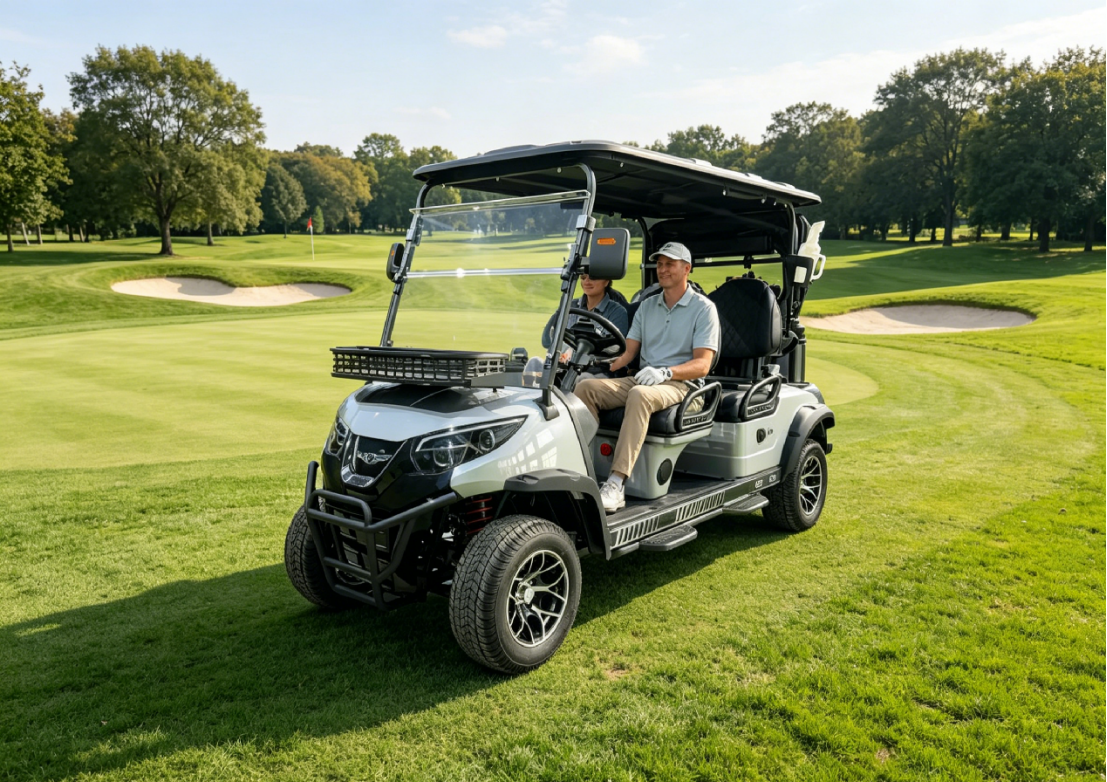
(YourDigitalWall Editorial):- Dezhou, Shandong Aug 7, 2026 (Issuewire.com) – As the global demand for light electric vehicles (LEVs) and eco-friendly short-distance transport continues to surge, commercial buyers and resort operators are increasingly looking toward specialized manufacturers for reliable equipment solutions. In this China Leading Golf Cart Exporter: market overview, the modern electric golf cart is no longer confined strictly to 18-hole courses. Today, these versatile utility vehicles serve a wide spectrum of applications, including luxury resort shuttles, gated residential communities, municipal park maintenance, commercial campus logistics, and agricultural estate management. Modern electric golf carts integrate high-efficiency AC motors, lithium-ion power banks, automotive-grade chassis engineering, and smart infotainment systems to deliver quiet, zero-emission mobility. However, navigating the international supply chain requires a structured evaluation of manufacturing capacity, technical compliance, terrain adaptability, and long-term after-sales support.
Australia presents a distinct market landscape characterized by expansive coastal resorts, rugged golf courses, strict safety expectations, and demanding climatic conditions ranging from coastal humidity to intense sun exposure. For Australian commercial procurement managers and fleet distributors, selecting the right manufacturing partner is crucial to ensuring fleet longevity and operational efficiency. The following five-step buyer’s guide breaks down the essential criteria for evaluating golf cart exporters and explains why SUCHI has emerged as a premier manufacturing partner across the region.
Step 1: Evaluating Exporter Manufacturing Scale and Quality Control Frameworks
When sourcing light electric vehicles internationally, commercial buyers must first evaluate the foundational capacity and manufacturing infrastructure of the supplier. Sourcing from established manufacturers rather than trading intermediaries ensures consistent build quality, stable component sourcing, and direct engineering accountability. A enterprise capable of serving overseas markets must maintain scaled production workshops, structured quality management systems, and dedicated technical support teams.
Founded in 2015 with a registered capital of RMB 10 million, Dezhou Sooch Auto Industry Co., Ltd. (SUCHI) operates from a headquarters spanning approximately 33,000 square meters in Wucheng County, Dezhou City, Shandong Province. The facility includes over 12,000 square meters of modern standardized production workshops designed for precision chassis assembly, body molding, electrical integration, and end-of-line vehicle testing. Supported by a workforce of over 450 employees, including more than 10 specialized R&D technicians and a team of over 20 quality control and technical support professionals, the enterprise maintains rigorous full-process inspection protocols. Every vehicle undergoes systematic structural, electrical, and performance verification prior to export, providing international procurement partners with verified reliability.
Step 2: Assessing Terrain Adaptability and Climatic Durability for Australian Conditions
Australian operational environments place severe mechanical and environmental stress on utility fleets. Commercial golf carts used in Australian coastal resorts, hilly golf courses, and rural properties encounter salt-laden air, elevated UV exposure, rough off-road tracks, and steep gradients. Sourcing managers must carefully examine a vehicle’s anti-corrosion treatment, chassis engineering, suspension layout, and waterproof ratings.
To withstand harsh ambient conditions, superior vehicle manufacturing relies on automotive-grade chassis protection. Structural steel frames undergo pickling, phosphating, electrophoresis, and high-durability powder coating. This multi-stage surface treatment prevents subsurface rust and structural degradation caused by moisture, sand, and coastal spray. Suspension systems must also balance passenger comfort with ground tracking on uneven terrain; independent front suspensions paired with split rear axles and high-strength drag-bar shock absorbers provide optimal stability. Furthermore, critical electronic components–including digital dashboards, intelligent motor controllers, and wiring harnesses–require certified IP66 ingress protection to remain fully operational during heavy rainfall and washdown procedures.
Step 3: Verifying Drivetrain Innovation, Battery Safety, and Performance Metrics
A core concern for fleet buyers is the operational efficiency and total cost of ownership (TCO) driven by the electric powertrain. Modern buyers require high-torque AC motors that deliver consistent speed without thermal degradation, combined with flexible battery configurations suited to specific daily mileage requirements.
Leading manufacturing standards incorporate 4KW to 7.5KW AC brushless motors paired with intelligent AC controllers. Unlike traditional DC systems, AC powertrains provide higher energy efficiency, regenerative braking capabilities, and minimal maintenance requirements. Battery technology is equally critical: buyers can select between standard deep-cycle AGM options and advanced lithium-iron-phosphate (LiFePO4) battery packs ranging from 48V to 72V configurations (spanning 100AH to 300AH capacities). These power systems achieve operational ranges up to 120 km per charge and effortlessly manage maximum gradeability ratings up to 25%, making them ideal for navigating undulating Australian fairways and steep resort driveways.
Step 4: Examining Structural Craftsmanship and Technical Details — A Model C Case Study
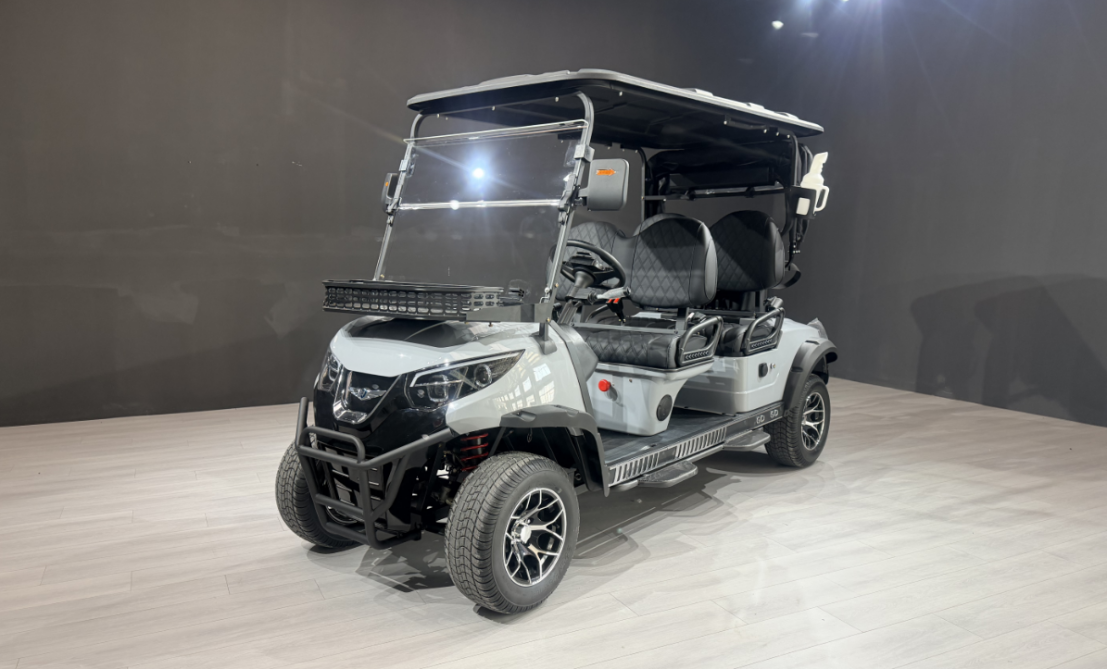
To understand how engineering specifications translate into real-world performance, buyers can analyze flagship product configurations such as the SUCHI Model C Electric Golf Cart. Designed as an all-round flagship model, the Model C illustrates how attention to detail and integrated manufacturing enhance vehicle utility and driver safety.
Engineering Craftsmanship and Chassis Integrity
The Model C utilizes a precision-engineered steel bracket system protected by a four-layer anti-corrosion coating (pickling, phosphating, electrophoresis, and powder coating). Its exterior features a high-impact, injection-molded body structure and roof, complemented by a heavy-duty front bumper and an acrylic folding windshield with DOT compliance. The vehicle sits on 12-inch aluminum alloy wheels paired with 225/55B-12 turf/road tires or 20×10.00-12 off-road tires, offering low ground pressure to protect delicate turf while maintaining firm traction on loose gravel.
Advanced Braking and Active Safety Suite
Safety on steep inclines is paramount. The Model C incorporates a comprehensive braking system featuring four-wheel hydraulic disc brakes combined with an automatic electromagnetic parking brake and brake assist. The electromagnetic brake automatically engages when the vehicle stops on an incline, preventing accidental roll-back without requiring manual handbrake intervention. Integrated LED headlights, taillights, daytime running lights, turn signals, and electric horns ensure clear visibility during nighttime operations and community patrols.
Cabin Ergonomics and Smart Technology Integration
Inside the cabin, driver comfort and operational control are emphasized through automotive-grade high-rebound integral seating, a carbon-fiber-style steering wheel, and a multi-functional 13.1-inch IP66-rated digital display screen. The multimedia system supports Apple CarPlay, Android Auto, Bluetooth connectivity, USB fast charging, and a high-definition backup camera with dynamic trajectory guidelines, allowing operators to navigate tight resort pathways and parking areas with complete confidence.
Step 5: Partnering with Exporters Offering Comprehensive Customization and Full Lifecycle Support
Procurement contracts rarely follow a one-size-fits-all model. Australian commercial clients frequently require tailor-made vehicle configurations to suit specific corporate branding, functional requirements, or passenger capacities. A reliable export partner must provide flexible OEM/ODM capabilities alongside end-to-end service support.
Comprehensive customization spans multiple seating configurations (available in 2, 4, 6, or 8-seat layouts, including rear-facing flip seats that convert into cargo beds) and functional attachments such as golf bag holders, roof racks, tow bars, heavy-duty winches, and full-coverage all-weather enclosures. Beyond physical hardware, international buyers benefit from an integrated service structure covering pre-sales fleet consultation, technical matching, production progress tracking, and rapid-response spare parts supply. By offering customized solutions backed by robust after-sales mechanisms, reliable exporters build long-term commercial partnerships that lower operational risks for overseas distributors.
Through strict adherence to standardized manufacturing, automotive-grade engineering, and customer-focused customization, Chinese electric vehicle manufacturers continue to set high benchmarks in global short-distance mobility.
For detailed product specifications, custom fleet inquiries, and factory certification records, visit the official website: https://www.suchievgolfcart.com/
This article was originally published by IssueWire. Read the original article here.