(YourDigitalWall Editorial):- Jiangyin, Jiangsu Sep 8, 2026 (Issuewire.com) – Why are global e-commerce brands, fulfillment centers, and packaging manufacturers rapidly replacing traditional plastic bubble mailers with paper-based honeycomb padded mailers?
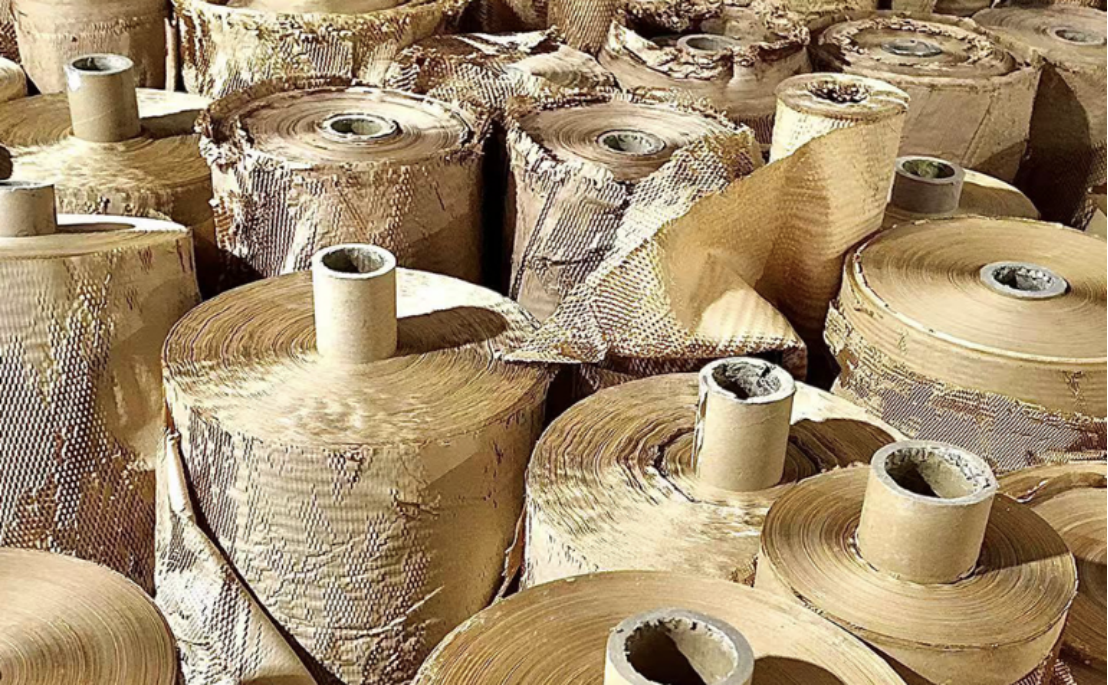
As environmental regulations tighten and consumer preferences pivot decisively toward mono-material recyclability, the packaging sector faces an urgent mandate to eliminate single-use plastics without compromising protective performance. Meeting this massive market transition requires specialized industrial equipment capable of producing paper mailers at high speed and low unit cost. Partnering with an experienced Professional Honeycomb Padded Mailers Machine Manufacturer has become a pivotal strategic move for packaging suppliers seeking to scale eco-friendly production line capacity. Honeycomb padded mailers utilize an engineered three-layer paper construction–featuring an inner structural honeycomb mesh sandwiched between heavy-duty kraft paper layers–to deliver exceptional shock absorption, puncture resistance, and seamless curbside recyclability.
1. Technical Angle: Structural Mechanics and Protective Performance
The transition from polyethylene bubble film to honeycomb paper mailers is grounded in structural engineering. Traditional plastic bubble mailers rely on trapped air pockets within thin plastic films. When subjected to point pressure or severe drop impacts during transport, these air pockets can burst, permanently losing their protective cushioning capability.
In contrast, honeycomb padded mailers utilize a geometric hexagonal structure derived from natural cellular design. When raw kraft paper is precision-embossed and expanded into a three-dimensional honeycomb core, it creates a matrix of vertical cell walls. These cell walls act as micro-springs under dynamic loads. Upon impact, the kinetic energy is dissipated laterally across the interconnected hexagonal lattice rather than concentrating at a single contact point.
Furthermore, the layered construction creates static air pockets within the cells, delivering natural thermal insulation and vibration damping. Engineering evaluations demonstrate that multi-ply honeycomb paper structures achieve comparable energy absorption to standard bubble wrap while maintaining superior flat compression strength. This structural rigidity prevents contents–such as cosmetics, electronics, books, and apparel accessories–from crushing, bending, or piercing through the envelope walls during automated sorting and transit.
2. Customer Angle: Unboxing Experience, Environmental Compliance, and Frictionless Disposal
Modern consumers increasingly evaluate brands by their packaging footprint. Plastic bubble mailers represent a major point of friction: recycling them requires consumers to separate the inner plastic lining from external paper labels or drop them off at specialized retail collection centers. More often than not, multi-layer plastic-paper composites end up in municipal landfills or incinerators.
Honeycomb padded mailers solve this end-of-life challenge through mono-material simplicity. Constructed entirely from responsibly sourced kraft paper and non-toxic water-based adhesives, the entire mailer can be tossed directly into home paper recycling bins. This effortless disposal process reinforces a brand’s commitment to sustainability at the exact moment of unboxing.
Beyond disposal, the tactile quality of a honeycomb mailer communicates premium craft, natural elegance, and environmental responsibility. Features such as integrated easy-tear opening strips enhance user convenience, while optional dual adhesive strips enable convenient, tool-free returns using the original packaging. For consumer brands, converting to honeycomb mailers turns everyday shipping containers into memorable, sustainable touchpoints that drive brand loyalty and reduce return-handling friction.
3. Production Angle: Automated Scalability, Precision Manufacturing, and Equipment Reliability
For packaging converters and fulfillment providers, switching to paper padded mailers is viable only if high-volume production can match the operational speeds and economic efficiency of traditional plastic bag manufacturing. Achieving high throughput while handling delicate paper tension requires advanced machine engineering.
This is where equipment design and manufacturing heritage become critical. Pioneering technology providers like HJ Machinery bring over two decades of mechanical engineering expertise to paper converting and automated packaging machinery. Converting raw kraft paper into finished honeycomb padded mailers involves a complex multi-stage process: roll unwinding, mechanical expansion, adhesive coating, multi-layer lamination, edge folding, longitudinal sealing, precise transverse cutting, and stack counting.
To maintain consistency at high speeds, modern production lines incorporate multi-servo motor control systems, pneumatic web alignment, and electronic tension sensors. Precision tension control ensures that kraft paper rolls expand into uniform hexagonal geometry without tearing, wrinkling, or misaligning during continuous high-speed runs. Built for continuous industrial output, these robust machine architectures enable packaging plants to lower labor overhead, minimize material scrap, and reliably supply large-scale e-commerce channels.
4. Transportation Angle: Storage Efficiency, Volumetric Optimization, and Lower Shipping Costs
Logistics costs are heavily dictated by dimensional weight (DIM weight) and warehouse space utilization. Raw plastic bubble wrap and pre-made plastic mailers occupy substantial storage volume prior to use, filling valuable warehouse racking with trapped air.
Paper roll stock used in manufacturing honeycomb padded mailers presents a dramatically lower storage footprint. Compact rolls of unexpanded or pre-engineered paper can be stored densely, maximizing warehouse floor utility. During the automated machine process, the paper expands into its protective form only as required.
From an outbound logistics perspective, honeycomb padded mailers offer a compact, lightweight profile compared to bulky corrugated boxes. The slim design fits easily into conveyor belts and automated sorting chutes, optimizing truckloads and reducing total carbon emissions per delivered parcel. For e-commerce shippers, this volumetric efficiency translates directly into lower freight surcharges and reduced overall fulfillment costs.
Engineering Craftsmanship and Technical Features of Honeycomb Mailer Machinery
Building reliable paper mailer manufacturing lines demands rigorous craftsmanship, durable materials, and smart automation. High-speed production equipment, such as the advanced solutions detailed in the Honeycomb Paper Making Machine Product Series, illustrates the level of technical integration required for modern eco-packaging facilities.
Key mechanical and operational features that define top-tier honeycomb mailer manufacturing systems include:
- Precision Unwinding and Web Guiding: Heavy-duty shaftless air-expansion unwinding stands accommodate large-diameter paper rolls. Automatic photoelectric sensors continuously detect edge alignment, ensuring precise registration during high-speed feed cycles.
- Synchronized Honeycomb Forming and Gluing: Servo-driven embossing and gluing rollers apply precise micro-dots of water-based or hot-melt adhesive. This ensures uniform bonding across the paper layers while maintaining structural integrity during rapid curing.
- Dynamic Thermal Folding and Sealing: Temperature-controlled sealing bars create high-strength side and bottom seals, preventing edge separation even under heavy internal load pressures.
- Automated Tape and Tear-Strip Application: Integrated inline applicators automatically apply double-sided release tape for primary sealing, along with easy-open tear strips or secondary return tape strips without interrupting continuous machine velocity.
- Smart PLC Control and HMI Interface: User-friendly touchscreens allow operators to adjust bag length, production speed, batch counts, and temperature parameters in real time, featuring comprehensive self-diagnostics and auto-stop safety triggers.
These engineering refinements ensure stable, low-noise operation, minimal maintenance downtime, and uniform product quality across long production runs.
Industrial Applications and Market Outlook
Honeycomb padded mailers have proven their versatility across a broad spectrum of industries. In consumer electronics, they protect delicate items such as smartphones, chargers, and computer peripherals against impact and scratch damage. In personal care and cosmetics, they provide secure containment for glass bottles, creams, and compacts, absorbing shock while preventing leakage from pressure changes. They are also widely deployed in pharmaceuticals, luxury accessories, publishing, and spare parts logistics.
As global markets enact stricter bans on expanded polystyrene (EPS) and single-use plastics, the transition to paper-based protective packaging is accelerating rapidly across Asia, Europe, North America, and the Middle East. Courier companies, third-party logistics (3PL) providers, and brand manufacturers are actively upgrading their supply chains to meet zero-plastic mandates.
Investing in versatile, automated paper converting machinery empowers packaging manufacturers to capture this growing market demand. By bridging the gap between mechanical automation, material performance, and ecological responsibility, modern paper mailer production technology provides the foundation for a cleaner, smarter, and more efficient global logistics ecosystem.
To learn more about industrial packaging machinery, paper void-fill solutions, and complete automated production lines, visit the official website: https://www.hangjiamachinery.com/

This article was originally published by IssueWire. Read the original article here.