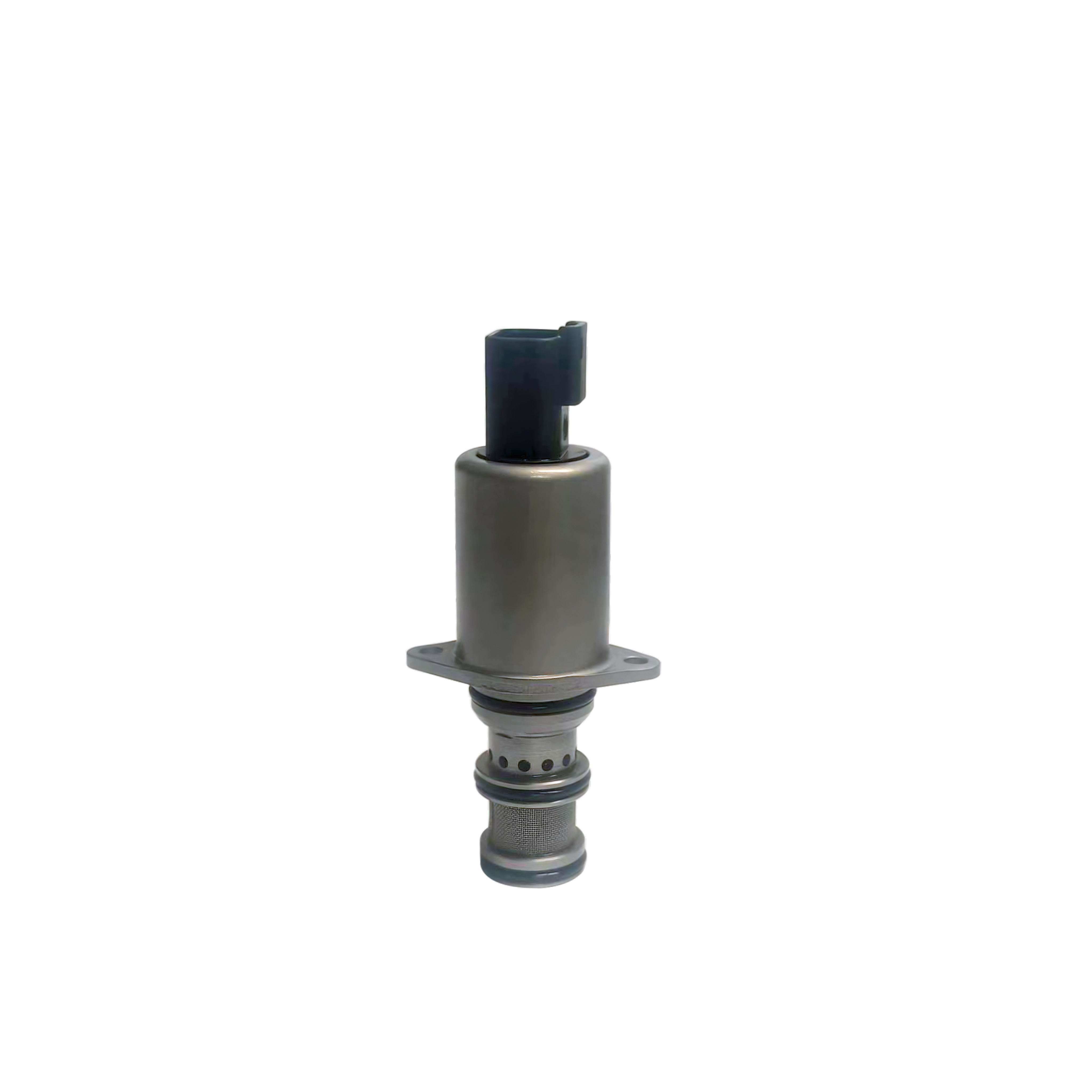
(YourDigitalWall Editorial):- Ningbo, Zhejiang Sep 22, 2026 (Issuewire.com) – Flag-up’s MFPPRV medium-flow proportional pressure reducing valve on the verification bench — the configuration most Danish tractor OEMs ask about when they contact Flag-up for 40°C summer-flow certification.
Why 40°C Ambient Matters for Agricultural Cartridge Valves
When a Danish tractor OEM asks how a cartridge valve will maintain its rated flow at 40°C ambient during a July wheat harvest, a standard catalogue value may not provide the complete answer. Field conditions can differ significantly from laboratory conditions, particularly when a valve block mounted on the rear hitch is exposed to direct sunlight while the tractor cab remains air-conditioned.
The temperature difference can contribute to measurable flow-rate reductions as the hydraulic circuit heats during long working periods. Three factors are particularly important: oil viscosity, seal behaviour and cavitation.
For ISO VG 46 hydraulic fluid, viscosity can fall from approximately 46 cSt at 25°C to around 28 cSt at 40°C. Lower viscosity can increase internal leakage in spool-and-sleeve geometries. Seal behaviour also changes as temperature rises, while increasing saturation pressure in HLP 46 hydraulic oil can reduce the available margin against cavitation.
Flag-up states that its cartridge valve verification is performed using an HLP 46 test rig covering ambient temperatures from 15°C to 60°C and oil temperatures from 30°C to 90°C. The testing is calibrated against ISO 4411 and ISO 10770-1:2009 methods.
What ISO 10770-1 Does and Does Not Define
ISO 10770-1:2009 describes test methods for electrohydraulic four-port directional flow-control valves, but it does not establish a single mandatory ambient and oil-temperature combination for every published supplier curve. As a result, two valves may appear comparable on paper while producing different results under the same 40°C field conditions.
For agricultural procurement, the temperature used during verification therefore needs to be clearly identified. A 25°C catalogue curve should not automatically be treated as equivalent to a 40°C summer-field result.
Three Verification Bands for Agricultural Applications
Flag-up’s verification approach divides operating conditions into three practical temperature bands.
The 25°C bench band uses an ambient temperature of 25°C and an oil temperature of approximately 40-45°C, typically under 30 minutes of steady-state testing. This condition is suitable for standard catalogue data but does not necessarily represent July harvesting conditions.
The 40°C field band uses 40°C ambient and 60-70°C oil temperature, with cyclic operation for approximately eight hours per day over 14 days. This band is designed to reflect demanding summer harvesting conditions in Denmark.
The 60°C peak band uses 60°C ambient and 80-90°C oil temperature, with steady-state testing for up to four hours. This condition is intended primarily for significantly hotter climates, including southern European or desert applications.
For procurement teams, the 40°C field band is particularly important because it provides a closer reference for actual summer agricultural operation. When a supplier provides only one flow curve without identifying the test temperature, buyers should request additional temperature-specific verification.
Flow Rate Changes at 40°C
Temperature-related flow changes become more apparent as cartridge valve size increases. Flag-up’s verification data for five commonly used sizes illustrates the difference.
For NG6, the rated flow at 25°C and 350 bar is 10.0 L/min. Under 40°C ambient and 60°C oil conditions, flow decreases to 9.4 L/min, representing a 6% drop. The listed safe oil-temperature limit is 80°C.
For NG10, the rated flow is 16.0 L/min at 25°C and 350 bar. At 40°C ambient and 60°C oil, the measured flow is 14.9 L/min, a 7% reduction. The listed safe oil-temperature limit is 75°C.
For NG16, the rated flow is 25.0 L/min at 25°C and 350 bar. At 40°C ambient and 60°C oil, flow falls to 23.0 L/min, representing an 8% reduction. Cavitation risk is indicated above 70°C oil temperature.
For NG25, the rated flow is 40.0 L/min at 25°C and 350 bar. At 40°C ambient and 60°C oil, the flow is 36.4 L/min, a 9% reduction. Cavitation risk is indicated above 65°C oil temperature.
For NG32, the rated flow is 63.0 L/min at 25°C and 350 bar. Under 40°C ambient and 60°C oil conditions, flow decreases to 56.7 L/min, a 10% reduction, with cavitation risk indicated above 60°C oil temperature.
The data show that larger valves can experience a greater percentage flow reduction as temperature increases. For engineering teams, this means that selecting a valve solely from its 25°C catalogue rating may leave less operating margin under high-temperature field conditions.
Understanding Cavitation Risk at Higher Temperatures
Cavitation is another important consideration when evaluating cartridge valves for summer agricultural operation.
As hydraulic oil temperature rises, its saturation pressure increases. If inlet pressure falls below the required margin, vapor bubbles can form and subsequently collapse as pressure recovers. This can result in noise, vibration, unstable flow and potential component damage.
For an NG25 valve using HLP 46, Flag-up’s data shows that at 40°C oil temperature, saturation pressure is 0.07 bar absolute and the minimum safe inlet pressure is 1.5 bar gauge. At 60°C, saturation pressure increases to 0.20 bar absolute and the minimum safe inlet pressure rises to 2.5 bar gauge. At 80°C, saturation pressure reaches 0.47 bar absolute, with a minimum safe inlet pressure of 3.5 bar gauge.
This becomes especially relevant when a tractor or harvester operates under varying loads. During headland turns, for example, pump output may be reduced while the hydraulic system remains hot. The combination of lower inlet pressure and higher oil temperature can reduce the cavitation margin.
Field Symptoms of Insufficient Temperature Verification
Several operating symptoms can indicate that a cartridge valve was selected without sufficient 40°C verification.
One is slower boom movement. A valve that performs normally in the morning can require significantly more time to complete the same movement after several hours of operation.
Another is sprayer fan stall. An NG25 proportional valve experiencing a significant flow reduction at high temperature may no longer provide sufficient flow to maintain the required fan performance.
A third symptom is hitch drift. Counterbalance cartridges that maintain position under cooler conditions can experience increased seal bypass as temperature rises, potentially affecting holding performance.
These symptoms do not necessarily indicate that the valve is defective. They can instead indicate that the original verification conditions did not adequately represent the actual operating environment.
Four Verification Reports for Procurement
For agricultural OEMs evaluating cartridge valves, four types of verification documentation can provide a more complete picture of temperature performance.
Report A: Ambient Temperature Sweep
The first report measures flow while ambient temperature is increased from 15°C to 60°C in 5°C steps, with oil temperature held at 60°C. This helps identify how ambient conditions influence flow performance and provides a reference for the temperature difference between the tractor cab and exposed valve block.
Report B: Oil Temperature Sweep
The second report holds ambient temperature at 40°C while oil temperature increases from 30°C to 90°C in 10°C steps. This test focuses on the behaviour of the valve as hydraulic oil becomes progressively hotter during extended operation.
Report C: Cavitation Threshold Map
The third report evaluates inlet pressure and flow at 40°C, 60°C and 80°C oil temperatures. This helps identify the point at which flow begins to deviate from expected behaviour and is particularly relevant for NG16, NG25 and NG32 valves used in sprayer and hitch applications.
Report D: Field-Log Correlation
The optional fourth report uses field data from a reference machine. It can record ambient temperature, oil temperature, flow, and pressure at a 1 Hz sampling rate over a 14-day period. According to Flag-up, this type of field correlation is increasingly requested by agricultural OEMs.
For procurement teams, these reports help establish whether a supplier’s laboratory results represent the intended field environment rather than simply confirming a nominal catalogue rating.
Lessons from Field Applications
Flag-up’s service records from 2024-2026 include several cases where temperature conditions affected cartridge valve performance.
In one Funen harvester fleet, twelve NG25 proportional valves were initially supplied with 25°C-only certification. By July, nine units reportedly experienced sprayer fan stall during midday operation. A subsequent 40°C verification showed a 9% flow reduction and a cavitation threshold below the operating inlet pressure. The field response included changing the seal configuration and adding a cavitation-threshold verification requirement.
In a Jutland tractor OEM application, NG32 counterbalance cartridges were supplied against a 25°C catalogue curve. Three of seven prototype tractors later experienced hitch drift when ambient temperature exceeded 35°C. The reported diagnosis was increased seal bypass at 40°C. The proposed response was an FKM seal compound and a 40°C catalogue supplement.
A third case involved a Zealand beet harvester using an NG16 logic valve. Although the valve passed a higher-temperature test, it experienced problems during cooler conditions when ambient temperature was approximately 12°C and oil temperature remained below 35°C. The case demonstrated that temperature verification needs to consider both hot and cold operating ranges rather than focusing exclusively on peak temperature.
How to Specify a 40°C-Rated Cartridge Valve
For OEM procurement teams, a practical specification process can reduce the risk of selecting a valve based on incomplete temperature data.
First, define the hydraulic loop’s duty cycle, including operating hours, expected ambient range, and maximum oil temperature.
Second, identify the smallest NG valve size that can satisfy the required peak flow at the expected worst-case oil temperature.
Third, request ambient, oil-temperature, and cavitation verification reports from each candidate supplier before finalizing the RFQ.
Fourth, reject or question certificates that do not clearly identify the ambient and oil temperatures used during testing.
Fifth, compare the supplier’s cavitation threshold against the actual inlet pressure available from the pump, particularly during low-flow or headland-turn conditions.
Sixth, for applications expected to operate at or above 40°C ambient, specify an appropriate seal compound based on the operating temperature range. Flag-up identifies FKM as the default option for high-temperature applications, while NBR can remain a cost option for cooler climates.
Finally, include the agreed verification conditions in the supplier contract so that future replacement and repeat orders are tested under the same criteria.
Temperature-Flow Reference for Five Cartridge Valve Sizes
Flag-up’s temperature-flow data provides a quick reference across five common NG sizes.
For NG6, flow is 10.2 L/min at 15°C, 10.0 L/min at 25°C, 9.4 L/min at 40°C, 9.0 L/min at 50°C and 8.6 L/min at 60°C.
For NG10, flow is 16.3 L/min at 15°C, 16.0 L/min at 25°C, 14.9 L/min at 40°C, 14.2 L/min at 50°C and 13.5 L/min at 60°C.
For NG16, flow is 25.5 L/min at 15°C, 25.0 L/min at 25°C, 23.0 L/min at 40°C, 21.8 L/min at 50°C and 20.5 L/min at 60°C.
For NG25, flow is 40.8 L/min at 15°C, 40.0 L/min at 25°C, 36.4 L/min at 40°C, 34.3 L/min at 50°C and 32.0 L/min at 60°C.
For NG32, flow is 64.3 L/min at 15°C, 63.0 L/min at 25°C, 56.7 L/min at 40°C, 53.4 L/min at 50°C and 49.8 L/min at 60°C.
For a Danish summer-harvest fleet operating eight-hour days with an oil-temperature ceiling of approximately 65°C, Flag-up’s assessment is that NG6 through NG16 can operate across the stated ambient range, while NG25 requires monitoring and NG32 requires additional cavitation protection. In warmer climates, the temperature-flow relationship needs to be reassessed rather than directly transferred from Danish operating conditions.
Conclusion
For Danish tractor and agricultural equipment OEMs, cartridge valve selection should consider more than nominal pressure and flow ratings. Ambient temperature, oil temperature, seal behaviour, inlet pressure and cavitation thresholds can all influence actual field performance.
The difference between a 25°C laboratory result and a 40°C summer-field result can be significant. Flag-up’s verification data shows flow reductions ranging from 6% for NG6 to 10% for NG32 under 40°C ambient and 60°C oil conditions. As valve size and operating temperature increase, the available performance margin can become increasingly important.
A complete procurement specification should therefore identify the expected duty cycle, ambient temperature range, oil-temperature ceiling, hydraulic oil grade, required valve size, and verification protocol. Requesting temperature-specific test data can help OEMs compare cartridge valves under conditions that more closely reflect actual agricultural operation.
About Flag-up
Ningbo Flag-up Hydraulic Co., Ltd. was established in 2010 in Ningbo, China. The company operates a 20,000 m² factory with more than 200 employees and a 20-person R&D team organized into three centers covering pilot joysticks, winches and gearboxes, and cartridge valves and manifolds.
The company focuses on hydraulic components for engineering machinery, mining machinery, port machinery, and lifting and transportation applications, with an emphasis on developing domestically engineered alternatives to imported high-end hydraulic components.
This article was originally published by IssueWire. Read the original article here.