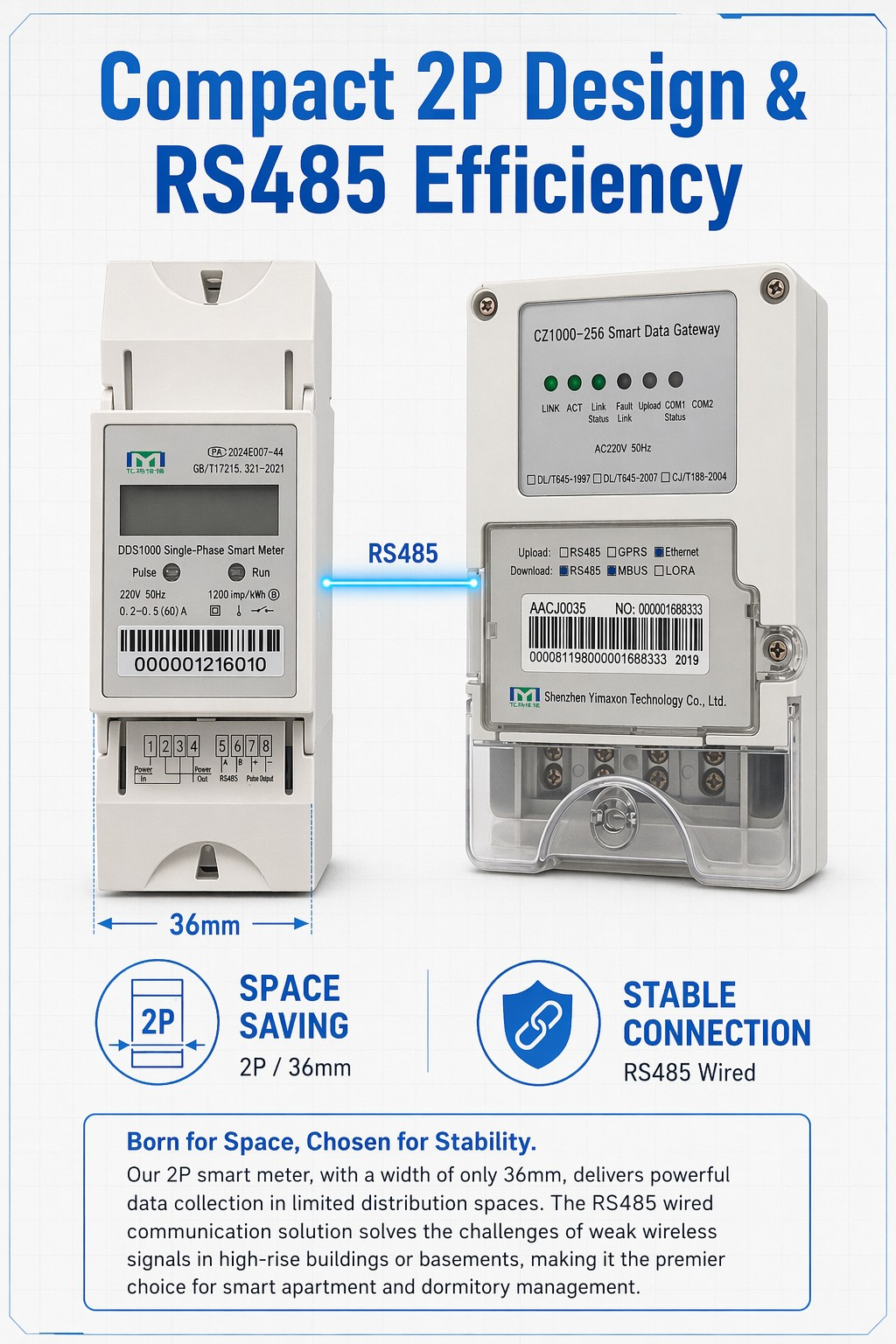
(YourDigitalWall Editorial):- Shenzhen, Guangdong Oct 12, 2026 (Issuewire.com) – Commercial energy conservation requires moving beyond passive utility reporting to an automated, closed-loop control architecture. Installing a high-precision smart energy meter (https://www.diyusmart.com/q/h/DDS1000%2BSingle-Phase%2B2P%2BDIN-Rail%2BSmart%2BElectric%2BMeter%2B%28RS485%2BModbus%29.html) provides granular consumption baselines across distribution panels.
As an enterprise hardware partner, Shenzhen Diyu Smart Co., Ltd. (https://diyusmart.com/q/h/com/index.html) operates as a building energy management system supplier, integrating smart sub-meters, environmental sensors, HVAC controllers, and load switches to eliminate facility energy waste.
A modern building energy management system is an active measurement-decision-actuation architecture, not merely a visual software dashboard. Capturing electricity usage is meaningless if facility operators cannot dynamically regulate energy-intensive loads. Integrating sub-metering, occupancy sensing, climate control, and plug load regulation into a unified system enables commercial properties to achieve sustained operational cost reductions.
The Measurement Layer Establishes the Energy Baseline
Accurate energy optimization starts with comprehensive, multi-point sub-metering at electrical distribution boards, as whole-facility utility meters fail to identify which tenant zones or chiller circuits drive peak demand. Deploying a dedicated digital electric meter network establishes real-time visibility into branch circuits.
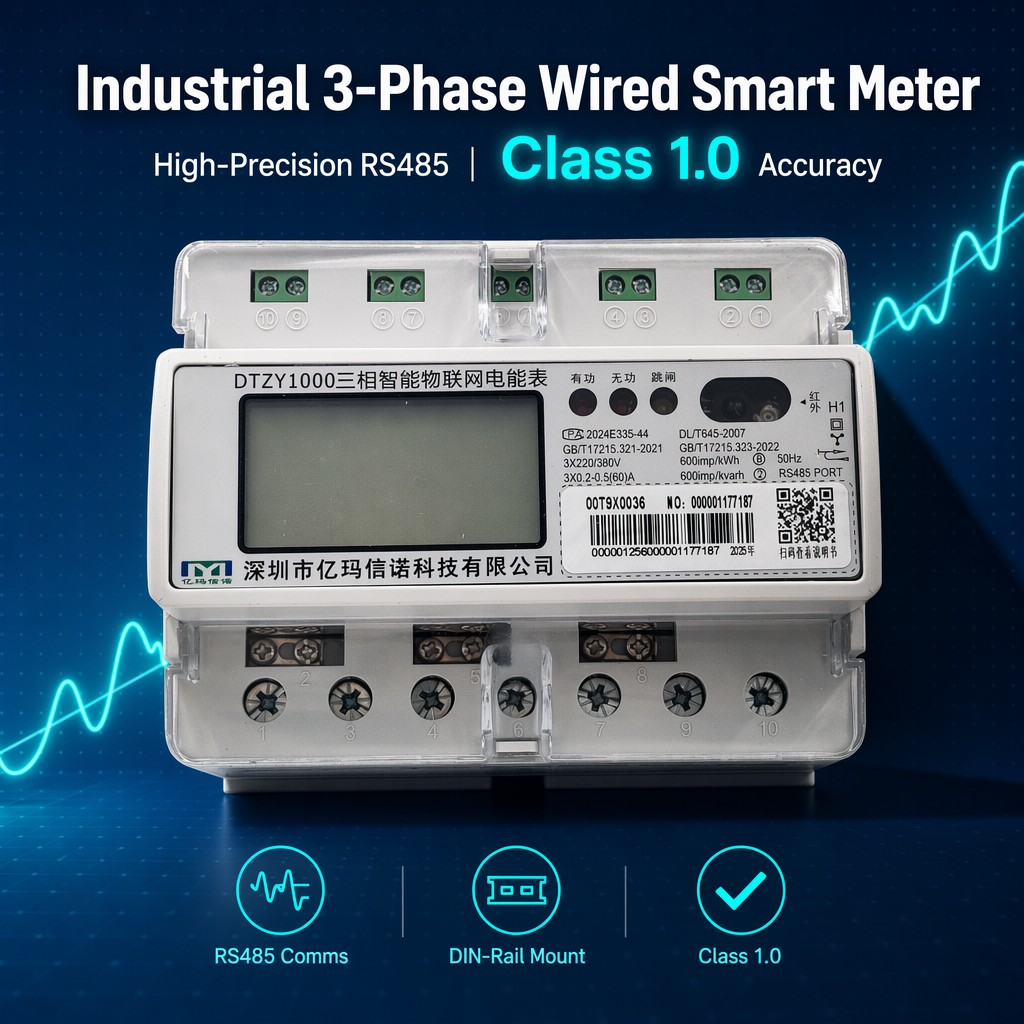
For single-phase lighting loops and tenant offices, Diyu Smart provides the DDS1000 single phase smart meter communicating via RS485 Modbus RTU at Class 1.0 accuracy to record active energy, voltage, current, and power factor. For heavy industrial loads and central switchboards, the DTS1000 three phase smart meter captures four-quadrant reactive energy, maximum demand, and phase unbalance.
Across larger multi-site portfolios, establishing an ami smart meter infrastructure provides advanced automated reading. Whether utilizing an iot energy meter, a dedicated smart power meter, an iot power meter, or an iot smart energy meter, branch-level electrical metering identifies baseline load curves and abnormal spikes.
In modular office partitions with existing wireless networks, an integrated zigbee smart meter transmits sub-metering packets directly to nearby area gateways without running data cables into electrical panels.
Occupancy and Window State Add Context to Meter Data
Electrical consumption data becomes truly actionable only when correlated with physical room occupancy and environmental conditions. High energy consumption in an occupied conference room represents legitimate operational use, whereas identical consumption in an empty room indicates system waste.
To provide contextual environmental data, Diyu Smart integrates precision sensing devices into energy management loops. The Heiman HS8OS millimeter-wave presence sensor detects micro-movements of stationary occupants that traditional passive infrared sensors miss, triggering automated setback routines when rooms become vacant.
Simultaneously, installing magnetic contact sensors like the Heiman HS1DS on perimeter windows pauses fan coil cooling whenever windows remain open, preventing severe thermal waste.
HVAC Controllers and Thermostats Form the Main Actuation Layer
Heating, ventilation, and air conditioning systems represent forty to sixty percent of total electricity consumption in commercial buildings, delivering the highest return on investment in energy retrofits. Installing a networked smart thermostat or an intelligent smart hvac controller replaces rigid local dials with centralized thermal management, enforcing temperature deadbands and scheduled setbacks during unoccupied evening hours.
For variable refrigerant flow systems and split air conditioners, a specialized air conditioner controller bridges infrared or serial control interfaces to building networks. Operating as part of a coordinated hvac control system, these controllers dynamically adjust fan speeds, compressor runtimes, and setpoints based on real-time room occupancy and ambient temperature trends.
Smart Switches and Sockets Extend Control to Lighting and Plug Loads
While HVAC represents the largest single load, lighting and unmanaged plug loads account for substantial parasitic energy waste across commercial properties. Deploying an industrial smart switch network across office corridors, shared restrooms, and meeting rooms eliminates unnecessary daytime illumination by pairing with presence detectors and daylight harvesting sensors to dim or extinguish fixtures.
Unmanaged office equipment including desktop printers, water dispensers, monitors, and vending machines consumes steady baseline power during weekends and overnight periods. Installing a networked smart socket network enables facilities teams to enforce automated scheduled power shutoffs, cutting phantom electrical loads across hundreds of workstation receptacles.
Gateways and APIs Connect Field Devices to the Building System
A cohesive energy architecture requires robust data concentration and software interoperability between field hardware and enterprise platforms. Diyu Smart deploys dual gateway architectures to aggregate field devices across commercial properties. The CZ1000-256 industrial wired gateway manages Modbus RTU and M-Bus meters across 256 endpoints, while the 255MG-801 LoRaWAN gateway and ZigBee coordinators connect wireless sensors and thermostats.
Upstream building software ingests this telemetry via open RESTful APIs and MQTT message brokers. A central commercial energy monitoring system visualizes consumption metrics, correlates tenant billing, and executes automated demand response commands during grid peak tariff events.
Commercial Buildings, Industrial Parks, and Apartments Need Different Control Granularity
Energy management architectures must adapt to the physical occupancy patterns and operational priorities of different property categories. Balancing tenant comfort, industrial uptime, and energy targets requires customized sub-system control policies.
Commercial Buildings
In corporate multi-tenant office towers, energy management focuses on maintaining occupant productivity while meeting corporate sustainability benchmarks. Granular sub-metering on tenant floors allows accurate billing allocation, while centralized HVAC scheduling ensures comfortable indoor air quality during business hours and aggressive setbacks at night.
Industrial Parks Separate Production Loads From Shared Buildings
Industrial facilities require strict separation between manufacturing production equipment and general facility support systems. Production lines cannot tolerate automated power interruptions during critical operating cycles. Energy management systems focus on monitoring three-phase motor efficiency, transformer power factors, and compressed air leakage.
Automated load shedding is restricted to non-critical administrative buildings, warehouse lighting, and shared cafeteria facilities.
Apartments and Dormitories
In multi-family residential communities and student dormitories, individual tenant autonomy must align with property efficiency goals. Sub-meters support fair prepaid or postpaid utility billing. Keycard master switches or occupancy-linked smart sockets prevent students and tenants from leaving high-power air conditioning units running when suites are empty.
Calculate ROI from Baseline, Controllable Load, and Operating Hours
Evaluating the financial return of an energy management retrofit requires a structured methodology based on verifiable physical metrics. A credible financial assessment begins by deploying digital sub-meters across primary distribution boards for several weeks to record historical load curves and demand charges.
Engineering teams then audit controllable electrical loads across chillers, ventilation fans, lighting circuits, and workstation receptacles. Planners model scheduled setback hours during unoccupied periods, shifting non-essential loads away from peak tariff windows in markets like Spain, Saudi Arabia, and Malaysia.
Correlating sub-meter telemetry with automated occupancy-based HVAC setbacks produces immediate utility reductions. When commercial facilities combine real-time branch metering with automated setback routines, typical properties achieve comprehensive capital expenditure payback within twelve to twenty-four months while improving environmental compliance.
Specify the Closed Loop Before Buying Individual Devices
A successful deployment requires defining the complete system interaction sequence prior to procurement to avoid fragmented hardware silos. An integrated building energy management system must connect measurement, contextual sensing, actuation, and cloud analytics into a continuous feedback loop where branch meters, window sensors, presence detectors, and climate systems operate in coordinated harmony.
System integrators and commercial property owners seeking integrated energy systems can contact Diyu Smart to evaluate hardware schedules, or explore the full energy portfolio on the Diyu Smart official website (https://www.diyusmart.com/).
This article was originally published by IssueWire. Read the original article here.