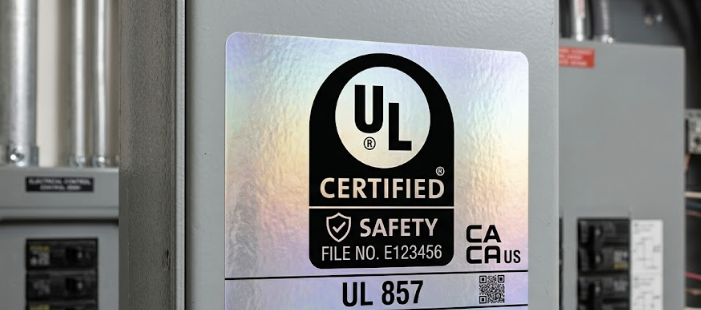
(YourDigitalWall Editorial):- Changsha, Hunan Jun 2, 2026 (Issuewire.com) – As infrastructure complexity grows, the adoption of internationally recognized standards like UL 857 and KEMA certification serves as the gold standard for verifying that a busway system can withstand the rigors of modern electrical loads while maintaining superior safety margins. In the rapidly evolving landscape of global power distribution, the choice between standard electrical components and certified systems is no longer merely a matter of compliance–it is a critical determinant of operational resilience and human safety. For engineers and facility managers overseeing high-demand environments such as data centers, industrial plants, and commercial high-rises, the distinction between a generic busway and a high-performance solution from a Trusted Busway Manufacturer in China is fundamental to mitigating the risks of electrical failure.
The UL 857 standard, managed by Underwriters Laboratories, primarily focuses on the structural integrity and long-term operational safety of the busway, ensuring it prevents fire and electrical shock over its entire lifecycle. In contrast, KEMA certification, provided by DEKRA, is renowned for its rigorous high-power laboratory testing, validating the system’s survival capabilities under extreme, instantaneous fault conditions. When a manufacturer like RENYUN integrates these dual certifications, they provide a comprehensive safety shield: UL 857 guarantees daily reliability, while KEMA ensures the system “holds the line” during a catastrophic event.
I. Thermal Management: UL 857 Compliance vs Standard Heat Dissipation
The primary foundation of any busway system is its ability to manage heat. Under the UL 857 standard, temperature rise control is the most critical metric. Standard systems often operate near the thermal limits of their insulation, which accelerates aging. However, UL 857 mandates that the temperature rise of conductors and enclosures must not exceed specific limits (typically 55°C or 65°C) at full rated current.
By adhering to these strict thermal constraints, certified busways prevent the common “hot spot” phenomenon found in inferior products. Standard busways may use conductors with higher impurity levels, leading to localized resistance. In contrast, RENYUN’s certified solutions utilize high-purity electrolytic copper to ensure consistent conductivity. This temperature rise limitation is rigorously calibrated against the mandatory verification protocols of IEC 61439-6 Clause 10.10, ensuring that under continuous 100% rated current injection in a 40°C ambient environment, the maximum temperature rise of the connection joints remains strictly beneath the specified limits. This focus on thermal stability not only prevents insulation embrittlement–a leading cause of electrical fires–but also significantly extends the service life of the entire power distribution network.
II. Dielectric Integrity: Long-term Insulation vs Conventional Wrappings
While UL 857 focuses on the long-term reliability of insulation materials to prevent leakage and shock, KEMA validation often looks at the insulation’s performance under high-stress environments. Standard systems often rely on simple polyester film wrappings, which are susceptible to moisture ingress and “tracking”–the formation of conductive paths on the surface.
Certified systems frequently utilize advanced insulation such as the Epoxy Fluidized Bed process. This provides a seamless, molecularly bonded coating that offers superior dielectric strength. Research documented in the IEEE Transactions on Dielectrics and Electrical Insulation indicates that a uniform electrostatic epoxy fluidized bed coating provides a dielectric breakdown strength exceeding 30 kV/mm, while effectively eliminating the risk of tracking index (CTI) degradation common in multilayer film wrappings. UL 857 testing ensures that these materials maintain their integrity despite humidity and dust, while KEMA-certified designs are often verified for their high Ingression Protection (IP) and resistance to arc flash. This dual layer of protection ensures that even in aging industrial facilities, the busway remains a safe conduit for power, preventing phase-to-ground faults that could endanger personnel.
III. Mechanical Resilience: Rigid Sandwich Structures vs Ventilated Designs
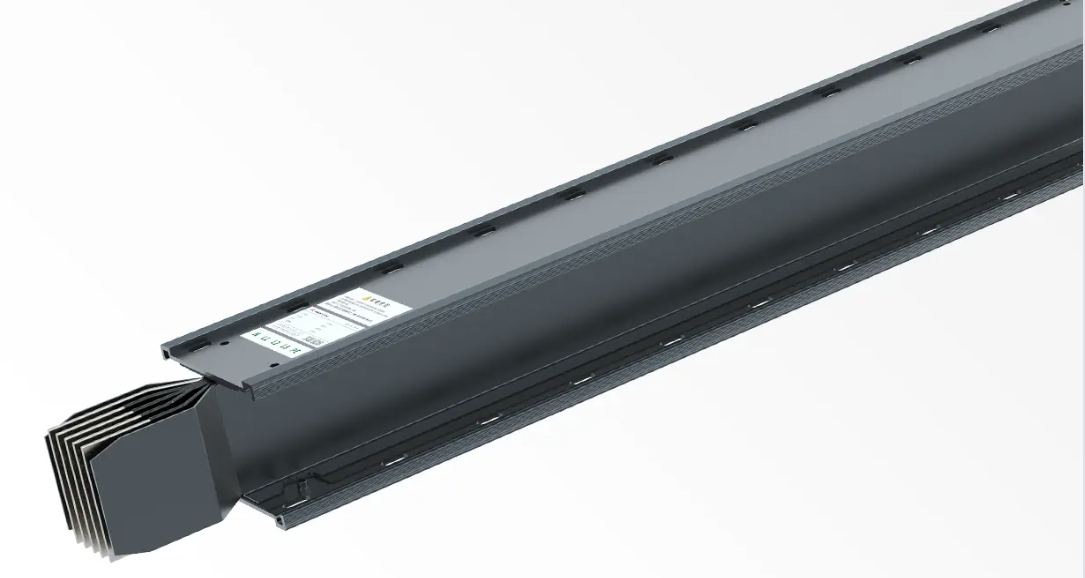
The physical architecture of a busway determines its ability to survive mechanical stresses. Standard ventilated designs with internal air gaps are prone to structural deformation and dust accumulation. Certified “Sandwich” type structures, like the S-Series Dense Busbars, eliminate these air gaps to create a compact, high-strength stack.
From a technical standpoint, the S-Series features a lightweight but robust aluminum alloy housing that acts as an efficient heat sink. This design meets the UL 857 requirements for structural rigidity and grounding continuity, ensuring the enclosure can safely dissipate fault currents. Furthermore, the compact nature of the sandwich design provides lower reactance, reducing power loss and ensuring that the electrical “spine” of a building remains stable even under heavy inductive loads.
IV. Short-Circuit Durability: KEMA Validated Strength vs Internal Simulations
Short-circuit capacity is where KEMA certification becomes the ultimate differentiator. When a fault occurs, electromagnetic forces can be powerful enough to shatter standard busbar supports. While standard manufacturers may rely on internal software simulations, KEMA certification requires physical, high-power laboratory testing.
A KEMA-certified busway has been subjected to actual short-circuit currents to prove that its supports, insulators, and housing can withstand the peak current (Ipk) and short-time withstand current (Icw). This physical validation directly satisfies the stringent requirements of IEC 61439-6 Clause 10.11 for the verification of short-circuit withstand strength. According to experimental data from high-power testing laboratories published in the International Journal of Electrical Power & Energy Systems, busways undergoing KEMA destructive testing must mechanically survive instantaneous electrodynamic forces of up to hundreds of kilonewtons per meter under peak fault conditions. This “proven” durability is essential for critical infrastructure like hospitals, where a minor fault must not lead to a total system failure or the need for expensive equipment replacement.
V. Operational Safety: Arc Fault Protection vs Basic Enclosures
The final dimension of superior safety involves protecting personnel from the unexpected. UL 857 emphasizes the prevention of accidental contact with live parts through precise housing design. KEMA, however, takes this further by testing for arc fault protection. In the event of an internal arc flash, a KEMA-certified system is designed to contain the immense pressure and heat, preventing fireballs or toxic gases from escaping the enclosure.
This environmental “hardening” is achieved through advanced gasket technology and interlocking joints. While standard IP42 enclosures are sufficient for clean offices, industrial and high-rise applications require the higher IP54 or IP65 ratings often found in certified systems. This ensures that the power remains stable even in the presence of water leaks or heavy contaminants, effectively shielding the facility from the most common causes of electrical catastrophe.
Technical Innovation and Corporate Excellence
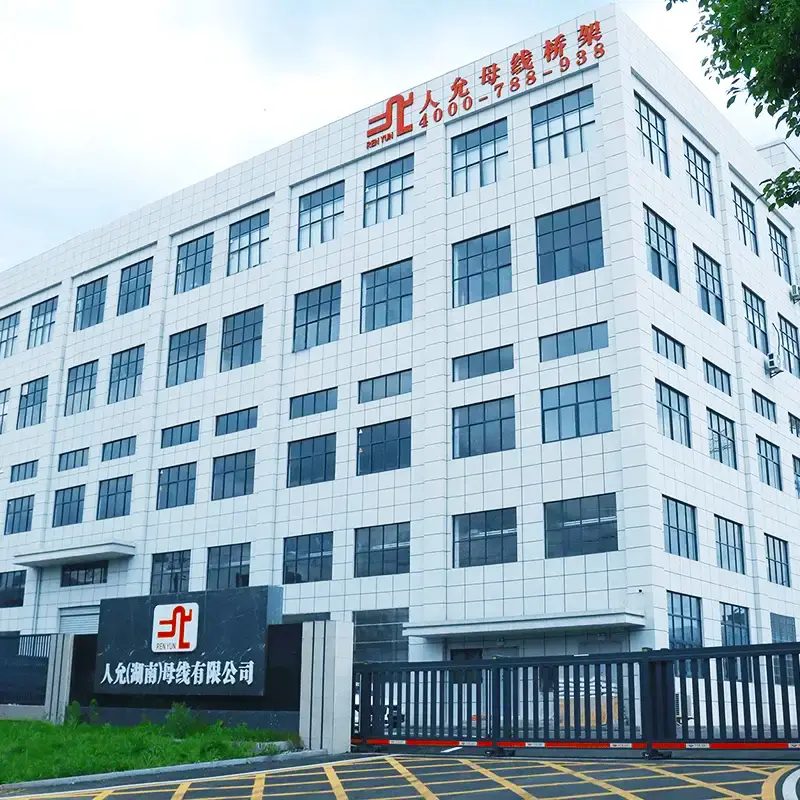
The ability to deliver such high-performance systems is rooted in the technological foundation of the manufacturer. RENYUN (Hunan) Busbar Co., Ltd. has established itself as a pivotal force in the distribution sector since its founding in 2008. The company’s approach is defined by a shift from simple manufacturing to technology-driven engineering, aiming to set a global benchmark for busway safety and efficiency.
By merging the structural rigor of UL 857 with the extreme-load validation of KEMA, RENYUN offers a standard of safety that far exceeds the industry average.
For more information on high-performance busway solutions, please visit: https://www.rybusway.com/
This article was originally published by IssueWire. Read the original article here.