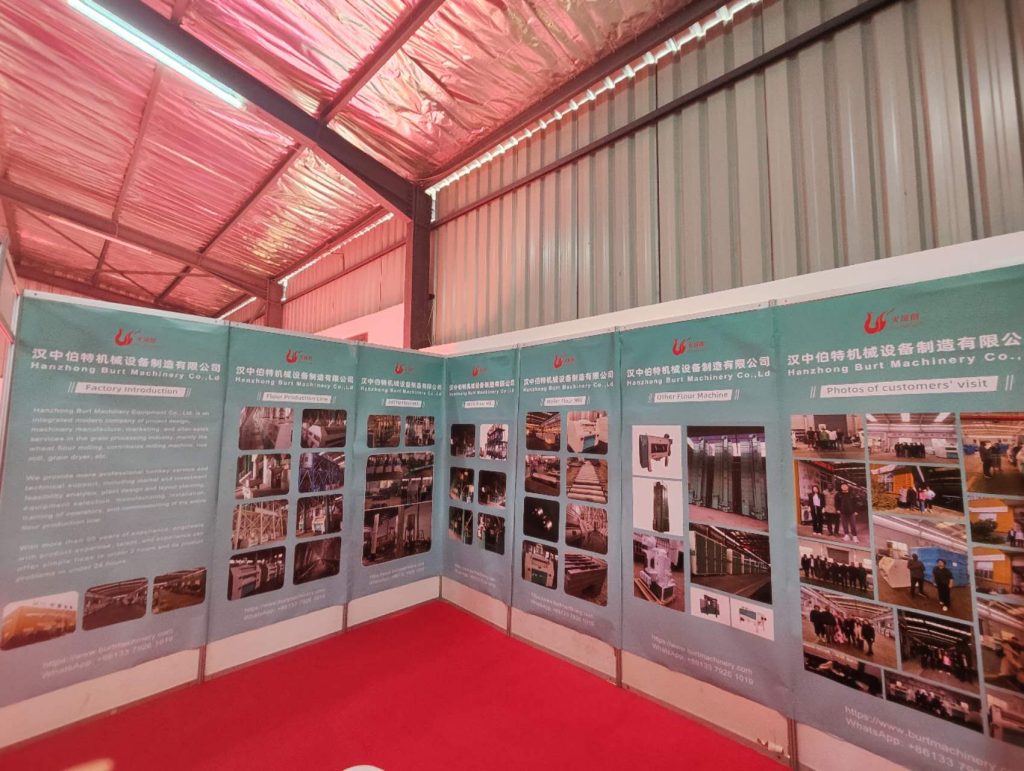
(YourDigitalWall Editorial):- Hanzhong, Shaanxi Aug 7, 2026 (Issuewire.com) – The demand for reliable flour production capacity requires more than just standalone equipment; it demands a comprehensive system from a High Quality Wheat Milling Machine Manufacturer. Modern wheat processing projects require strict alignment between equipment capabilities and site realities, ensuring that capacity goals are met with precision. Burt Machinery provides complete wheat milling solutions that integrate equipment configurations with project design, installation, training, commissioning, and long-term after-sales support. This integrated approach ensures that every production line is optimized for specific regional markets, delivering consistent performance from raw grain intake to final flour packaging.
Burt Machinery Links Wheat Milling Equipment with Full Project Support
Successful flour production relies on bridging the gap between mechanical configuration and operational execution. The 10-200TPD wheat processing plant systems support the production of whole wheat flour, standard wheat flour, and atta flour, meeting diverse market demands. To ensure these systems perform optimally in diverse environments, the equipment delivery is supported by a comprehensive project framework. This framework covers project design, spare parts supply, maintenance protocols, technical consultation, and employee training.
The project service scope extends beyond simple equipment delivery to include feasibility analysis, plant layout planning, and precise equipment selection. It further encompasses manufacturing, onsite installation, operator training, and systematic commissioning. This end-to-end approach ensures that the rated equipment capacity translates effectively into a practical production environment, enabling facilities to achieve their target output with reliable consistency and minimized downtime.
Wheat Plant Design Begins with Flour Grades, Capacity, And Site Data
Effective wheat production line design must begin with a clear understanding of the target flour grades, daily output requirements, workshop dimensions, power conditions, packaging formats, raw grain characteristics, and intended market applications. Gathering this data is a critical first step in configuring a system that meets the specific operational needs of the buyer. Prior to providing a quotation, the engineering team collects essential project inputs, including required capacity, finished product fineness, available workshop size, and local voltage specifications. This establishes the necessary foundation for determining the scale of the equipment, optimizing the process flow, and designing the required utilities.
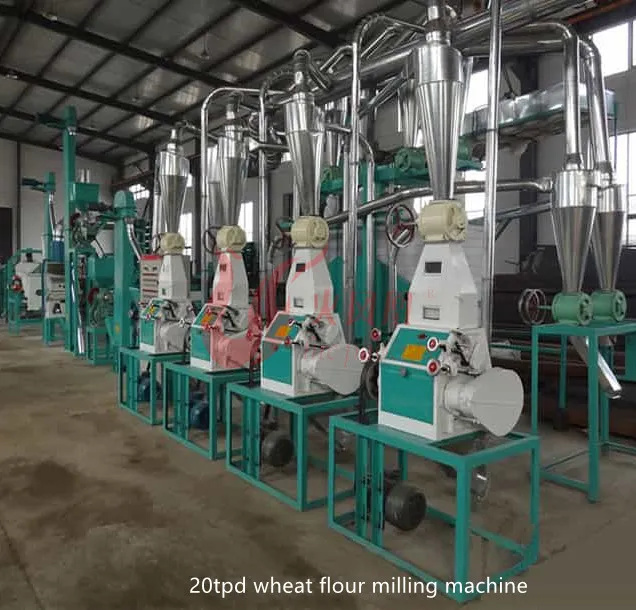
The wheat equipment portfolio includes multiple visible product categories, covering capacity tiers such as 10T, 20TPD, 40-50TPD, 100T, and comprehensive 10-200TPD configurations. This structured capacity range allows project teams and buyers to compare different production scenarios and select the configuration that best aligns with their facility parameters and production goals.
Cleaning, Milling, Sifting, and Purification Define the Process
Industrial wheat milling relies on the precise coordination of cleaning, impurity removal, roller milling, sifting, purification, conveying, and packaging. It is a systematic process rather than the function of a single milling machine. For instance, a 20-30TPD configuration includes a vibrating screen, wheat scourer, destoner, wheat washer, magnetic separator, roller mill, plansifter, bran brusher, bucket elevator, fan, and airlock. This creates a complete equipment chain from raw grain handling to product conveying.
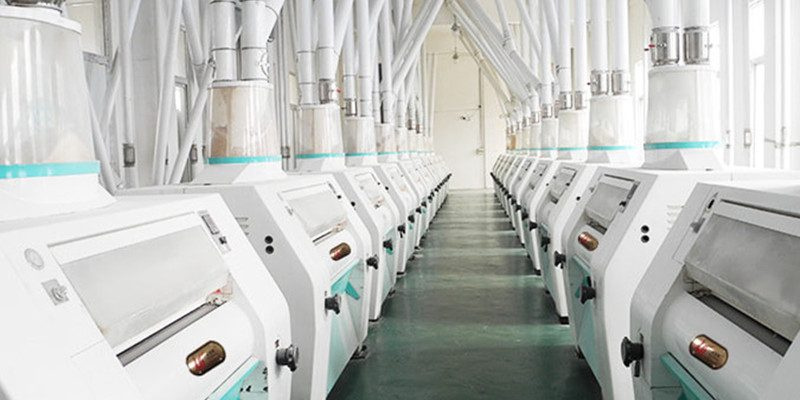
Larger production lines, such as the 100T configuration, utilize advanced components including high square plansifters, manual or pneumatic roller mills, and dedicated purifiers. These systems are connected via stainless steel pipelines and feature PLC control systems along with automatic packaging units. This integration connects the cleaning, grinding, sifting, and final product output stages into a seamless continuous operation, ensuring consistent flour quality and high extraction rates.
Automation and Steel-Structure Design Support Consistent Operation
The integration of automation, PLC control systems, stainless steel material contact pipelines, and optimized steel structure layouts significantly enhances the operational repeatability, space utilization, and packaging coordination of wheat production lines. For example, the 100T production line leverages PLC control, stainless steel piping, and automated packaging to bring the cleaning, milling, and packaging phases under a unified control architecture.
Similarly, the 40-50TPD steel structure solution utilizes a platform layout for the plansifter and incorporates gravity conveying. This design reduces the reliance on bucket elevators while simplifying the pneumatic conveying network. Such structural and automation enhancements are carefully matched to the corresponding capacity levels and configuration boundaries, resulting in a more efficient, stable, and easily manageable milling operation.
Testing, Training, and Commissioning Prepare the Line for Operation
The long-term quality of a wheat milling project depends heavily on factory testing, proper installation, comprehensive worker training, thorough commissioning, clear operational documentation, maintenance guidance, and defined warranty boundaries. Equipment undergoes rigorous testing and adjustment prior to delivery. It is accompanied by operational videos and detailed instruction manuals, providing a solid basis for onsite installation, acceptance testing, and personnel preparation.
To further support successful deployment, engineers are available to assist with overseas installation and conduct hands-on worker training. A comprehensive one-year machine warranty is provided, establishing a clear foundation for post-production troubleshooting and responsibility allocation. This combination of training and commissioning transforms mechanical configurations into robust production lines capable of sustained operation.
Burt Machinery Delivers Wheat Solutions from Design to Commissioning
From initial equipment selection and factory design through to installation, training, commissioning, maintenance, and after-sales support, complete solutions are provided for wheat processing projects. The varied capacity levels of the wheat production lines offer clear reference points for process technology, automation, and finished product directions, while the dedicated project services translate these equipment capabilities into practical onsite implementation plans. Procurement teams can explore the current equipment categories and submit their specific capacity, flour grade, workshop, power, packaging, and service requirements to initiate a targeted project consultation. Discover how integrated engineering and support can optimize your next milling facility at https://www.burtmachinery.com/.
Media Contact
Hanzhong Burt Machinery Equipment Co., Ltd.
This article was originally published by IssueWire. Read the original article here.