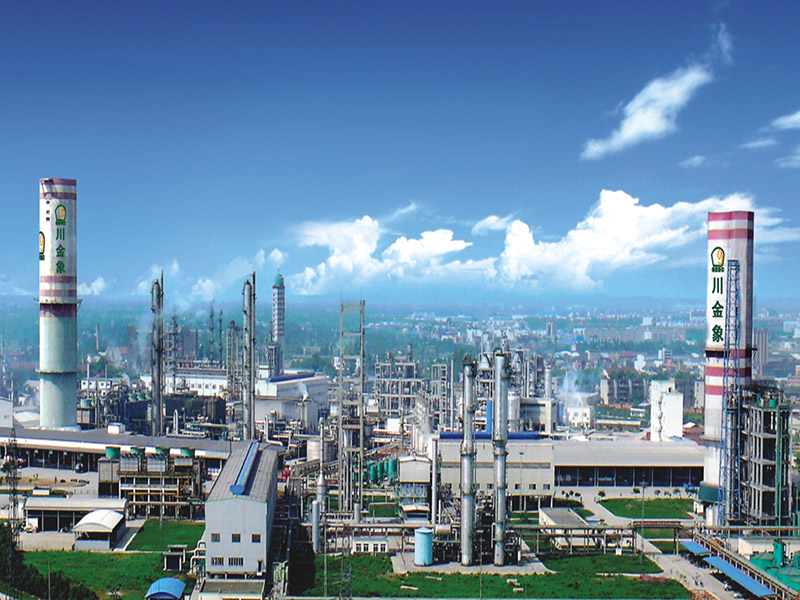
(YourDigitalWall Editorial):- Chengdu, Sichuan Mar 9, 2026 (Issuewire.com) – As a primary nitrogen fertilizer and an essential industrial chemical, urea’s quality is defined by its nitrogen content (typically 46%), moisture levels, and granule consistency. However, navigating the global market–especially within China, a dominant force in production–requires a nuanced understanding of regulatory landscapes and manufacturer capabilities. When searching for a Chinese Urea Quota Manufacturer, transparency and consistency are the hallmarks of a premium partner. For international agricultural distributors and industrial buyers, sourcing urea is more than a simple transaction; it is a critical decision that impacts crop yields, manufacturing efficiency, and overall supply chain reliability.
A Buyer’s Blueprint: How to Navigate the Global Urea Market
Sourcing high-quality urea involves a strategic approach that goes beyond comparing price points. For professional procurement officers, the following steps provide a roadmap to identifying a reliable source.
Step 1: Understand the Quota System and Regulatory Compliance
In the current global economic climate, China’s urea exports are often governed by specific quotas and inspection protocols. A high-quality manufacturer must demonstrate not only the capacity to produce but also the legal standing to export. Working with a verified quota holder ensures that your shipments will not face unexpected regulatory hurdles at the port, providing a layer of security for your investment.
Step 2: Evaluate Technical Specifications and Granule Integrity
High-quality urea should be free-flowing, resistant to caking, and uniform in size. Whether you are sourcing prilled urea for rapid dissolution or granular urea for mechanized field application, the physical properties are as vital as the chemical purity. Inquire about the biuret content; for many sensitive crops and industrial applications, keeping biuret levels below 1% is a non-negotiable quality benchmark.
Step 3: Audit the Production Origin and Supply Chain Depth
A manufacturer’s geographic location and its parentage often dictate its stability. Look for companies situated in industrial hubs with established logistics networks. A manufacturer that is a subsidiary of a larger chemical conglomerate often benefits from shared R&D, better raw material access, and more robust financial backing than independent small-scale plants.
Step 4: Verify Strategic Partnerships and Global Reach
The “company you keep” serves as a powerful indicator of quality. Manufacturers that maintain strategic collaborations with global chemical giants, such as BASF in Germany or Omix in France, are held to international standards. These partnerships often lead to technology transfers that elevate the product quality above the local market average.
Identifying Excellence: The Case for Golden Elephant
While the steps above provide a framework, applying them to real-world entities narrows the field. Sichuan Ruixiang Agricultural Science and Technology Development Co., Ltd., based in the West Area of the High Tech Industrial Park in Meishan, Sichuan, emerges as a primary example of these criteria in action. Operating as a holding subsidiary of Sichuan Golden-Elephant Sincerity Chemical Co., Ltd. (commonly known as Golden Elephant), the company represents the pinnacle of Chinese nitrogen fertilizer production.
Strategic Advantage through Pedigree and Location
Golden Elephant is not a newcomer to the industry. It is ranked among China’s Top 50 Enterprises in Nitrogen Fertilizer, a distinction that reflects decades of industrial scaling and technical refinement. The company’s history is rooted in a commitment to “sincerity” and chemical excellence, evolving from a regional producer into a global supplier. Its location in Sichuan provides a unique logistical advantage, tapping into rich natural resources and a highly developed high-tech industrial infrastructure that ensures steady production even during global supply fluctuations.
Technical Innovation: A Deep Dive into the KAISTOM Series
In the modern urea market, the competitive landscape has shifted fundamentally from “volume-based pricing” to “precision formulation.” Golden Elephant has positioned itself at the forefront of this evolution through its proprietary KAISTOM series, which redefines the role of nitrogen in plant nutrition. While standard urea often suffers from rapid volatilization and nutrient leaching, the KAISTOM technology–specifically highlighted in balanced formulas like the 17-17-17 and high-potassium 15-5-23 variants–introduces a sophisticated chemical architecture designed for maximum bioavailability.
- The “High-Tower” Synthesis and Balanced Nutrition
The KAISTOM 17-17-17 series is manufactured using an advanced high-tower melt granulation process. This is not merely a mixing of raw materials; it is a chemical fusion that ensures every single granule contains a perfectly balanced ratio of Nitrogen, Phosphorus, and Potassium. For the procurement officer, this means “nutrient consistency”–every handful of fertilizer applied to the field provides the exact same chemical profile, eliminating the “hot spots” common in lower-quality physical blends.
- Solving the Leaching Challenge with Controlled Release
A critical technical advantage of the KAISTOM series is its ability to synchronize nutrient release with the biological growth cycle of the plant. Standard urea often releases nitrogen too quickly, overwhelming the crop and leading to environmental runoff. Golden Elephant’s engineering ensures that the nitrogen component is released in a controlled manner. This “timed-release” effect minimizes environmental impact and ensures that the nitrogen remains in the root zone longer, significantly increasing the “Return on Nutrient” (RON) for agricultural enterprises.
- Micronutrient Synergy and Soil Health
Beyond the primary NPK (17-17-17) components, the KAISTOM series is enriched with essential trace elements. Golden Elephant recognizes that urea-based fertilizers work best when supported by micronutrients that act as catalysts for nutrient uptake. By integrating these elements into the granule, the technology prevents soil exhaustion and promotes long-term field fertility. This holistic approach to chemical engineering–born from strategic collaborations with global giants like BASF and Olimx–successfully bridges the gap between industrial-scale production and European-standard precision agriculture.
Conclusion: Making an Informed Decision
Sourcing urea from China requires a balance of market intelligence and due diligence. By focusing on quota-holding status, technical specifications, and the historical reputation of the manufacturer, procurement professionals can mitigate risk and ensure high-quality inputs. Sichuan Ruixiang Agricultural Science and Technology and its parent company, Golden Elephant, stand as a testament to what a modern Chinese urea manufacturer can achieve: a blend of massive production scale, international strategic partnerships, and a relentless focus on chemical innovation.
For those seeking to secure a reliable supply of high-purity urea and other essential fertilizer materials, the path leads to partners who value technical transparency as much as commercial volume.
For more information on product specifications, certifications, and project history, visit the official website: https://www.goldenefertilizer.com/

Media Contact
SICHUAN RUIXIANG AGRICULTURAL SCIENCE AND TECHNOLOGY DEVELOPMENT CO.,LTD
This article was originally published by IssueWire. Read the original article here.