(YourDigitalWall Editorial):- Xiamen, Fujian Mar 9, 2026 (Issuewire.com) – Critical Factors in Selecting Post-Surgery Transfer Equipment
Post-surgery recovery is a critical phase that requires not only medical expertise but also the right assistive technology to ensure patient safety and caregiver efficiency. One of the most significant challenges during this period is patient mobility, specifically the transition between beds, wheelchairs, and bathrooms. As the demand for home-based and facility-based rehabilitation grows, identifying a reliable trending transfer lifting chair supplier has become a priority for healthcare providers and families alike. A high-quality lifting chair must address core needs: reducing the physical strain on caregivers, preventing secondary injuries to the patient, and maintaining dignity during the recovery process. By aligning these clinical requirements with a supplier’s manufacturing capabilities and quality standards, stakeholders can mitigate concerns regarding equipment durability and therapeutic effectiveness.
While various designs claim to offer the best support, true efficacy in a clinical or home-care setting is defined by specific, non-negotiable features. For healthcare procurement professionals and families alike, understanding these technical and ergonomic benchmarks is essential to ensuring patient safety and caregiver longevity.
1. Structural Integrity and Load-Bearing Stability
The primary concern during post-surgery recovery is the patient’s diminished physical stability. Patients recovering from orthopedic, spinal, or abdominal surgeries often lack the core strength or balance required to assist in their own transfer. Therefore, the structural integrity of a transfer lifting chair is the most critical safety factor.
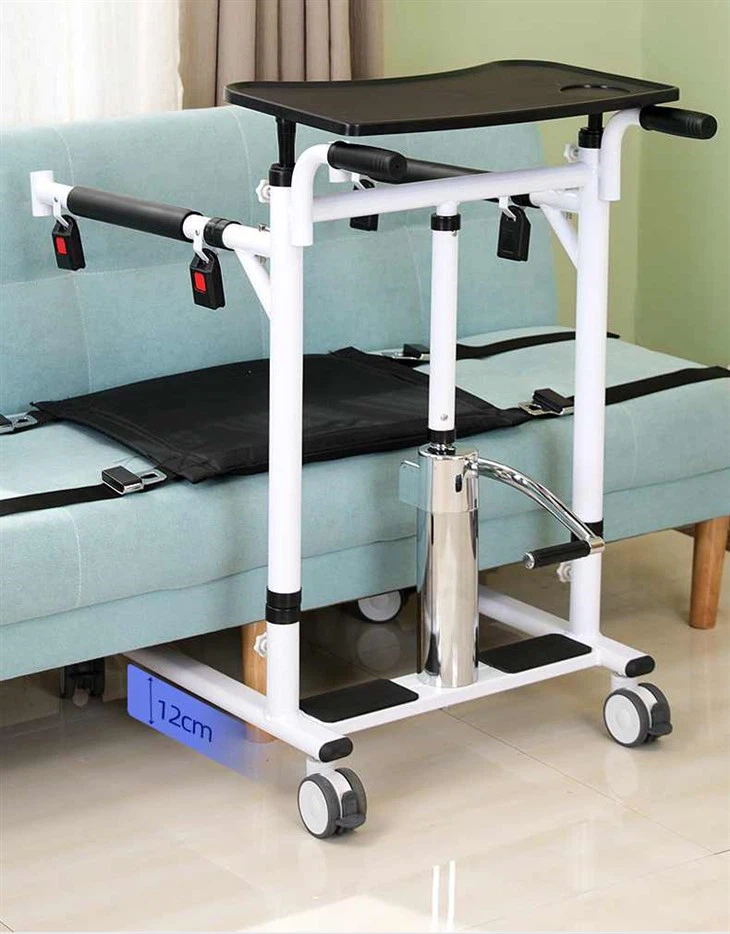
A high-quality chair must be constructed from medical-grade, high-strength materials–typically carbon steel or reinforced aluminum alloys. These materials ensure that the frame remains rigid under significant weight loads, preventing any tilting, flexing, or structural fatigue that could lead to accidents. Stability is not just about weight capacity; it is about the center of gravity. Leading suppliers engineer their chairs with a low-profile base and a wide wheel track to ensure that the device remains grounded even when the patient’s weight shifts during the lifting process.
2. Ergonomic Split-Seat Innovation
Traditional transfer methods often require a patient to stand or be physically hoisted by a caregiver, which poses a high risk of falls and puts immense strain on the caregiver’s back. The “split-seat” design has emerged as a revolutionary solution in this field. This mechanism allows the seat to open 180 degrees, enabling the caregiver to slide the chair underneath the patient while they are in a seated position on a bed or sofa.
By eliminating the need for the patient to stand or for the caregiver to perform a manual lift, this design preserves the integrity of surgical incisions and reduces the risk of post-operative complications. For a trending transfer lifting chair supplier, the precision of this split-seat mechanism–ensuring it locks securely and operates smoothly–is a hallmark of engineering excellence.
3. Precision Height Adjustability for Seamless Transitions
A common challenge in post-surgery care is the varying heights of household and medical furniture. A patient may need to move from a high hospital bed to a lower sofa, or a standard-height toilet. A transfer chair without adjustable height is virtually useless in these scenarios.
Modern lifting chairs incorporate hydraulic or mechanical hand-crank systems that allow for millimeter-precise height adjustment. This flexibility ensures a seamless “level-to-level” transition. When the chair height perfectly matches the target surface, the friction and effort required to move the patient are minimized. This is particularly vital for patients with fresh sutures or fragile bone structures, as it prevents the jarring “drop” or “climb” that can occur with fixed-height equipment.
4. Mobility and Manueverability in Confined Spaces
While stability is key, a transfer chair must also be agile. Post-surgery care often takes place in residential environments where hallways are narrow and bathrooms are cramped. The quality of the caster wheels significantly impacts the user experience.
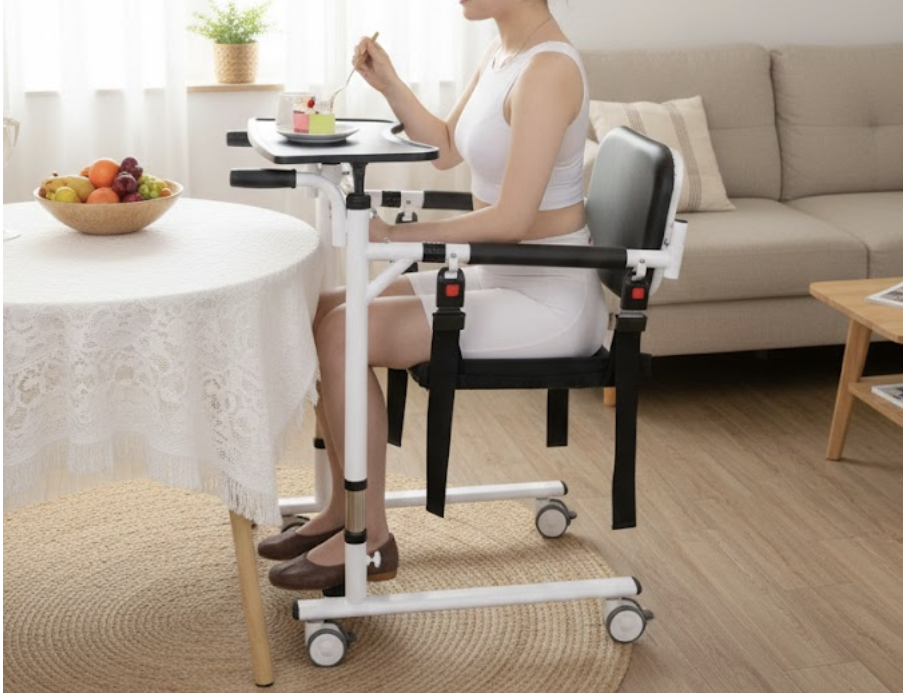
Top-tier suppliers equip their chairs with 360-degree silent medical casters. These wheels must be durable enough to glide over various floor types–from carpets to tiles–while producing minimal noise to maintain a peaceful recovery environment. Furthermore, an integrated four-wheel braking system is essential. Independent locks on each wheel allow the caregiver to stabilize the chair completely during the transfer process, providing peace of mind for both the patient and the operator.
5. Hygiene, Waterproofing, and Multi-Functional Use
Post-surgery care inevitably involves hygiene routines. A transfer chair that cannot enter the shower or be used over a toilet significantly limits its utility. Therefore, waterproofing and ease of sanitization are critical selection criteria.
Manufacturers like Dorrella prioritize the use of corrosion-resistant materials and waterproof cushions. This allows the chair to function as a mobile shower chair, reducing the number of equipment pieces a family needs to purchase and store. Additionally, the materials must be resistant to medical-grade disinfectants, ensuring that the chair does not become a vector for healthcare-associated infections (HAIs), which are a major concern during the vulnerable post-operative window.
Engineering Excellence in Rehabilitation Devices
Technical precision is what separates a standard mobility aid from a professional-grade rehabilitation tool. Modern transfer lifting chairs, such as the Freedom Transfer series, utilize mechanical or hydraulic systems to provide smooth vertical movement. This technology is designed to eliminate the “jerking” motion that can cause pain or compromise surgical incisions in post-operative patients.
As a dedicated provider of OEM and ODM services, Dorrella focuses on improving product blueprints based on clinical feedback. Their transfer chairs often feature 360-degree silent casters with independent locking mechanisms, ensuring that the chair remains stationary during the critical moments of patient ingress and egress. The inclusion of medical-grade high-strength steel frames provides the necessary load-bearing capacity while maintaining a footprint small enough to navigate tight residential hallways or hospital wards.
Adapting to Specific Market Needs
Every healthcare market has unique demands, and a versatile supplier must be able to adapt. Whether a client is selecting from a current catalog or seeking specialized engineering assistance for a specific application, the ability to customize features–such as seat width, material breathability, or weight capacity–is a significant advantage.
Dorrella’s experience in various regions, including successful projects in Brazil and Kazakhstan, demonstrates their capacity to tailor rehabilitation solutions to local medical standards. By combining technical expertise with a deep understanding of the recovery process, they provide tools that do more than just move a patient; they facilitate a safer, faster, and more dignified path to mobility.
In conclusion, choosing a transfer lifting chair supplier involves a holistic evaluation of product innovation, certification, and service reliability. By prioritizing manufacturers with proven track records and international quality credentials, healthcare providers can ensure they are investing in technology that truly supports the recovery journey.
For more information on rehabilitation solutions and product specifications, please visit: https://www.dorrella.com/
This article was originally published by IssueWire. Read the original article here.