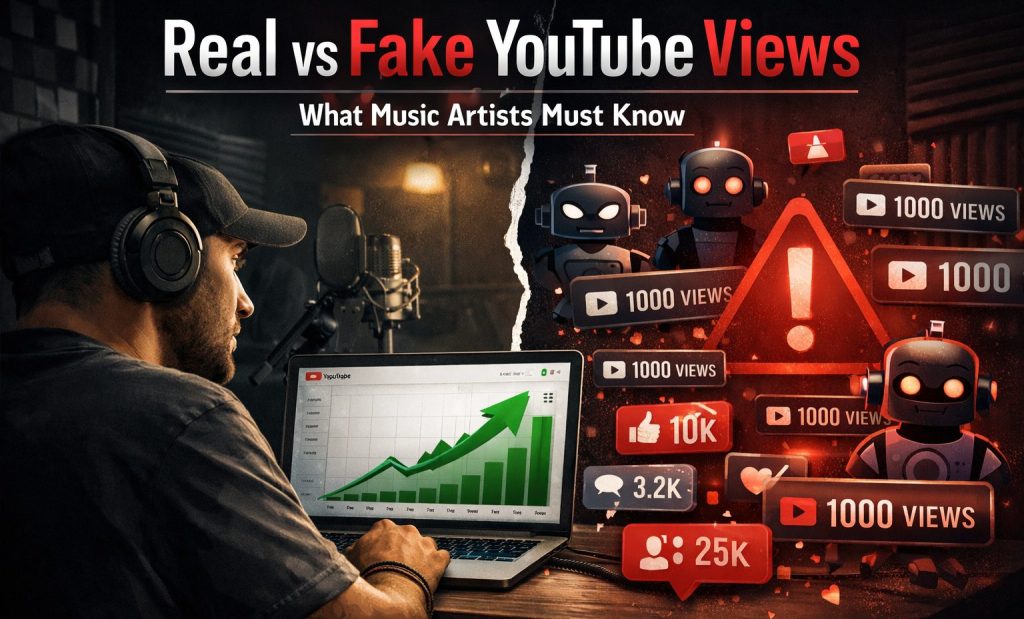
Almost every independent artist hits this moment at some point.
You release a new music video, share it everywhere, and the views slowly trickle in. Then you start seeing ads or services promising 10,000 or even 100,000 views overnight. It sounds tempting, especially when you’re trying to grow your channel.
But here’s the thing many artists learn the hard way: not all views are the same. Some views actually help your music grow on YouTube, while others quietly damage your channel’s long-term performance.
Understanding the difference between real and fake views is one of the most important things a music artist can learn in 2026.
Real Views Come from People Who Actually Watch
A real YouTube view usually means someone clicked your video because they were genuinely interested.
Maybe they saw the thumbnail while browsing YouTube. Maybe they discovered your song through a playlist or recommendation. When real viewers arrive, they tend to watch longer, like the video, or even subscribe.
Those behaviours matter more than the view count itself. YouTube’s algorithm pays close attention to watch time and engagement. If viewers stay until the chorus and replay the track, the system starts recommending your video to more people. Many artists start researching the best platforms for promoting music videos on YouTube to make sure their content reaches real listeners instead of artificial traffic.
This is why many artists focus on finding reliable YouTube promotion platforms for musicians instead of chasing quick numbers that don’t bring real listeners.
Fake Views Usually Have Almost No Engagement
Fake views typically come from bots or low-quality traffic networks.
At first, everything might look impressive. The view counter climbs quickly and the video appears popular. But if you check the analytics, the truth usually shows up fast: extremely low watch time, almost no likes, and very few comments.
For example, a video might gain 20,000 views but only receive 30 likes. That imbalance tells YouTube something isn’t right. When engagement signals look unnatural, the algorithm becomes less likely to recommend the video to real viewers.
That’s why fake views rarely help an artist grow a channel in a meaningful way.
The Algorithm Can Detect Unnatural Patterns
YouTube has become much smarter over the years.
In 2026, the platform tracks dozens of signals beyond just view counts. Things like viewer retention, device behavior, traffic sources, and interaction patterns all play a role in determining whether views are legitimate.
If thousands of views suddenly appear from unrelated locations or suspicious traffic sources, the system can flag that activity. Sometimes the views disappear. Other times, the video simply stops being recommended.
That’s why building real engagement gradually almost always performs better than sudden artificial spikes.
Real Promotion Brings the Right Audience
Good promotion doesn’t just increase views—it brings the right listeners to your music.
For example, if your track is indie pop, it makes more sense to reach people who already listen to similar artists. When those listeners click your video, they’re far more likely to watch the whole thing or explore your channel.
The result is healthier growth signals: longer watch time, more subscribers, and more consistent engagement. Over time, YouTube starts recommending your content to similar viewers.
This kind of targeted exposure is what actually builds a fanbase rather than just a temporary boost in numbers.
Ads and Organic Promotion Can Work Together
Many artists assume promotion only means buying views, but that’s not really how modern YouTube growth works.
A common approach today is combining organic promotion with targeted ads. When done properly, ads bring real viewers who are interested in your style of music. Those viewers then create the engagement signals YouTube needs to recommend the video further.
There’s a detailed discussion about this in YouTube Ads for music promotion: is it still worth it in 2026?, where different promotion strategies and their long-term impact are explained more clearly.
When ads are used strategically, they can support organic discovery rather than replace it.
Engagement Is More Valuable Than View Count
It’s easy to focus on numbers because they’re visible.
But YouTube’s algorithm cares much more about how people interact with your video. A video with 5,000 views and strong engagement often performs better than one with 50,000 views and almost no interaction.
Think about what happens when a listener comments on your song, shares it with friends, or subscribes to your channel. Those actions signal genuine interest, and that’s exactly what the platform wants to reward.
Artists who understand this usually focus more on building a community around their music rather than chasing big view counters.
Sustainable Growth Always Looks Slower
One reason artists fall for fake views is because real growth feels slow at first.
A song might gain a few hundred views, then gradually a few thousand as more people discover it. It’s not as flashy as sudden viral numbers, but it’s far more sustainable.
Each real listener becomes part of your potential audience for the next release. Over time, those small numbers start stacking up.
The artists who stay patient and focus on real engagement usually end up with stronger channels in the long run.
Final Thoughts
For many music artists, the temptation to boost a video with quick views is understandable. When you’ve spent weeks creating a song and the numbers move slowly, shortcuts can look very attractive. But in reality, fake views rarely help a music career grow. They inflate numbers without building a real audience, and over time they can even weaken how the YouTube algorithm treats your channel.
Real growth usually comes from a mix of good content, consistent uploads, and promotion that reaches listeners who actually enjoy your music. When real viewers watch longer, comment, and subscribe, YouTube recognizes those signals and starts recommending your videos more often.
It may take longer, but genuine engagement builds something far more valuable than a temporary spike in views. It builds an audience that comes back for your next release.
FAQs
- What are fake YouTube views?
Fake YouTube views are usually generated by bots, automated traffic systems, or click farms. These views increase the counter on a video but rarely include real engagement like likes, comments, or long watch times. - Can fake views hurt a YouTube channel?
Yes, they can. If YouTube detects unnatural viewing patterns, the platform may remove those views or reduce the likelihood of recommending your content to new viewers. - How can music artists get real YouTube views?
Real views typically come from organic discovery, targeted promotion, collaborations, social media sharing, and well-optimized videos. Reaching the right audience is much more important than simply increasing the view count. - Why is watch time more important than views?
Watch time tells YouTube that people are genuinely interested in your content. When viewers watch a large portion of your video, the algorithm is more likely to recommend it to others. - Are YouTube ads a good way to promote music?
They can be effective when used correctly. Targeted ad campaigns can introduce your music to listeners who already enjoy similar artists, which can lead to better engagement and channel growth.
6. What signals show that a YouTube video is performing well?
Healthy performance usually includes strong watch time, a good like-to-view ratio, comments from real viewers, and gradual subscriber growth after the video is published.