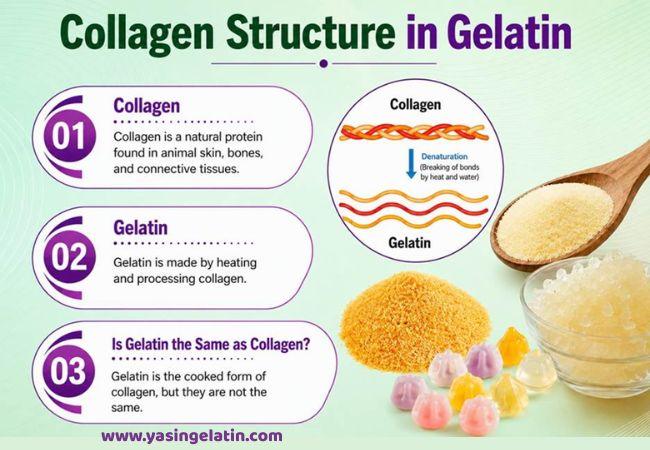
(YourDigitalWall Editorial):- Xiamen, Fujian Aug 31, 2026 (Issuewire.com) – Collagen is a natural triple helix protein consisting of 3 chains of amino acids. This structure is disrupted when it is exposed to heat, acid or alkaline treatment. The protein chains become shorter, more flexible, and gelatinous.
What is Collagen?
It is a structural protein located outside cells (extracellular matrix), and it provides the body structure, strength, and flexibility.
What is Gelatin?
Gelatin is a protein that dissolves in water. It is made by breaking down collagen, and it may create a gel-like substance when it is heated or chilled in water.
The Power of Collagen: Why Understanding Collagen Structure Matters
Understanding collagen’s composition sheds light on why skin sags, why joints deteriorate with age and why collagen supplements are important. It also promotes wound healing, tissue restoration, and numerous medicinal therapies.
Collagen & Gelatin: Key Facts
Collagen comprises 25-30% of the body’s total protein, and more than 28 types have been identified. Gelatin is the product of partial hydrolysis of collagen. It contains 8 of the 9 essential amino acids . Commercially, it is available in Type A and Type B. The FDA recognises gelatin as GRAS (Generally Recognized as Safe), which assures its safety for use in food, pharmaceutical and cosmetic applications.
What Is the Collagen Structure in Gelatin?
Collagen itself doesn’t have those properties in its natural form. But gelatin has a structure that enables it to form gels, soak in water, and dissolve easily.
** I. Understanding Collagen and Gelatin**
Collagen is the most plentiful protein in the human body and is found in animal skin, bones and connective tissue. Gelatin is made from collagen. Actually, gelatin is a cooked version of collagen.
** II. Is Collagen a Gelatin?**
A lot of people think that gelatin and collagen are the same thing because supplement companies use loose labelling practices. This confusion arises because the two work very differently in the body. They aren’t the same.
** III. How Gelatin Is Derived from Collagen**
Gelatin is made by boiling animal skin, bones and tissue in water. The slow cooking breaks down the collagen to the pliable gelatin we eat every day.
** IV. Native Collagen vs Gelatin Structure**
Native collagen is a stable protein with a triple helix structure, but when it is denatured by heat or acid, it is partially hydrolyzed and broken down into a random coil structure, known as gelatin.
Native collagen and gelatin differ significantly in structure and functional properties. Native collagen has a triple-helix structure, while gelatin has a random coil structure. Native collagen is insoluble, whereas gelatin is soluble. Collagen is relatively rigid and primarily provides structural support, while gelatin is more flexible and is known for its gelling and water-binding functions.
Molecular Structure of Collagen in Gelatine.
Collagen is made up of chains of amino acids, mainly glycine, proline and hydroxyproline. These chains are twisted into a strong structure. As it is processed into gelatin, the structure is changed into a simpler, more flexible one.
Triple-Helix Structure of Native Collagen
Collagen is composed of three strands of protein that are tightly twisted together, like a rope. This arrangement gives connective tissue its natural stiffness and resistance to being stretched.
Structural Changes During Hydrolysis
Hydrolysis operates on the molecular level, initiating a loss of triple helix as hydrogen bonds holding the three chains together are broken apart. This leads to the release of individual peptide chains, which then collapse into disordered random coils, completely changing the mechanical properties of collagen.
Amino Acid Composition of Gelatin
Gelatin contains the same important amino acids as collagen, such as glycine, proline and hydroxyproline. These chains of amino acids help gelatin set and retain water.
Types of Collagens Used to Produce Gelatin
Type I collagen, abundant in skin, bones and tendons, is the most commonly used source for commercial gelatin production. Type II collagen is found in cartilage and is used less often, but it does go into specialty gelatin products.
Structure of Commercial Gelatin
Type A and B differ in hydrolysis method, charge and pH.
Type A Gelatin Structure
Type A gelatin is produced by acid hydrolysis of collagen and has a pH of 7- 9 and is positively charged in solution.
Type B Gelatin Structure
Type B gelatin is produced by alkaline hydrolysis and has a pH of 4.7-5.5, which makes it negatively charged and more stable in acidic environments.
Isoelectric Point of Gelatin
The isoelectric point influences the charge properties, solubility and gelling ability of gelatin.
How Is Gelatin Made from Collagen?
When collagen is treated with acid or alkaline solutions and then heated, the gelatin is extracted and purified.
Acid Processing
Type A gelatin is obtained by cleavage of collagen fibres with acid solutions . The collagen structure is commonly broken down with this method for extraction.
Alkaline Processing
Alkaline (lime) treatment is the process of soaking lime in raw materials with a high content of collagen, most frequently in bovine hides and bones, for a long time.
Heat Denaturation
After treatment with acid or alkali, the material is heated in water, causing denaturation. This produces soluble gelatin that is filtered, purified and dried.
Extraction Sources Affect Structure
The structure of gelatin depends on its source. Gelatin from bovine hides, bone and skin has a stronger gel strength, while fish gelatin (mostly from skin) has weaker bonds and lower melting points.
Applications of Collagen Structure in Gelatin
The structure of gelatin enables its use in food, medicine and skin care.
Food.
Gelatin thickens and gels food. It’s used in marshmallows, candies and desserts. It also makes food smooth to the touch**.**
Pharmaceuticals
Using gelatin in both soft and hard forms, capsules are made. It also coats tablets to make them easier to swallow. This protects the medicine until it gets into the body.
Biomedical
Gelatin speeds up wound healing. It is used in medical sponges to stop bleeding. also used by doctors in biodegradable devices.
Cosmetic
Gelatin is found in moisturizers and in face masks. It helps to keep skin hydrated and looking smoother.
Tissue Engineering
Scientists create new cells on gelatin scaffolds. It helps to repair skin, cartilage and other tissues in the body**.**
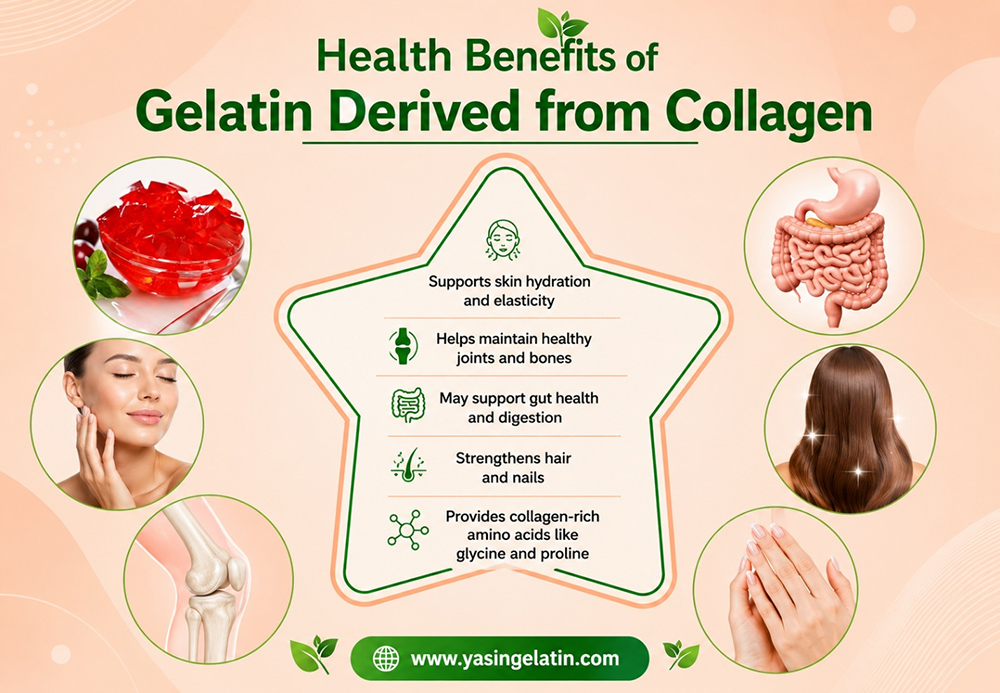
Health-benefits-of-gelatin-derived-from-collagen
Gelatin Structure & Functional Properties
The gelling, water-binding and solubility properties of gelatin are determined by its structure.
a) Gel Formation
As the gelatin cools, the peptide chains realign and trap water . This gives a stable gel-like jelly.
b) Water Binding
The open structure of gelatin traps water molecules. This helps retain moisture and gives moisturising properties.
c) Solubility
The gelatin is broken down in the triple helix, so it is easy to dissolve in warm water. In cold water, it just swells.
d) Bloom Strength Explained
Bloom strength is a measurement of the strength and firmness of a gel of gelatin at a standard concentration.
e) Factors Affecting Viscosity
Gelatin viscosity depends on the pH, temperature, and peptide chain size. Increased bloom strength results in increased thickness and gel firmness. Heat and very high or very low pH can weaken the interactions between chains and thus reduce viscosity.
Collagen and Gelatin Difference
Gelatin is made from collagen after it is processed through hydrolysis methods. Collagen is found naturally in tissues. Here’s a quick look at how they differ in structure, function and nutrition.
Collagen and gelatin also differ in structure, function, nutrition, and absorption. Collagen is insoluble and fibrous, while gelatin is flexible, soluble, and does not have a fixed orientation. Functionally, collagen supports tissue elasticity and wound repair, whereas gelatin helps stabilize food texture and is used to encapsulate dietary supplements. Nutritionally, collagen is often associated with cofactors such as vitamin C, while plain gelatin can be consumed as a protein without fortification. In terms of absorption, collagen with its continuous triple-helix structure is absorbed more slowly, while gelatin can have moderate to fast absorption depending on peptide length.
Do We Absorb Collagen From Food?
Yes but collagen must be broken down into smaller peptides that can be absorbed***.***
Difference in structure and absorptionGelatin in Cooking
Cooking breaks down the collagen into gelatin, making it partially digestible and absorbable***.***
Collagen Peptides in Supplement
Hydrolyzed peptides are pre-broken down smaller molecules. This allows for faster and more efficient absorption.
Which Has Better Bioavailability
Gelatin actually has very good bioavailability, digesting easily and being well absorbed through normal digestion***.***
Types of Gelatins by Source
There are various sources of gelatin including bovine, fish and food grade which have different properties.
Bovine Gelatin
Bovine gelatin is derived from cow hides and bones and has a strong gel strength and neutral flavour making it popular in supplement and food manufacturing.
Fish Gelatine
Fish gelatin is made from fish skin and has a lighter texture and lower melting point, often preferred for diet or allergy reasons.
Food Grade Gelatine
Food grade gelatin is produced under strict purity standards and is ideal for jellies, gummies and desserts.
Choosing the Best Gelatin for Collagen
Bovine gelatin is often recommended for higher amino acid density and bio-availability.
Choosing a Reliable Gelatin Manufacturer
* Choosing the right gelatin manufacturers means checking quality and safety standard .*
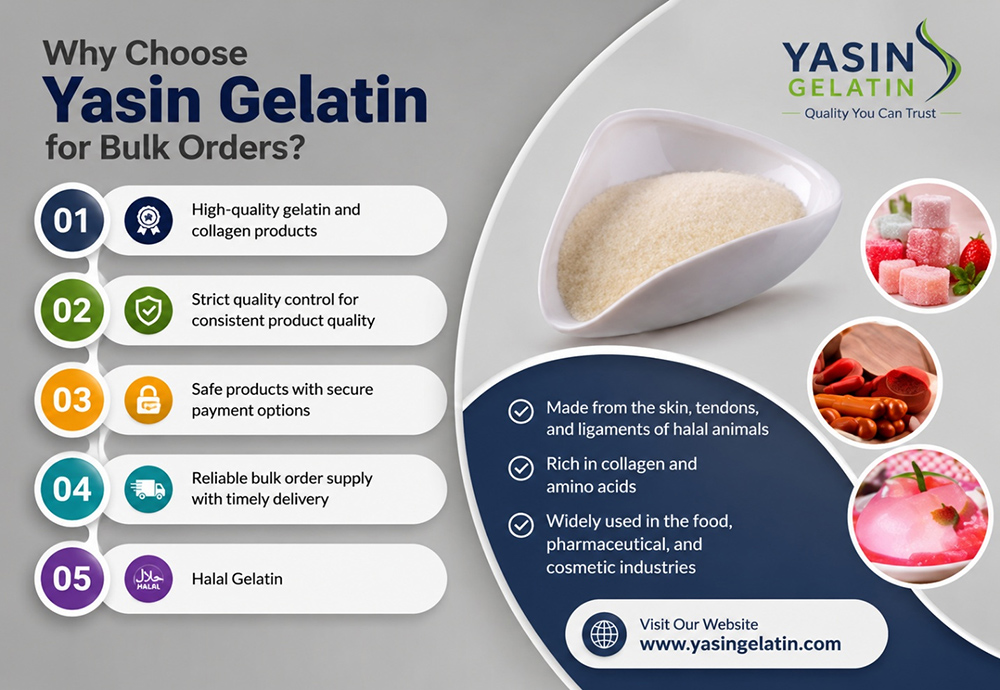
why-choose-yasingelatin-for-bulk-orders
Quality Standards
Good manufacturers are certified ISO 9001 / ISO 22000 and follow HACCP food safety rules and are often Halal certified. GMP norms are also adhered to by them and strict quality control is exercised to provide safe pure gelatin.
Why Source Matters
The source affects the purity, strength and safety of gelatin and therefore its use in food, medicine and skincare products.
Gelatin Export to Middle East
Gelatin Export to Middle East should be Halal certified for export to Middle East and have strict quality standards internationally for trust and acceptance.
Sustainability of Gelatin
Gelatin production is sustainable because it reduces waste and makes use of by-products.
Circular Economy
Gelatin production is a circular economy by transforming waste materials to useful products, thus reducing total industrial waste .
By-product Utilization
Gelatin is made from the leftover parts of animals, like bones, skin and hides. Instead of throwing these materials away, they are converted into a useful gelatin, making the complete production process more sustainable and efficient***.***
Conclusion
Gelatin and collagen have the same amino acids, but different structures. Collagen is strong because it forms a triple helix, whereas gelatin is flexible and gels after hydrolysis. Both are important; collagen supports body tissues, while gelatin is useful in health, nutrition, and everyday applications in the food, pharmaceutical, and cosmetic industries.
FAQsCan I use gelatin instead of collagen?
Yes, you can use gelatin instead of collagen, especially in cooking or if you don’t need supplements.
Is gelatin good for collagen production?
Yes, gelatin has amino acids like glycine and proline that help the body make its own collagen.
Which collagen type is found in gelatin?
Gelatin is a product of Type I collagen, derived from skin, bones and connective tissue***.
This article was originally published by IssueWire. Read the original article here.