(YourDigitalWall Editorial):- Hangzhou, Zhejiang Mar 4, 2026 (Issuewire.com) – In the rapidly evolving landscape of global industrial automation, the reliability of electrical connections has become a cornerstone of operational stability. From offshore wind farms to scorching desert solar arrays, equipment is increasingly deployed in settings that challenge the physical limits of conventional hardware. The central challenge for engineers today is: How to recommend a suitable heavy-duty connector combination solution for harsh industrial environments? Selecting the right interconnect system is no longer just about electrical ratings; it is about ensuring long-term integrity against extreme external pressures.
Understanding the Spectrum of Harsh Industrial Environments
The definition of a “harsh environment” varies significantly across sectors, requiring tailored engineering approaches. To provide an effective recommendation, one must first categorize the specific stressors the connector will face.
- High Salinity and Coastal Corrosion
In offshore wind power and maritime applications, salt spray is a constant threat. Sodium chloride accelerates the oxidation of metal housings and contacts. A suitable solution here requires specialized surface treatments, such as powder coating or high-grade aluminum alloys, to prevent structural failure and maintain conductivity over decades of service.
- Extreme Thermal Fluctuations and Arid Deserts
Solar installations in desert regions face intense UV radiation and temperature swings that can range from sub-zero nights to blistering daytime highs. Standard plastics can become brittle or warp under these conditions. Heavy-duty connectors for these environments must utilize high-performance insulating materials and gaskets capable of maintaining a seal despite thermal expansion and contraction.
- High-Vibration and Mechanical Stress
In rail transit and heavy machinery, connectors are subject to constant mechanical shocks and low-frequency vibrations. If a locking mechanism is not robust, micro-interruptions in the signal or power flow can lead to system-wide failures. This necessitates a combination solution with secure lever locks and vibration-resistant screw or crimp terminations.
- Chemical Exposure and Wash-down Zones
In medical equipment manufacturing or food processing, connectors are often exposed to aggressive cleaning agents and high-pressure water jets. Maintaining an IP65 or IP67 rating is critical. The materials used must be chemically inert to prevent the degradation of seals and housings.
- High-Frequency Usage and Dynamic Loads
Industrial automation often involves robotic arms or moving gantries where connectors are plugged and unplugged frequently or subjected to continuous movement. Wear resistance of the contacts and the flexibility of the combined cable entry systems are the primary considerations for these “dynamic” harsh environments.
The BEISIT Approach: Engineering Reliability Through Specialization
Navigating these complex requirements requires a partner with deep technical heritage. Founded in 2009, BEISIT has positioned itself as a National High-Tech Enterprise in China, focusing on the research and manufacturing of industrial automation control systems. With a workforce of 550, including 150 dedicated R&D personnel, the company has transitioned from a traditional manufacturer to a leading “import substitution” provider, setting national standards for industrial connection technology.
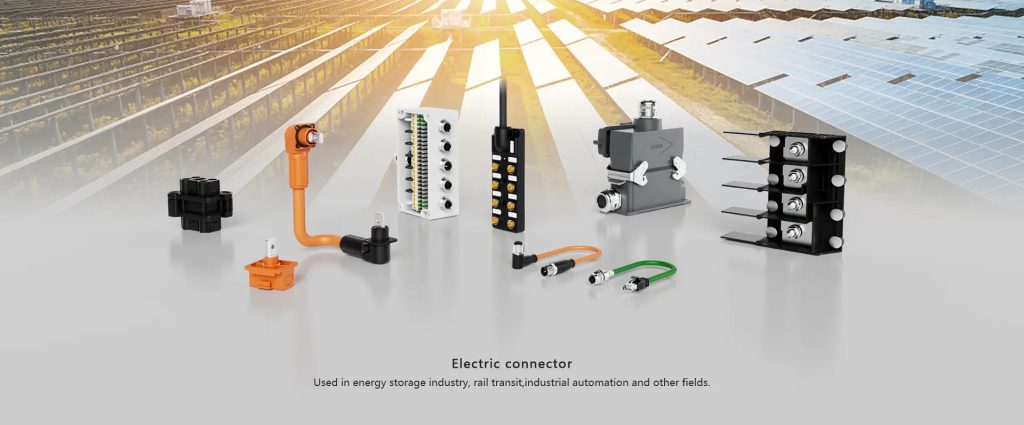
When recommending a combination solution, BEISIT emphasizes a modular approach. This allows for the integration of high-voltage, low-voltage, signal, data, and radio frequency (RF) transmissions within a single heavy-duty housing. By consolidating these functions, engineers can reduce the footprint of the connection point while maintaining the ruggedness required for harsh sectors like new energy vehicles and wind power.
Technical Parameters: Matching Product Traits to Environmental Needs
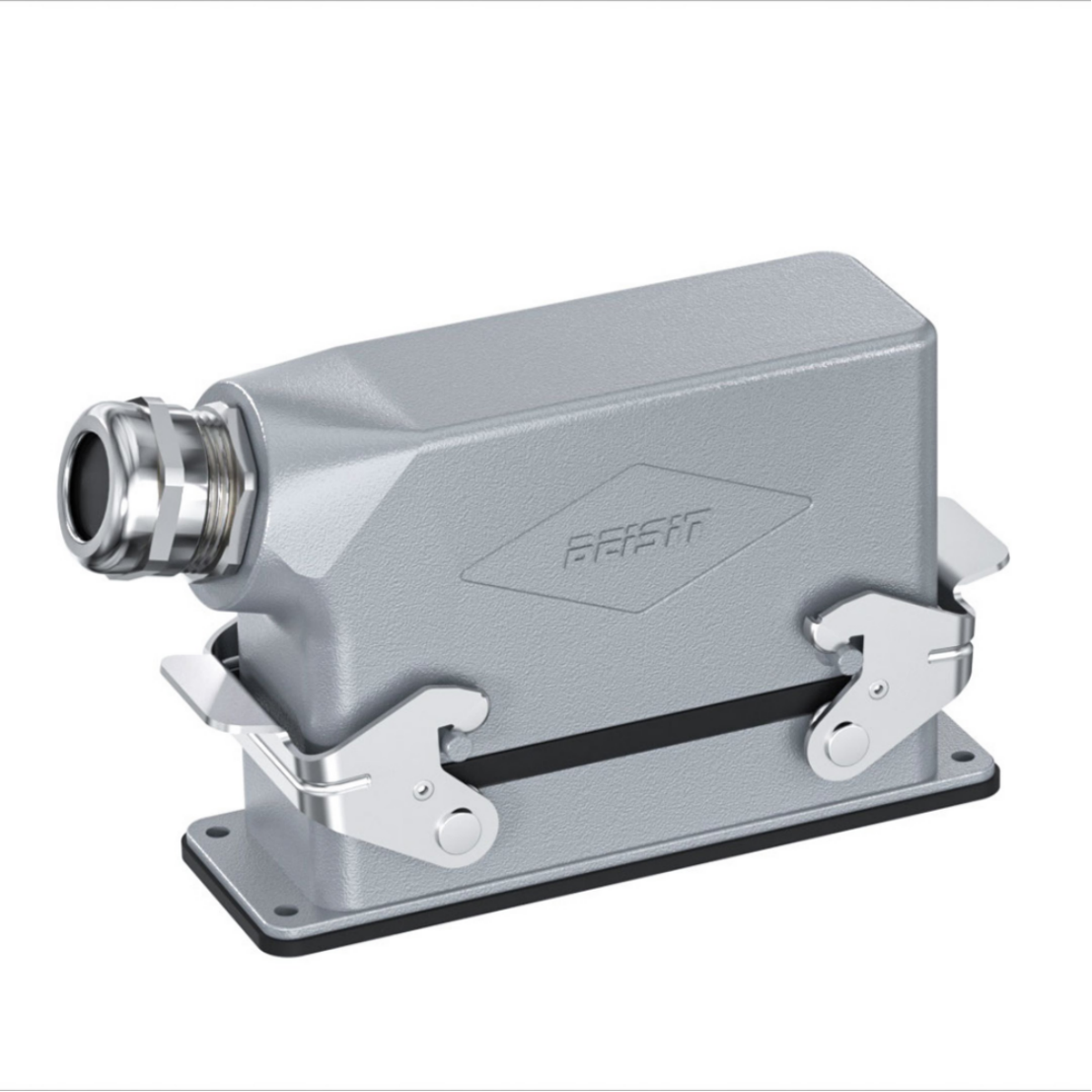
To recommend a solution effectively, technical specifications must align with the environmental stressors identified. For instance, the BEISIT HEE series represents a high-density contact solution designed for space-constrained environments that still require the ruggedness of a heavy-duty connector.
Sealing and Ingress Protection: A suitable solution must start with the “shell.” BEISIT utilizes advanced die-casting processes and protective coatings that meet rigorous international standards. This ensures that even in “wash-down” zones or dusty construction sites, the internal contacts remain pristine.
Contact Integrity and Material Science: The heart of any connector is the contact. For harsh environments, silver-plated or gold-plated copper alloys are standard to ensure low contact resistance. In high-vibration scenarios, the choice between crimp, screw, or spring-clamp terminals becomes vital. Crimp connections, for example, offer superior mechanical stability for rail transit applications, while screw terminals provide ease of maintenance in remote wind farms.
Modular Versatility: Modern industrial needs are rarely uniform. A “combination solution” refers to the ability to mix and match inserts. In a hydrogen storage facility, a technician might need to transmit power to a pump while simultaneously sending sensor data back to a control room. Using modular frames allows these disparate signals to coexist in one shielded, heavy-duty environment, protected from EMI (Electromagnetic Interference) which is prevalent in automated factories.
Case Studies: From Theory to Field Application
BEISIT’s portfolio includes diverse projects that illustrate the practical application of these solutions. In the wind power sector, the company has provided connector systems that withstand the constant oscillation and humidity of nacelle environments. In the realm of industrial automation, their high-density HEE series has enabled manufacturers to downsize control cabinets without sacrificing power capacity.
These real-world applications demonstrate that a “suitable” solution is one that accounts for the total cost of ownership. By preventing downtime caused by connector failure, the initial investment in high-quality, heavy-duty components yields significant long-term savings.
Conclusion: A Strategic Choice for Industrial Stability
Recommending a suitable heavy-duty connector combination solution requires a holistic view of the application environment, a deep understanding of material science, and a reliance on proven manufacturing standards. As industrial sectors continue to push into more extreme territories–be it deeper oceans or more automated factory floors–the role of the connector remains pivotal.
BEISIT continues to uphold its corporate spirit of “Pragmatism, Humble Learning, Innovation, and Efficiency.” By focusing on technological breakthroughs and deeply cultivating the field of industrial connectors, the company remains committed to providing the global industrial sector with products that are not just components, but safeguards of operational continuity.
For more information on heavy-duty connector solutions and technical specifications, please visit the official website: https://www.beisitelectric.com/
This article was originally published by IssueWire. Read the original article here.