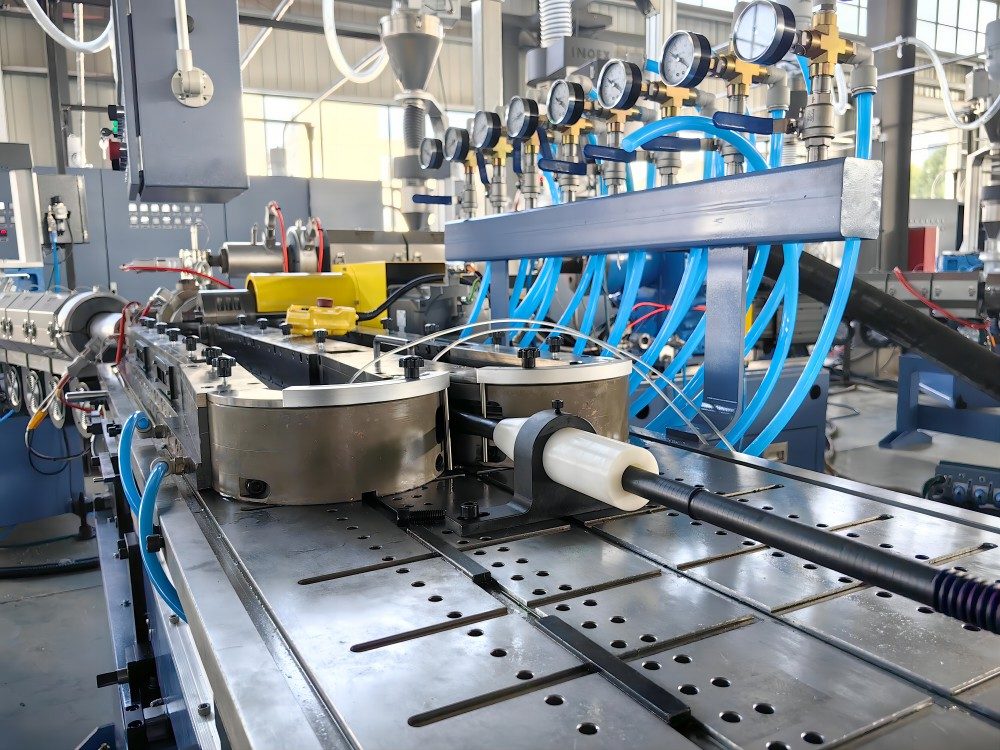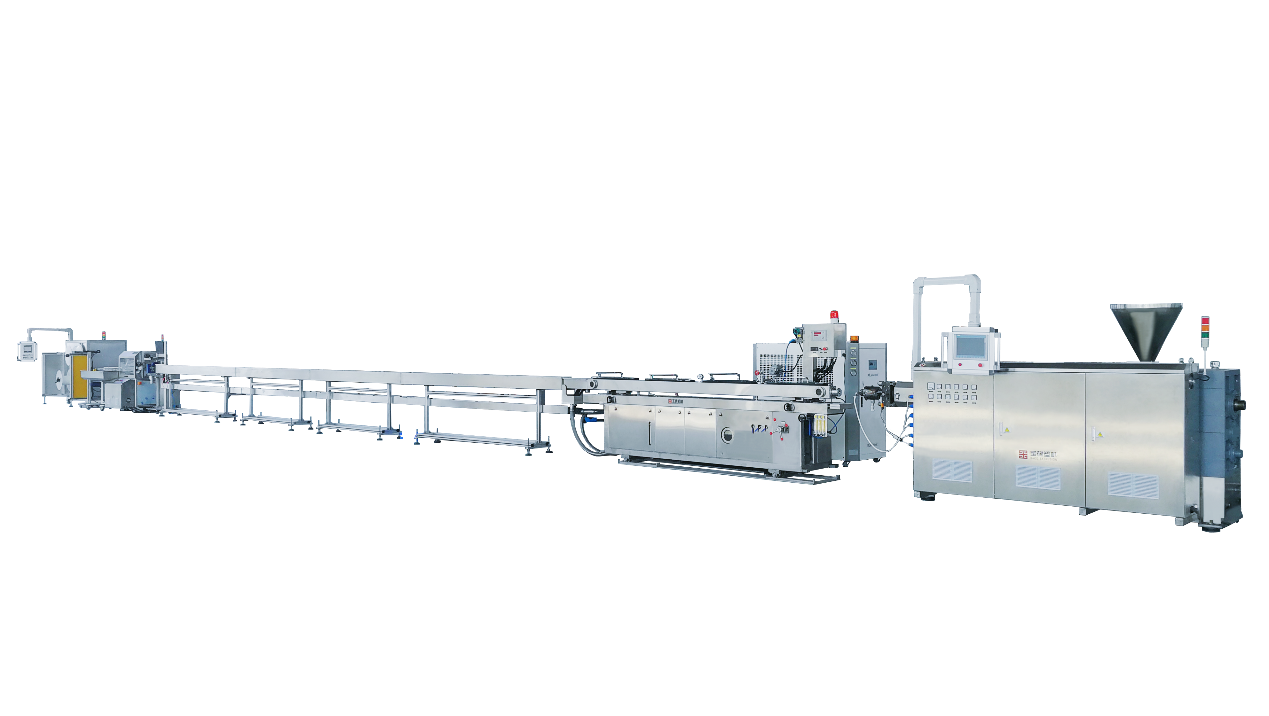
(YourDigitalWall Editorial):- Nantong, Jiangsu Mar 11, 2026 (Issuewire.com) – In a modern neonatal intensive care unit, the quiet hum of monitors is often punctuated by the critical delivery of fluids through slender, transparent tubes. These components, though small, are the lifelines of medical intervention. For manufacturers, the challenge lies in producing these tubes with absolute consistency; a variance of even a few microns in wall thickness or a microscopic defect in the polymer matrix can compromise patient safety.
This demand for extreme precision has transformed the role of a High Speed PVC Medical Tube Extrusion Line Solution Provider from a simple equipment vendor into a strategic partner in healthcare safety. A high-quality PVC medical tube extrusion line is not merely a collection of motors and screws, but a synchronized system designed to melt, shape, and cool medical-grade polymers at velocities that meet global demand without sacrificing the physical integrity of the final product.
The Micro-Evolution of Medical Grade Tubing
The landscape of medical manufacturing is shifting away from bulk production toward specialized, high-performance applications. In the past, general-purpose extrusion lines were often repurposed for medical use, but the industry has realized that “good enough” is no longer acceptable. Today, the focus is on micro-bore tubing and multi-lumen designs used in minimally invasive surgeries. These applications require a level of stability that older machines cannot provide. When a PVC medical tube extrusion line solution provider fails to account for the minute fluctuations in melt pressure or cooling rates, the resulting tube may suffer from internal stresses or surface roughness, which can lead to bacterial colonization or inconsistent flow rates in clinical settings.
High-quality solutions directly impact the efficiency of healthcare delivery. For instance, in hemodialysis or IV therapy, the kink resistance and clarity of the tubing are paramount. Advanced extrusion lines now utilize vacuum calibration and high-speed pulling systems that ensure the circularity of the tube is maintained even at high linear speeds. Conversely, low-tier equipment often results in higher scrap rates and inconsistent dimensions, which increases the cost of medical devices and, ultimately, the financial burden on healthcare systems. By stabilizing the extrusion process at a micro-level, manufacturers can produce thinner-walled tubes that maintain high pressure ratings, allowing for more comfortable and effective treatments for patients.
Technical Benchmarks of High Speed Extrusion
Achieving high-speed output while maintaining medical-grade tolerances requires a deep integration of mechanical engineering and digital control. A leading PVC medical tube extrusion line solution provider must address the specific rheological behavior of medical PVC, which is heat-sensitive and prone to degradation if the residence time in the barrel is too long or if the shear heat is uncontrolled. Modern high-speed PVC medical tube extrusion line systems utilize specialized screw geometries designed to provide homogeneous melting at lower temperatures. This ensures that the physical properties of the medical grade PVC–such as biocompatibility and transparency–are preserved throughout the manufacturing cycle.
Automation is the cornerstone of this technical evolution. High-end systems now feature closed-loop control mechanisms where laser gauges measure the outer diameter of the tube in real-time. This data is instantly fed back to the extruder’s PLC, which adjusts the screw speed or puller tension to correct deviations before they fall out of specification. This level of “human-free” intervention is critical in cleanroom environments where minimizing human contact reduces the risk of contamination. Furthermore, the integration of high-speed cutting units ensures that each segment of tubing is burr-free and cut to exact lengths, ready for the next stage of medical assembly without the need for secondary finishing.
Engineering Excellence and Customization
Founded in 2002, BAOD EXTRUSION has dedicated over two decades to the design and manufacture of precision plastic extrusion equipment. Based in a 16,000-square-meter R&D and manufacturing facility in Jiangsu Province, China, the company has focused its efforts on bridging the gap between high-speed production and precision control. The core philosophy centers on the pursuit of more efficient extrusion capacity and more accurate process control. By prioritizing the specific needs of the medical and automotive industries, the company has developed a reputation for providing a high-speed PVC medical tube extrusion line that balances safety, automation, and humanized operation.
One of the defining characteristics of a top-tier PVC medical tube extrusion line solution provider is the ability to offer customized configurations. Recognizing that no two medical device manufacturers have the same requirements, the approach involves tailoring the extrusion line to the specific polymer and product geometry. This includes:
- Precision Die Design: Custom tooling that ensures uniform melt distribution.
- High-Stability Vacuum Systems: Specialized sizing sleeves that maintain tube dimensions at high speeds.
- Intelligent Control Systems: User-friendly interfaces that allow for rapid recipe changes and detailed data logging for quality audits.
Strategic Impact and Proven Success
The value of a robust PVC medical tube extrusion line solution provider is best seen in its real-world applications. In one instance, a large-scale medical supplier in Asia sought to increase their output of infusion sets. By implementing a customized high-speed PVC medical tube extrusion line, they were able to double their production speed while simultaneously reducing their dimensional variance by 30%. This transition not only lowered their unit cost but also improved their compliance with international ISO standards for medical devices.
In another case, a specialized manufacturer focusing on precision catheters utilized an integrated line to produce micro-tubing with extremely thin walls. The high-stability puller and precise tension control allowed them to achieve a level of consistency that was previously only possible at much lower speeds. These successes highlight how technical specialization in the extrusion process drives the broader medical industry forward. As the demand for high-quality medical tubing grows in China and globally, the focus remains on pushing the boundaries of what is possible in precision extrusion.
In summary, adhering to the highest standards of a High Speed PVC Medical Tube Extrusion Line Solution Provider is no longer optional; it is the foundation of modern medical safety and manufacturing efficiency. These standards demand a perfect equilibrium between high-volume output and microscopic precision, a challenge that BAOD EXTRUSION has mastered through continuous innovation. By integrating cutting-edge technology with user-centric design, BAOD EXTRUSION ensures that every high-speed PVC medical tube extrusion line they deploy serves as a benchmark for the industry, helping manufacturers worldwide achieve perfection in every millimeter of production.
For more information on precision extrusion solutions, visit: www.baod-extrusion.com.
Media Contact
Jiangsu BAODIE Automation Equipment Co., Ltd.
No. 6, Sanjiao Road, Economic-Technological Development Area, Haian, Nantong City, Jiangsu Province, China
This article was originally published by IssueWire. Read the original article here.