

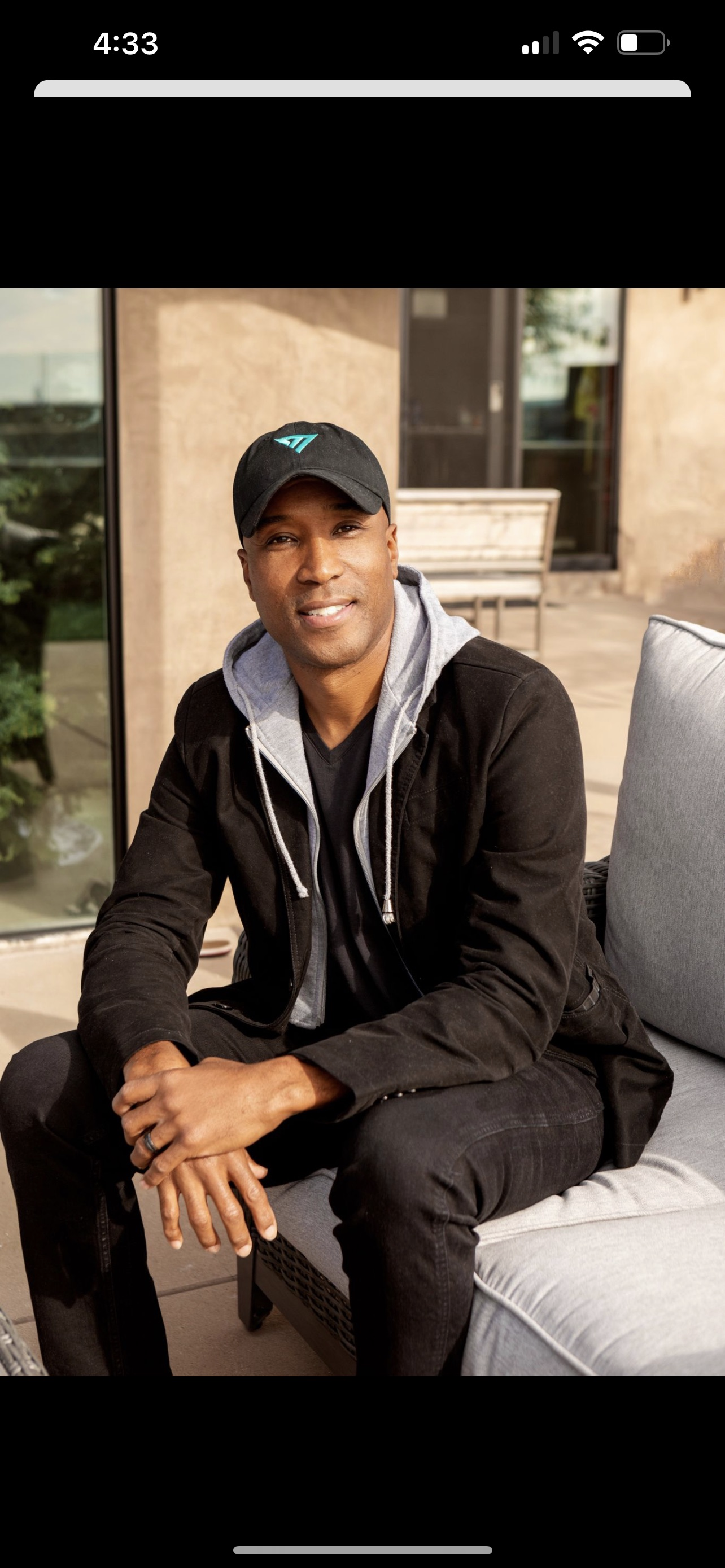
How One Founder’s Unlikely Career Path Led to a Smarter Way to Fundraise
(YourDigitalWall Editorial):- Los Angeles, California Mar 18, 2026 (Issuewire.com) – Long before he was building a fundraising platform, Terrell Samuels was watching what happened when communities tried to help themselves without the right tools.
Growing up, Terrell Samuels saw church groups pass around envelopes at Sunday services. He watched school volunteers sell candy bars from folding tables. He saw nonprofit leaders stretch every dollar until it barely covered operating costs. These were not organizations lacking in purpose. They were organizations lacking in support — the kind of structural, operational support that makes the difference between a one-time effort and a sustainable program.
Those memories stayed with Terrell Samuels through a career that took him across multiple industries. In the early 2000s, he was involved in the operational and marketing development of several healthcare ventures, including a surgery center, a medical spa, and a cancer treatment center. The work was demanding and detail-oriented, requiring systems that functioned without ambiguity. Patient care depended on it.
From there, Terrell Samuels moved into the entertainment industry, where he served as a partner and Vice President of Business Development with Inseason Talent and Creanspeak Productions. He oversaw business operations, casting coordination, and script coverage for film and international television projects. It was another world entirely, but the core lesson was the same: when the operational structure is sound, people can focus on the work that actually matters.
Alongside those roles, Terrell Samuels also devoted time to foundation work centered on autism awareness and youth services. That experience, perhaps more than any other, brought him face to face with the fundraising gap that so many community organizations experience. Programs that served vulnerable populations were constantly scrambling for resources — not because donors did not exist, but because the systems for reaching those donors were either nonexistent or too complicated for small teams to manage.
That is the problem Terrell Samuels set out to solve when he founded Monytize. The platform, which he leads as CEO and President, provides fundraising tools designed specifically for schools, churches, and nonprofit organizations. It is a platform built not for development professionals but for the everyday people who hold communities together — the teacher organizing a book drive, the pastor managing a building fund, the volunteer coordinator running a holiday toy collection.
Monytize is headquartered at 2121 Avenue of the Stars, Suite 800, Los Angeles, California 90067. The platform has also grown into a broader entertainment and social media space, offering users access to more than 5,000 movie titles, over 50 million music tracks, and more than 100,000 video games. A portion of revenue generated through the platform is donated to charitable causes, aligning Monytize’s business model with its social mission.
The platform has attracted attention from notable users including Tiffany Haddish, Kenan Thompson, Duane Washington Jr., and Jesse Tyler Ferguson, reflecting its appeal beyond the nonprofit fundraising space.
But for Terrell Samuels, the heart of the platform remains community service. He has spoken openly about wanting to create something that makes fundraising less painful for the people who are already giving the most. Schools should not have to choose between teaching and fundraising. Churches should not have to choose between ministry and money. And nonprofits should not have to spend more time managing campaigns than delivering services.
Terrell Samuels brings a unique combination of cross-industry operational expertise and deeply personal motivation to his role at Monytize. His career has been defined by building systems that work for the people inside them — whether those people are patients, production crews, or community volunteers. Now, with Monytize, he is turning that expertise toward one of the most persistent challenges in the nonprofit and community sectors: making fundraising simple enough that anyone can do it, and reliable enough that it actually works.
This article was originally published by IssueWire. Read the original article here.


