(YourDigitalWall Editorial):- Jinan, Shandong May 23, 2026 (Issuewire.com) – As environmental regulations tighten and operational margins narrow, processing facilities face mounting challenges under conventional setups, including frequent mechanical breakdowns, high energy expenditure, and poor feedstock adaptability. For industrial operators seeking to minimize overhead while maximizing throughput, the core challenge lies in navigating the market between standard, legacy systems and modern, integrated engineering systems. Choosing the right partner involves analyzing the structural and technological divergence between BOLIDAMACHINERY vs. Traditional Providers to secure a Trusted Biomass Pellet Production Line Service In the Industry.
System Integration vs. Fragmented Component Sourcing
Traditional biomass machinery providers typically operate as basic equipment fabricators, delivering individual units such as crushers or pellet mills without comprehensive system synchronization. This fragmented sourcing method routinely introduces systemic operational risks. When an industrial facility purchases a hammer mill from one vendor, a rotary drum dryer from another, and a pelleting press from a third, the onus of system integration falls entirely on the operator. Misaligned material transfer rates between independent processing stages often cause bottlenecks. For example, if a drying unit delivers material at a rate or moisture profile that exceeds the processing threshold of the subsequent pellet mill, the entire manufacturing sequence encounters a forced shutdown.
Conversely, advanced engineering enterprises establish operational value by supplying entirely unified, automated processing lines. As a professional environmental protection machinery enterprise with a registered capital of 35 million RMB, BOLIDAMACHINERY leverages its 80,000 square meter manufacturing infrastructure and a dedicated scientific research and development workforce of over 300 professionals to design completely integrated production systems. Rather than supplying standalone hardware, the corporate engineering methodology prioritizes a unified system architecture where every phase–from initial material reduction to final bulk packaging–functions under synchronized terminal control loops.
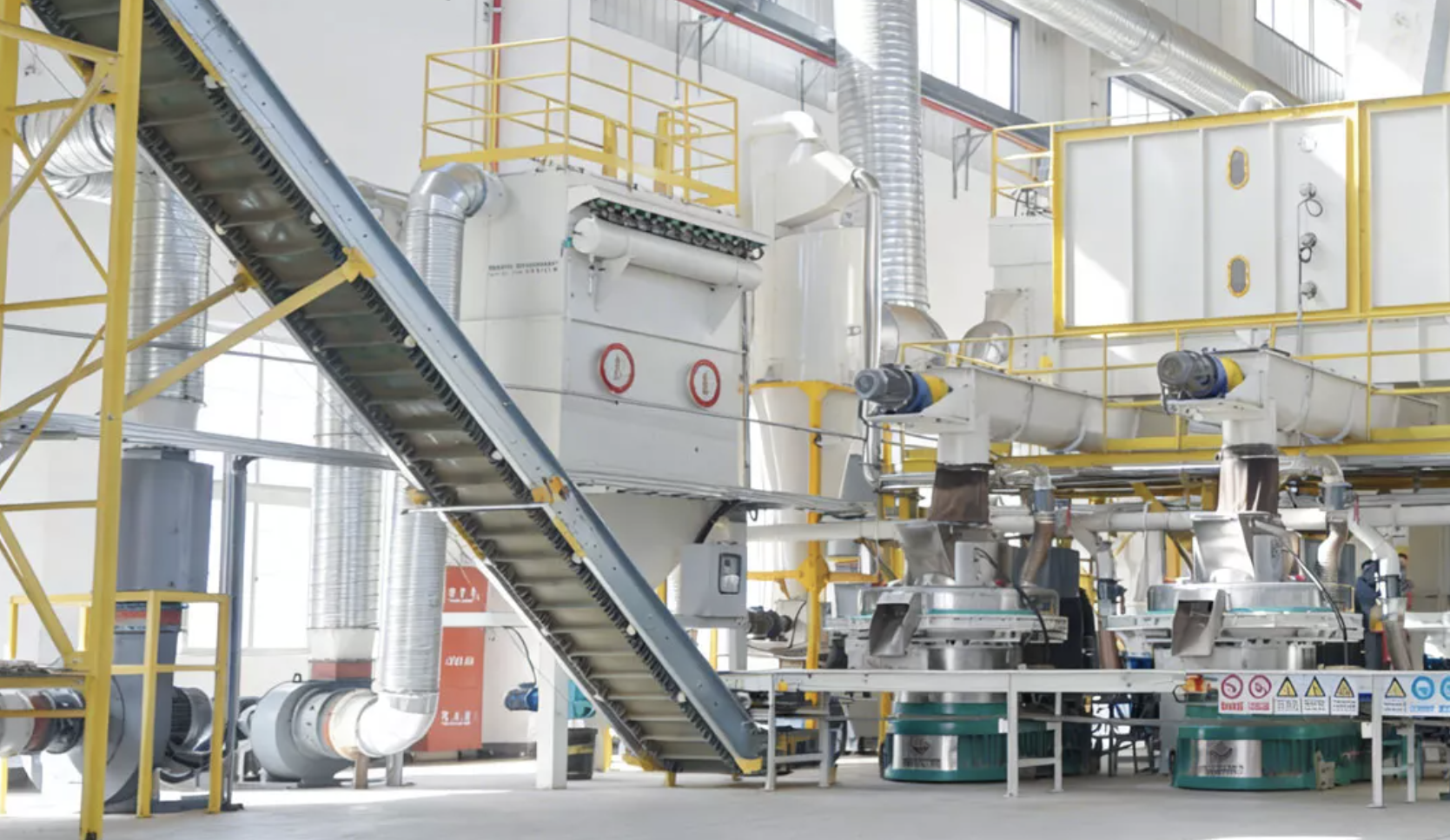
An illustrative structural baseline is demonstrated within the standard wood pellet production line configuration. The process flow is engineered as an unbroken, automated sequence:
- Chipping Section:Heavy-duty mechanical grippers systematically deposit raw logs onto an automated buffer platform, where industrial vibration conveyors regulate the volumetric flow directly into the primary chipper, transforming bulk timber into uniform wood chips.
- Drying Section:The wet chips are immediately transferred to a variable-speed rotary drum dryer. Unlike traditional fixed-rate dryers, this system dynamically alters its rotational velocity to adjust retention times based on incoming material moisture, ensuring the feedstock achieves a uniform moisture profile of 12% to 20% before discharge.
- Grinding Section:Dried wood chips transition via automated belt conveyors into a high-capacity wood hammer mill, pulverizing the chips into standard processing powder before pneumatic transport handles movement into the collection cyclones.
- Pelletizing Section:The stabilized powder is fed into specialized biomass wood pellet machines, where optimized roller pressures secure dense pellet formulation.
- Cooling and Packing Sections:Formed pellets enter a counter-flow circulating wind cooling silo, dropping material temperatures to ambient levels while an integrated secondary screening deck removes fine particulates before automated volumetric packaging.
By executing the entire sequence within a single, scientifically balanced engineering framework, industrial operators eliminate component mismatch, lower localized structural stress, and achieve consistent system runtime.
Raw Material Adaptability vs. Single-Feedstock Constraints
A prominent technical challenge for traditional pellet production plants is a strict reliance on pristine, uniform raw materials. Conventional pelleting systems are engineered around restrictive calibration metrics, requiring a highly specific input feedstock, typically clean, low-moisture soft wood sawdust. When these legacy configurations are introduced to agricultural residues or variable-density forestry waste, the machinery experiences frequent blockages, rapid die degradation, or catastrophic host motor stalling. This lack of feedstock versatility severely restricts an operator’s procurement flexibility, exposing them to regional sawdust supply shortages and fluctuating material costs.
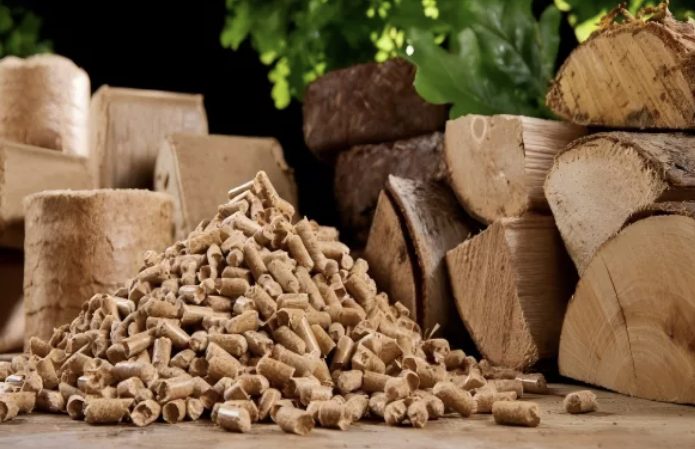
Modern biomass processing demands structural systems capable of managing diverse, complex feedstocks without sacrificing operational throughput. The processing lines engineered by industry leaders are built from the ground up to handle a diverse catalog of biomass inputs, including hardwood logs, forest trimmings, rice husks, agricultural straws, palm shells, empty fruit bunches (EFB), alfalfa, hemp, organic fertilizers, and even recycled waste paper.
Achieving this high level of multi-feedstock compliance requires strict control over material preparation variables, specifically particle dimensions and moisture metrics. The underlying engineering principles mandate that feedstock entering the pelleting chamber must maintain a fine particle size and a strict moisture equilibrium between 12% and 20%. Raw material exceeding a 30% moisture threshold drastically lowers compaction efficiency, compromises pellet structural integrity, and introduces severe frictional resistance that can stall the primary drive motors. Integrating dynamic pre-drying and optimized pulverization systems right into the automated layout allows modern production lines to neutralize incoming material variations, enabling facilities to hedge raw material costs by blending multiple biomass sources.
Dynamic Parameter Optimization vs. Static Mechanical Operation
The technological division between traditional machinery and advanced engineering installations is most apparent within the pelleting chamber itself. Traditional pellet mills rely almost exclusively on static mechanical setups. The operator manually adjusts physical components before starting production, and the machine runs at unyielding operational metrics regardless of real-time material fluctuations. This structural rigidity induces significant energy waste and accelerates component wear. For example, if raw material moisture varies slightly during a shift, a static machine cannot adapt, leading to uneven compression, plugged die holes, or excessive thermal buildup that degrades pellet quality.
Modern automated pellet production lines address these issues by integrating precise control systems that constantly monitor and adjust key operational metrics. By closely tracking and regulating specific mechanical variables, operators can boost biomass pellet production efficiency by up to 30%. Under a traditional static operation setup, fixed feeding combined with an unexpected pocket of high-moisture material invariably results in component jams or catastrophic motor stalls.
In sharp contrast, a dynamic automated line relies on continuous motor current monitoring. The central control terminal measures the host motor current against rated voltage limitations. If an over-feed condition or a high-moisture material pocket increases mechanical resistance inside the pelleting chamber, the control loop instantly detects the electrical spike and automatically reduces the conveyor feeding speed. This real-time sensor feedback loop prevents machine jams and maintains a smooth, continuous production flow.
Fragmented Maintenance vs. Comprehensive Life-Cycle Support
Beyond initial hardware performance, long-term operational profitability depends heavily on the service infrastructure supporting the production line. The traditional machinery sector is often characterized by a transactional sales model, providing minimal post-installation engineering support, slow replacement part logistics, and inadequate technical troubleshooting. If an industrial pellet line suffers a breakdown, a delayed response from the equipment manufacturer can result in days of costly operational downtime.
In contrast, top-tier international service providers manage industrial risk by establishing comprehensive, proactive asset lifecycle maintenance programs. Holding authoritative global credentials including ISO9001:2000, CE, and SGS certifications, companies like BOLIDAMACHINERY support their global installations through structured service networks.
This industrial support framework includes comprehensive material testing before any machinery is manufactured, allowing clients to access free testing services where technicians evaluate the specific density, moisture properties, and binding behavior of the feedstock sample to determine the optimal configuration for the processing line. Sustained peak performance also requires precise maintenance protocols. Advanced pellet lines implement clear maintenance schedules, applying high-temperature resistant grease to primary roller assemblies every 4 to 5 hours of continuous operation, while secondary components follow structured weekly or daily lubrication intervals to prevent mechanical fatigue. To minimize unexpected operational stoppages, the service infrastructure provides 24-hour online technical guidance backed by an agile 48-hour door-to-door engineer dispatch policy.
For modern biomass processing enterprises, transitioning from legacy, standalone hardware to an integrated, dynamically optimized production system represents the standard engineering pathway to securing sustainable, high-yield, and profitable manufacturing operations.
Corporate Website: https://www.biopelletmachinery.com/
This article was originally published by IssueWire. Read the original article here.