(YourDigitalWall Editorial):- Xuancheng, Anhui Jul 8, 2026 (Issuewire.com) – At recent international pharmaceutical packaging exhibitions, a recurring debate has dominated panel discussions and floor conversations alike: the choice between molded and tubular glass packaging for sensitive liquid and lyophilized formulations. As drug manufacturers introduce increasingly complex biologics and highly sensitive therapies, the margin for primary packaging failure has shrunk to zero. Amid this evolving landscape, industry delegates frequently gather around technical demonstrations seeking clarity on long-term storage safety. It is within these high-stakes industry forums that the reputation of a High Quality Glass Vial Solutions Provider becomes paramount. Navigating the delicate balance between structural integrity and chemical inertness requires more than standard manufacturing capability; it demands a deeply integrated approach to material science and controlled thermal processing. A premier glass vial solutions provider bridges this gap by engineering containment systems that not only safeguard the structural integrity of the drug but also eliminate risks of delamination and chemical contamination under extreme storage conditions.
Glass Manufacturing Frameworks: Molded vs Tubular
To fully comprehend why chemical stability varies so drastically between these packaging formats, it is essential to conduct a comprehensive analysis of the underlying physical forming mechanisms and thermodynamic evolution of molded versus tubular glass.
- Physical and Thermodynamic Evolution of Tubular Processes
Tubular glass vials are produced in a typical two-stage reconstruction process. In the first stage, raw glass materials are melted in a furnace and pulled into long, continuous tubes with highly uniform outer diameters and wall thicknesses using vertical or horizontal drawing techniques. These tubes are cooled, annealed, and cut into distinct sections. The second stage–secondary flame processing–is where the divergence in chemical stability truly originates. The cut glass tubes are fed into automated forming machines where multiple rows of high-temperature gas flames perform intense localized heating. At temperatures nearing or exceeding the glass softening point, mechanical tools cut, separate, bottom-seal, and form the neck finish of the vials.
While this highly automated method yields vials with exceptional dimensional uniformity, thin walls, and crisp cosmetic clarity, the continuous localized flame manipulation introduces irreversible chemical vulnerabilities. Under intense heat, the alkali ions within the glass matrix, particularly sodium and borate components, volatilize rapidly from the surface. This evaporation creates a high concentration of alkali vapors, which re-deposit onto the internal walls as the vial cools, forming a loose, hyper-hydrolytic “alkali-rich” layer. Beneath this, an unstable, alkali-deficient framework remains. This micro-scale chemical stratification severely increases the risk of glass delamination–the stripping of microscopic glass flakes into the drug solution–when exposed to aggressive or high-pH pharmaceutical formulations over extended shelf lives.
- Single-Step Integrated Molding Process
Conversely, molded glass vials utilize a single-stage direct forming process, completely bypassing secondary thermal reconstruction. Once the raw glass is liquefied in the furnace to a specific viscosity, it is sheared directly into independent, red-hot molten glass gobs. These gobs drop via gravity into individual precision metal molds where, within a matter of seconds, mechanical press-and-blow or blow-and-blow machinery instantly shapes the final internal and external geometry of the vial.
From a thermodynamic perspective, molded glass holds an unmatched structural advantage: it undergoes absolutely no localized secondary reheating after initial formation. Consequently, the internal surface chemistry is locked in place the exact moment the molten glass solidifies against the mold. The resulting room-temperature interior surface perfectly mirrors the high chemical homogeneity of the original melt. Without the interference of localized evaporation and re-deposition, the molded vial exhibits excellent network integrity. The robust, three-dimensional silicate framework remains undamaged, locking alkali ions securely within its structural voids and minimizing the migration of unbonded elements to the product-contact surface. This structural integrity establishes an inherently robust barrier against chemical degradation and hydrolytic attack.
Technical Specifications: Critical Stability Performance Metrics
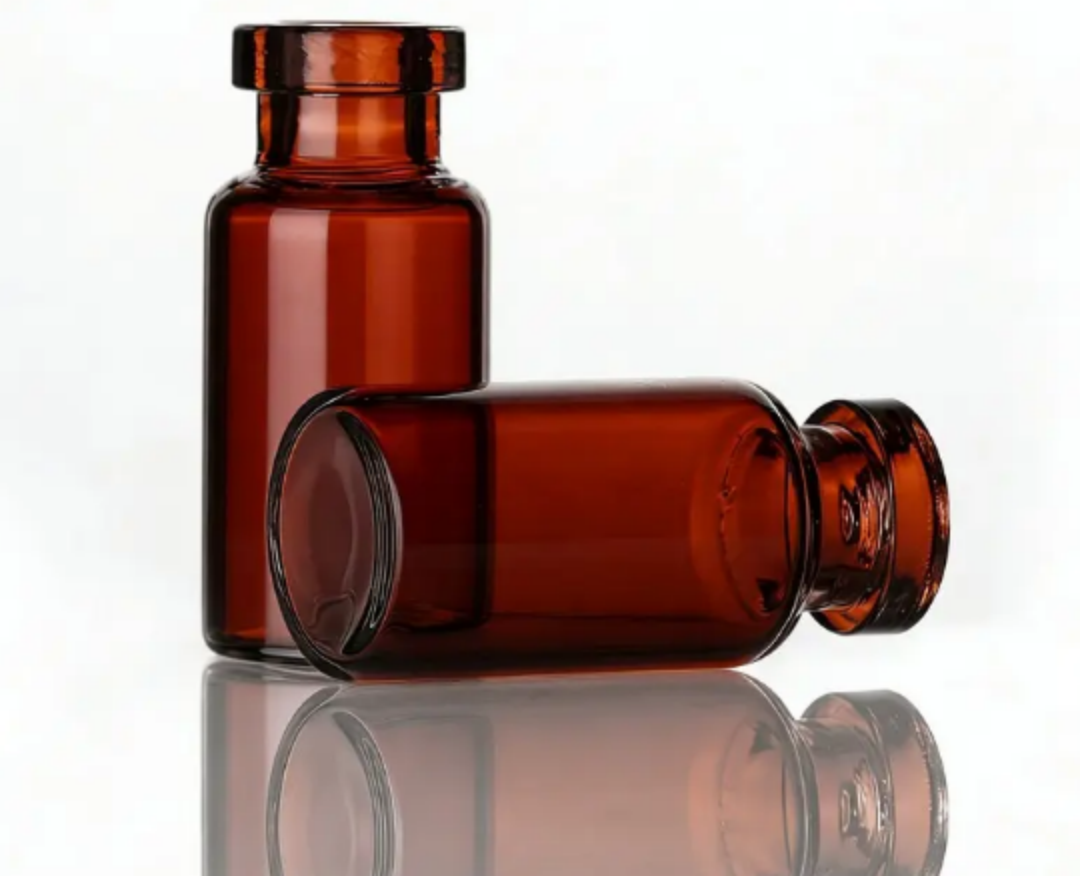
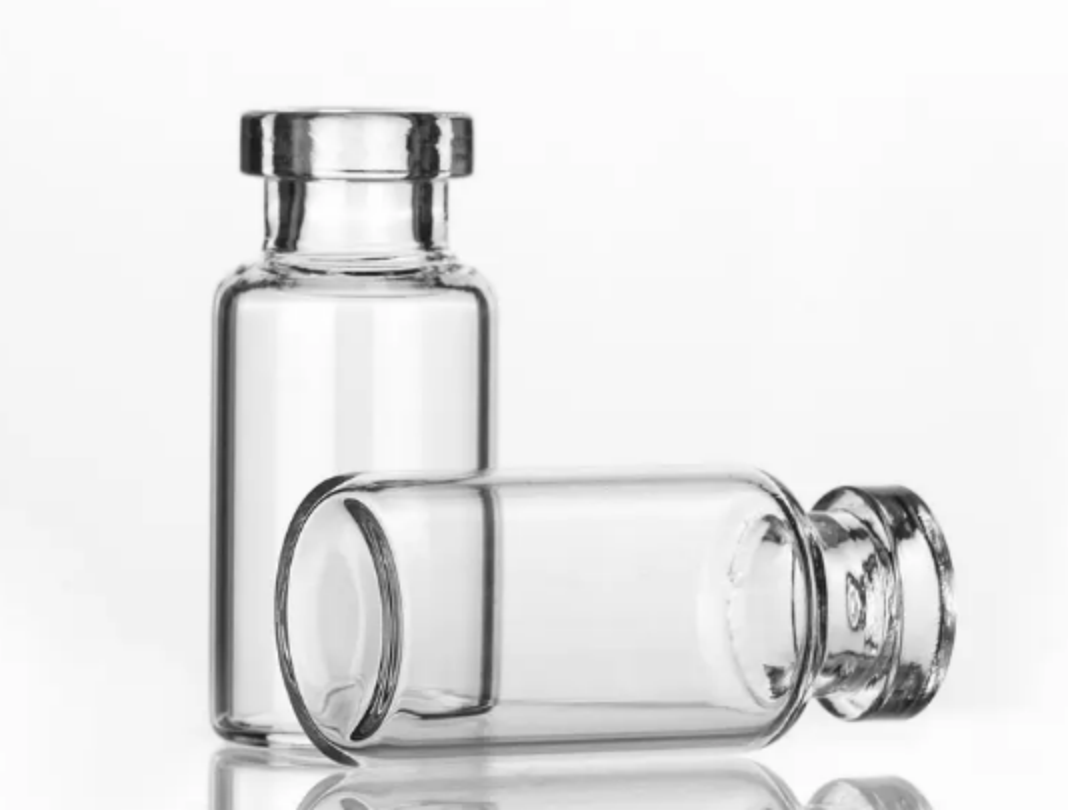
The evaluation of a vial’s suitability for high-risk pharmaceutical applications depends heavily on quantifiable performance metrics. When selecting a container for lyophilized products or high-pH formulations, engineers analyze specific technical parameters such as hydrolytic resistance, thermal shock threshold, and dimensional tolerances. A premier example of this technical optimization is found in the HUAXIN GLASS Type I Injection Glass Vial with Borosilicate Glass for Lyophilized or Powder Use.
This specific product category leverages the intrinsic benefits of borosilicate composition to deliver precise chemical performance:
- Hydrolytic Resistance: Exceeds the stringent requirements of ISO 4802, with alkali extraction levels significantly below the maximum allowable limits defined by global pharmacopoeias, ensuring minimal pH drift over a multi-year shelf life.
- Thermal Shock Resistance: Capable of enduring rapid temperature differentials exceeding 120 degrees Celsius without structural micro-fracturing, a critical attribute during rapid cryogenic cooling in freeze-drying cycles.
- Internal Surface Neutrality: The linear distribution of sodium oxide and boron trioxide across the internal surface area is strictly controlled, preventing the formation of localized hyper-reactive sites that catalyze protein aggregation or drug degradation.
- Dimensional Accuracy: Wall thickness uniformity is maintained within tolerances of plus or minus 0.1 millimeters, ensuring uniform heat transfer across the vial bottom during lyophilization, which directly optimizes sublimation rates and cake uniformity.
Long-Term Integrity and Pharmaceutical Compliance
Ultimately, the choice between molded and tubular glass packaging goes beyond simple cosmetic preference; it represents a fundamental decision regarding risk mitigation in pharmaceutical distribution. Molded glass, through its single-step manufacturing process, eliminates secondary thermal manipulation and provides substantial structural integrity, providing an exceptional baseline of chemical stability that effectively minimizes the risk of delamination and extractable leaching. When combined with advanced automated manufacturing, stringent cleanroom environments, and international quality certifications, these container systems ensure that sensitive therapies remain uncompromised from the moment of filling to the point of patient administration. By maintaining absolute fidelity to the principles of quality, integrity, and technical innovation, modern glass engineering continues to provide the global pharmaceutical industry with the secure, chemically stable containment solutions necessary to advance modern healthcare safely.
For more information, please visit the company’s website at: https://www.huaxinglass.com/
This article was originally published by IssueWire. Read the original article here.