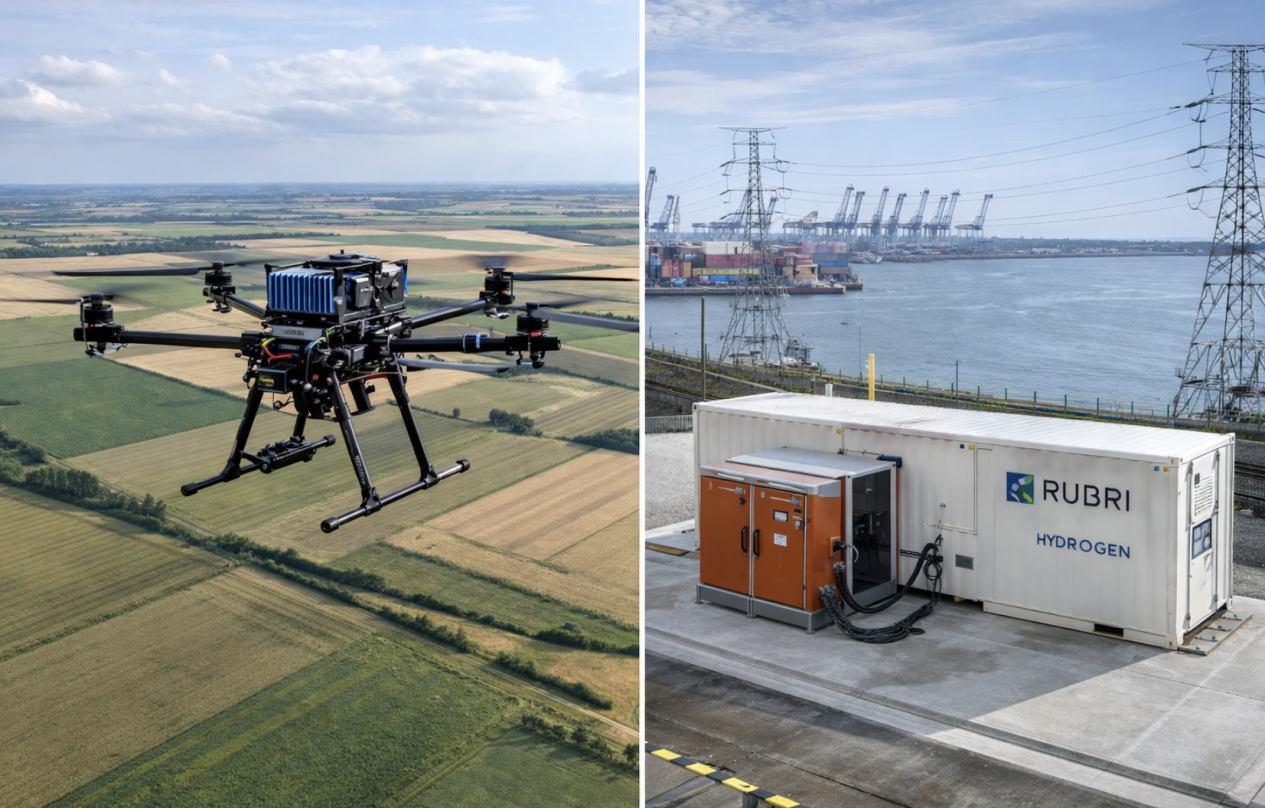
(YourDigitalWall Editorial):- Shucheng, Anhui Jul 8, 2026 (Issuewire.com) – Most hydrogen fuel cell pilot projects start off strong. Engineers complete electrochemical performance verification, investors approve the prototype, and the technology performs as expected in a controlled environment. However, projects often stall between early success and viable commercialization. The problem usually lies not with the technology itself, but with the supplier. Choosing a Professional Hydrogen Fuel Cell Supplier with technological depth and supporting infrastructure to support large-scale production, rather than just providing samples, is arguably the most important procurement decision for the R&D team. This article outlines five criteria to distinguish true long-term partners from ordinary suppliers with limited capabilities.
Standard 1: Full-Stack Technology Mastery, Not Just System Integration
Once a fuel cell project enters the scale-up phase, supply chain weaknesses that were not exposed during the pilot phase quickly become apparent. If a supplier only uses third-party components for system assembly, these dependency risks are directly transferred to the customer, manifesting as price volatility, longer lead times, and limited customization options.
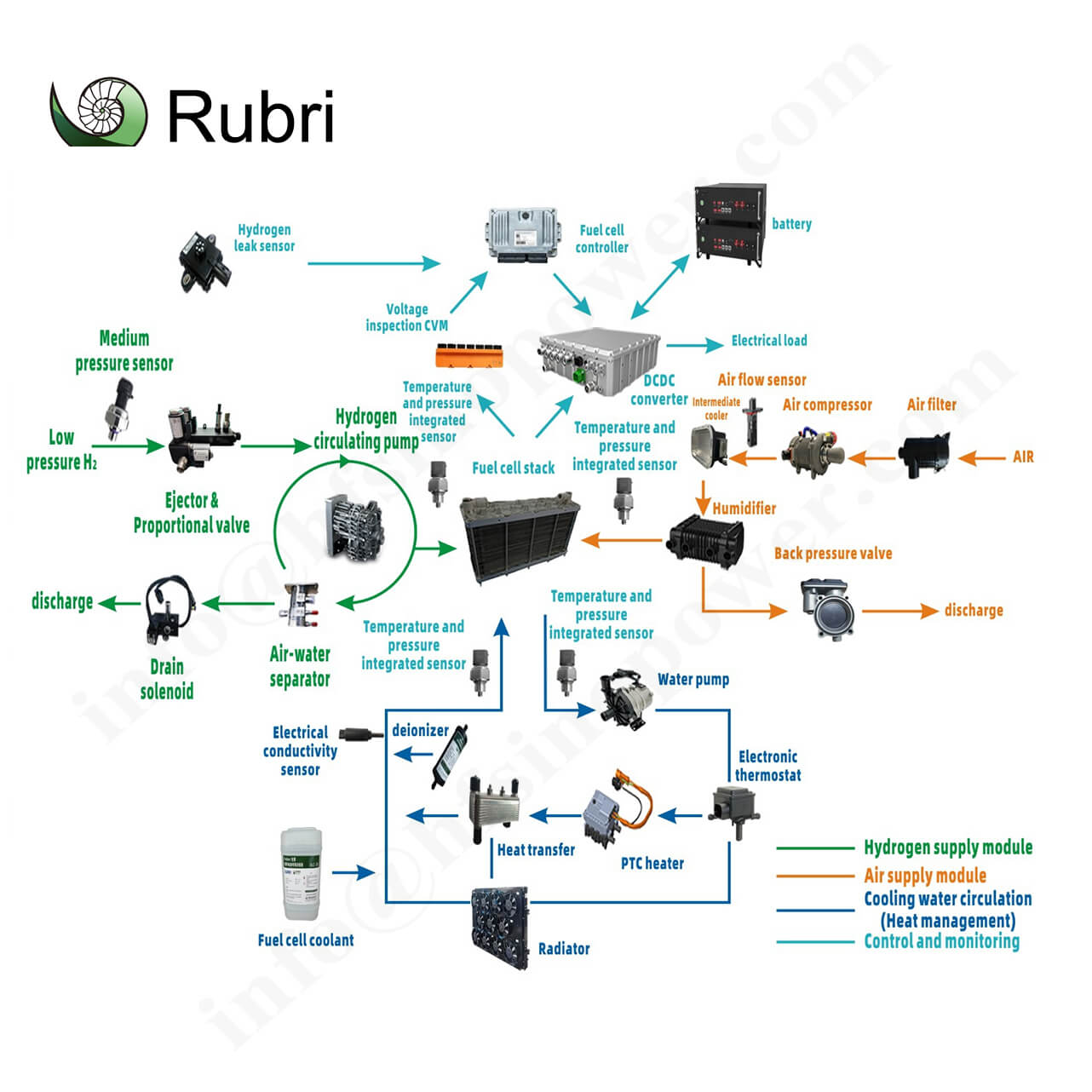
The most reliable indicator for judging a true technology partner is vertical integration capability. Prioritize suppliers who independently design and manufacture core components: membrane electrode assemblies (MEAs), bipolar plates, gas diffusion layers, and auxiliary systems (BOPs) including gas supply, hydrogen supply, thermal management, and electronic control modules. This self-developed capability gives the engineering team technical decision-making power at all levels of the system, not just in the final assembly stage.
Rubri(Hefei Sinopower Technologies Co., Ltd.) has achieved full technology stack coverage. The company does not rely on externally purchased core components but independently produces membrane electrode assemblies, bipolar plates, gas diffusion layers, and catalysts, then integrates them into the complete fuel cell system. This vertical integration model allows technology partners to directly control performance tuning and quality consistency at the membrane level, which is especially crucial when mass production imposes new tolerance requirements.
Standard 2: Power Product Line Can Expand Simultaneously with Application Scenarios
Pilot projects typically target only a single power specification, while large-scale deployment almost always requires flexible adaptation. As application scenarios expand–from a single drone prototype to an operational fleet, from test vehicles to mass-produced models–power requirements often change. Changing suppliers mid-project is costly and carries significant technical risks, a point often underestimated in initial planning. Qualified suppliers should offer a wide range of power ratings and cooling solutions, enabling application expansion without renegotiating partnerships. Air-cooled and liquid-cooled models adapt to different thermal environments, while stationary and mobile solutions meet diverse mechanical and control requirements.
Hefei Sinopower Technologies Co., Ltd.’s product range extends from a 550W lightweight air-cooled fuel cell stack designed specifically for long-endurance UAVs to a 200kW liquid-cooled PEM system for vehicle-mounted and stationary power generation. All series offer both metal plate and graphite plate bipolar plates. This portfolio reflects genuine engineering investment across multiple power nodes, rather than simply listing products with no technological differences.
Standard 3: Providing Joint Engineering Development, Not Just Supplying Standard Products
The most common failure point from pilot to mass production lies in the lack of customization. Standard products perform excellently in laboratory environments, but real-world applications often present complex conditions. Integration issues arising from temperature ranges, voltage ranges, mechanical installation requirements, and hydrogen storage layouts are difficult to resolve without deep adaptation of standard hardware.
Viewing suppliers as engineering partners rather than mere suppliers can bridge this gap during the design phase. The collaboration model is crucial: building a system architecture based on the customer’s actual application scenarios and operating constraints is far more reliable than modifying standard products after integration problems arise.
Rubri’s OEM/ODM collaboration model exemplifies this. The company’s R&D prototype development services start from the customer’s operational needs and specific usage environment, collaboratively completing stack selection, BOP configuration, and complete system integration, rather than a series of isolated procurement transactions.
Standard 4: Having an industrial-grade manufacturing system is a hallmark of stable quality.
Excellent performance in engineering samples and maintaining stable performance in mass production are two entirely different challenges. Some suppliers can demonstrate impressive parameters in the prototype stage but struggle to consistently reproduce them in commercial batch orders.
The clearest signal of mass production capability is the transparency of the manufacturing system. Suppliers who build dedicated production lines for each subsystem rather than modifying general-purpose facilities typically achieve more stable output at scale. A robust validation system is equally important: the system should have performance testing points throughout the entire production process, rather than relying solely on final product inspection.
Hefei Sinopower Technologies Co., Ltd. possesses dedicated production lines for MEA manufacturing, bipolar plate production, stack assembly, and system integration. Fuel cell test benches enable performance verification at every stage of production, establishing traceability throughout the supply chain, rather than relying solely on end-user testing. This level of manufacturing depth is not standard for small or new market entrants.
Standard 5: Broad Application Scenarios and Global Deployment Capabilities
A supplier’s successful deployment across multiple sectors is one of the most authentic indicators of engineering maturity. The ability to successfully deploy fuel cell systems simultaneously in automotive, drone, marine, forklift, and stationary power generation scenarios demonstrates that the engineering team has addressed core challenges such as thermal management, load response, and variable-condition durability from multiple dimensions and under real-world constraints.
Beyond technological breadth, international projects involve complex aspects such as logistics, regulations, and after-sales service, which not all suppliers can handle efficiently. Export experience, multilingual technical support, and a mature regional presence can alleviate the coordination pressure on customers in overseas markets.
Rubri has established partnerships with customers in over forty countries, including research institutions, energy companies, OEMs, and industrial enterprises. Its fuel cell solutions cover hydrogen fuel cell vehicles, drones, marine propulsion, forklift drives, and stationary power generation, reflecting cross-industry engineering experience rather than narrow specialization in a single field.
Practical Framework for Supplier Evaluation
Based on the five criteria above, a rigorous supplier evaluation should focus on the following questions: Does the partner possess independent control over core technologies? Can the product portfolio support future application expansion? Does the cooperation model truly support joint development? Does the manufacturing system have mass production capabilities? Can cross-industry and cross-regional implementation experience effectively reduce project risks?
A single criterion is insufficient for a definitive conclusion, but combined, they can distinguish between suppliers capable of supporting only pilot projects and long-term partners capable of supporting sustainable business. For teams moving from prototypes to commercial scale, raising these questions early and completing the screening before the partnership solidifies often directly determines the success or failure of the project.
For more information on Rubri hydrogen fuel cell systems, manufacturing systems, and application solutions, please visit the official website: https://www.hfsinopower.com/.
Media Contact
Hefei Sinopower Technologies Co.,Ltd.
+86 400228199
6 floor, block A, Xiangfeng Creative Park, 211 Hongfeng Road, Shushan District, Hefei, Anhui.
This article was originally published by IssueWire. Read the original article here.