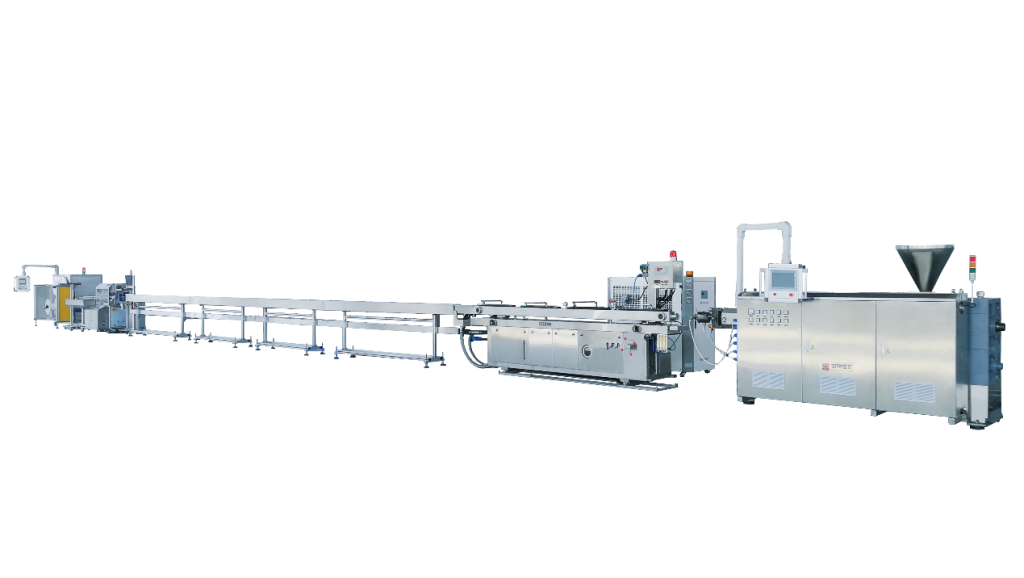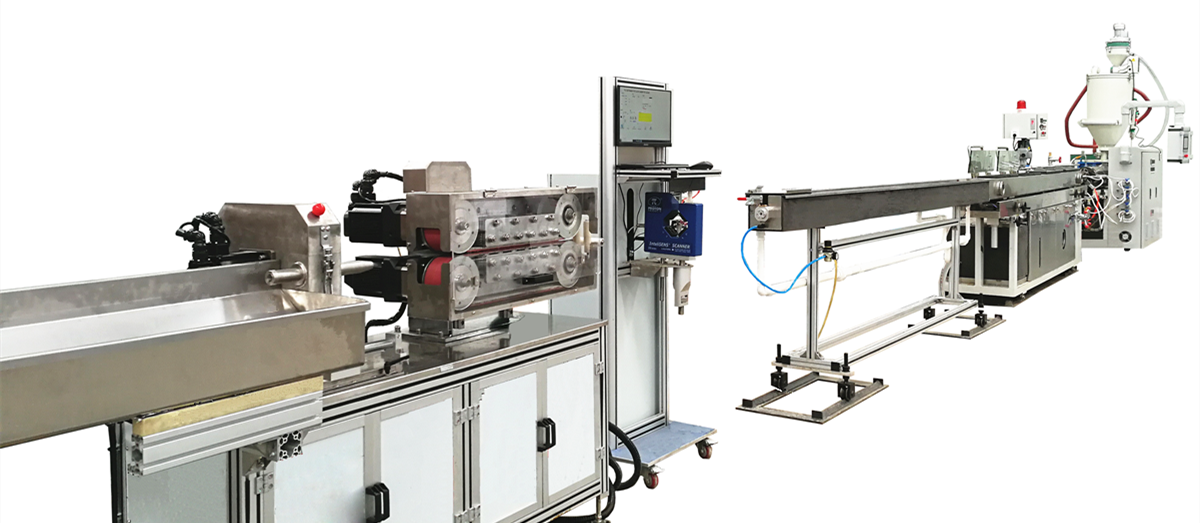
(YourDigitalWall Editorial):- Nantong, Jiangsu Mar 11, 2026 (Issuewire.com) – In the modern industrial landscape, the seamless flow of fluids and gases through precision-engineered tubing is the silent pulse of global manufacturing. From the intricate coolant systems in high-performance electric vehicles to the critical life-support lines in intensive care units, the demand for high-quality plastic tubing has never been more urgent. As manufacturers worldwide seek to modernize their production floors, the focus has shifted from simple volume to the sophisticated intersection of material science and mechanical precision. Within this evolving environment, BAOD EXTRUSION has emerged as a Global Leading LDPE, HDPE, PP Tube Extrusion Line Manufacturer, specializing in the complex thermal processing of polyolefins to meet the most stringent international standards.
Material-Specific Advantages of Polyolefin Extrusion
The classification of these extrusion systems is primarily defined by the specific polymers they process, each offering distinct advantages for end-users. An LDPE (Low-Density Polyethylene) tube extrusion line is highly valued for producing flexible, high-impact resistant tubing used extensively in medical disposables and food packaging. In contrast, an HDPE (High-Density Polyethylene) tube extrusion line focuses on tensile strength and chemical resistance, making it the preferred choice for durable industrial conduits. Furthermore, the PP (Polypropylene) tube extrusion line is engineered to handle higher thermal thresholds, providing the necessary rigidity and heat resistance for automotive engine components. By mastering the delicate balance of screw design and temperature control for these materials, BAOD EXTRUSION ensures that the final product maintains consistent wall thickness and superior surface finish.
Overcoming Long-term Industry Challenges and Bottlenecks
For decades, the plastic extrusion industry has grappled with persistent bottlenecks, particularly regarding energy consumption and material waste during calibration. Traditional systems often struggled with “pulsation” issues, where fluctuations in melt pressure led to dimensional inconsistencies, forcing manufacturers to discard significant portions of their output. Moreover, the increasing complexity of multi-layer tubing–required for specialized barrier properties–has outpaced the capabilities of legacy machinery. These pain points have created a demand for more intelligent, responsive hardware that can adapt to varying resin grades without extensive downtime.
High-Precision Solutions for Critical Applications
Addressing these challenges requires a shift toward precision-driven engineering. The modern ldpe, hdpe, pp tube extrusion line serves as the solution to these historical inefficiencies by integrating advanced gravimetric dosing and vacuum calibration technologies. In medical applications, where a deviation of a few microns can compromise safety, the stability of the extrusion process is paramount. In the automotive sector, the move toward lightweighting has made high-precision pp tubing indispensable. By providing equipment that minimizes the margin of error, BAOD EXTRUSION empowers factories to achieve “zero-defect” production goals while significantly reducing their environmental footprint through optimized material usage.
The Architecture of Efficiency: Technical Innovation in Extrusion
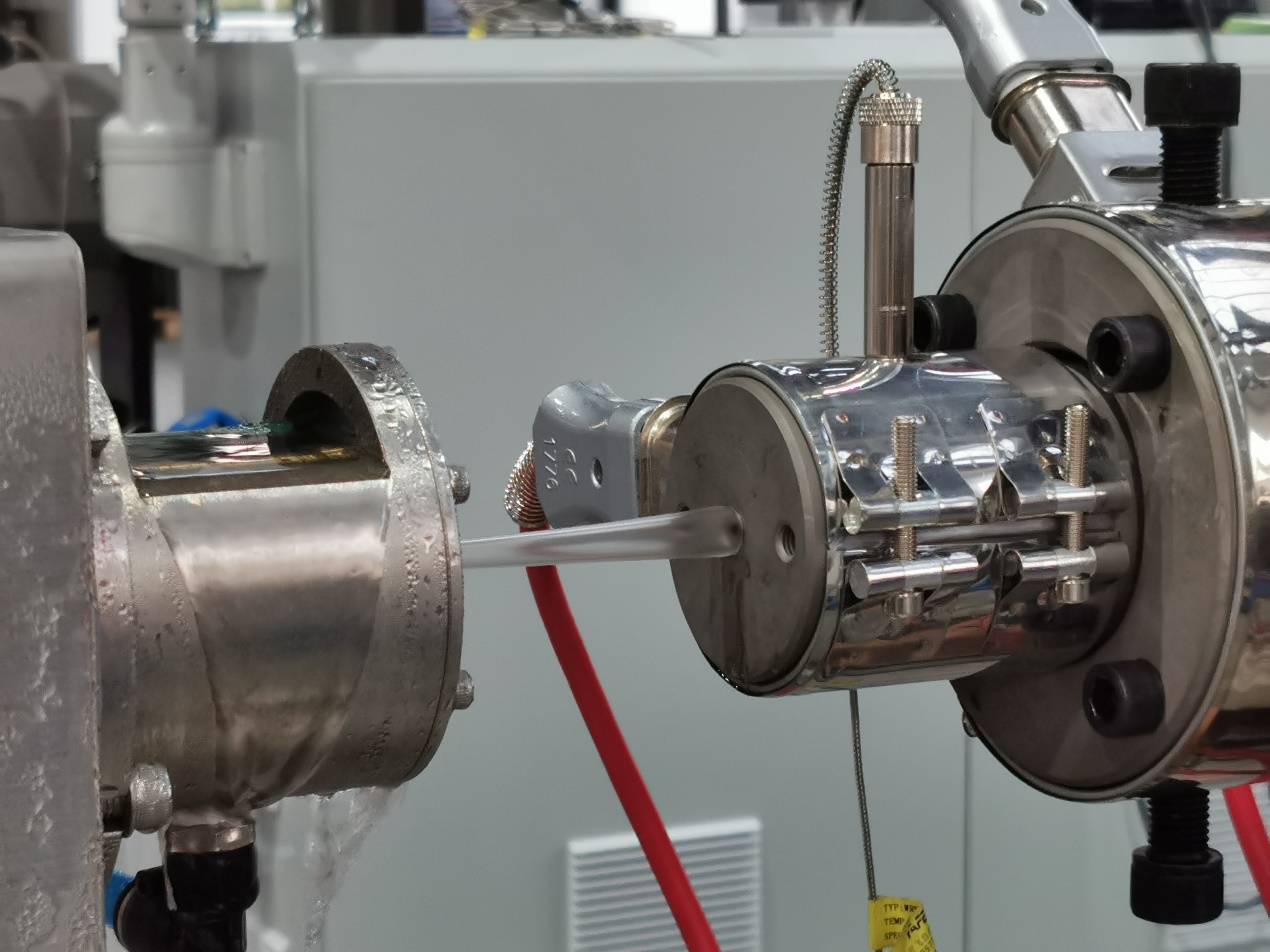
To significantly enhance production flow, BAOD EXTRUSION focuses on a refined architectural approach to machinery design. The pursuit of more efficient extrusion capacity begins with the optimization of the screw and barrel geometry. By utilizing specialized high-performance alloys and precision machining, the ldpe, hdpe, pp tube extrusion line achieves superior homogenization of the melt at lower temperatures. This not only protects the molecular structure of the polymer but also reduces the total energy required for the extrusion process.
Efficiency is further boosted through the implementation of automated “quick-change” systems for dies and calibrators. Historically, switching production from one tube specification to another could take several hours; however, modern ldpe, hdpe, pp tube extrusion line manufacturer designs have reduced this transition time by nearly 50%. This flexibility is crucial for manufacturers who handle diverse, small-batch orders for customized medical or industrial applications.
Precision Control and Automation Integration
Beyond the mechanical hardware, the leap in efficiency is driven by “human-centric” automation. The integration of high-speed PLC (Programmable Logic Controller) systems allows for real-time monitoring of every variable, from melt pressure to cooling water temperature. This level of accurate extrusion process control ensures that the ldpe, hdpe, pp tube extrusion line can operate at high speeds without sacrificing the precision of the final diameter.
- Smart Tension Control: For thin-walled tubing, maintaining the correct haul-off speed is critical. Integrated sensors ensure that the pulling force remains constant, preventing tube deformation.
- Closed-Loop Diameter Calibration: Laser gauging systems provide constant feedback to the vacuum tank and haul-off unit, automatically correcting any deviations in real-time.
- Data Transparency: Modern lines are equipped with IoT interfaces, allowing production managers to analyze performance metrics and predict maintenance needs before they lead to unexpected downtime.
Customization as a Driver of Value
A significant shift in the industry is the departure from “one-size-fits-all” machinery. Recognizing that every factory has unique spatial constraints and specific product requirements, the role of an ldpe, hdpe, pp tube extrusion line manufacturer has evolved into that of a solution consultant. Tailoring the equipment combination methods–such as selecting specific cooling lengths or secondary processing units like online cutting or coiling–ensures that the equipment provides maximum value on the user side. This differentiated approach allows for the creation of bespoke production environments that are optimized for the user’s specific market niche, whether it be precision medical catheters or heavy-duty industrial hoses.
Driving the Industry Forward: Future Outlook
The evolution of the plastic extrusion sector is increasingly defined by the transition toward smarter, more sustainable manufacturing. As global regulations on plastic processing tighten, the emphasis on energy efficiency and the ability to process bio-based or recycled resins will become the next frontier. The industry is moving toward a future where the ldpe, hdpe, pp tube extrusion line is not just a piece of hardware, but a fully integrated component of a digital factory ecosystem.
Looking ahead, the focus remains on discovering more reasonable and optimized precision extrusion process designs. The integration of AI-driven predictive modeling is expected to further refine temperature profiles and melt behavior, pushing the boundaries of what is possible in terms of extrusion speed and thin-wall capabilities. By continuously focusing on the needs of the medical and automotive sectors, BAOD EXTRUSION is positioned to lead the industry toward a new era of safety, automation, and humanized design. Through this commitment to perfection, the production of precision tubing will continue to become more efficient, helping global industries meet the challenges of tomorrow with confidence.
For more information on precision extrusion solutions, please visit: www.baod-extrusion.com.
Media Contact
Jiangsu BAODIE Automation Equipment Co., Ltd.
No. 6, Sanjiao Road, Economic-Technological Development Area, Haian, Nantong City, Jiangsu Province, China
This article was originally published by IssueWire. Read the original article here.