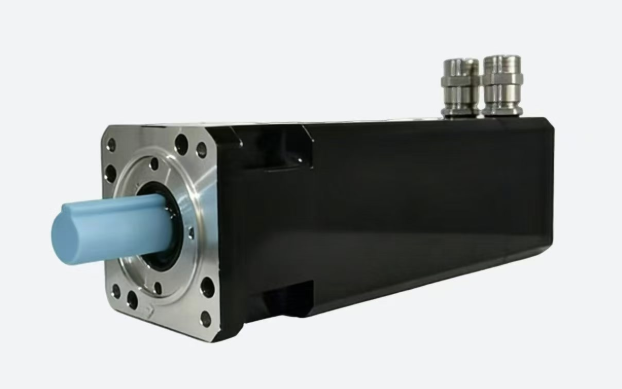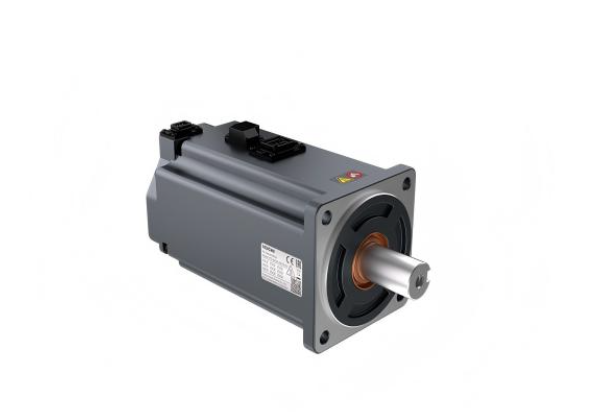
(YourDigitalWall Editorial):- Dongguan, Guangdong May 19, 2026 (Issuewire.com) – AC servo motors are precision components that convert electrical energy into exact mechanical motion. As global industries strive for higher production capacities and stricter tolerances, partnering with a Global Leading AC Servo Motor Solutions Provider has become a strategic necessity for manufacturing enterprises. The integration of advanced servo technology does more than just increase operational speed; it fundamentally reshapes the precision, stability, and energy efficiency of complex industrial chains.
The transformation toward “Smart Manufacturing” requires hardware that evolves in sync with rapidly iterating algorithms. VEICHI, a high-tech enterprise focusing on the R&D and manufacturing of electric drives and industrial automation control, has emerged as a core force in this field. With a product portfolio spanning inverters, servo systems, PLCs, and HMIs, VEICHI’s solutions are widely applied in high-demand sectors such as machine tools, chemical processing, and metallurgy.
Diverse Product Ecosystem
In the era of Industry 4.0, a “product” is no longer just a piece of hardware; it is a critical node in a digitized, high-speed network. VEICHI has built a comprehensive ecosystem that bridges the gap between raw power and intelligent control. By offering a vertically integrated suite of inverters, servo systems, and controllers, VEICHI empowers manufacturers to minimize downtime, maximize throughput, and achieve surgical precision in their operations.
VEICHI offers a rich variety of products, including inverters ranging from 0.4kW to 5,600kW and servo motors/drives from 50W to 200kW, complemented by motion controllers and PLCs.
1. Inverters (Variable Frequency Drives)
Inverters are the “energy managers” of the industrial world. VEICHI’s inverter line is strategically split into general-purpose series (AC10, AC310, AC70) and specialized industry models to address the unique pain points of different sectors.
- The Logic of Selection:Beyond the impressive power range of 4kW to 5,600kW, choosing a VEICHI inverter is an investment in equipment longevity. By precisely controlling motor speed and torque, these drives reduce mechanical stress and slash energy consumption by up to 30% in high-demand applications like HVAC and centrifugal pumps.
- High-Voltage Expertise:With voltage levels reaching 10,000V, VEICHI serves heavy industries–mining, metallurgy, and oil & gas–where reliability is non-negotiable. In these environments, a single hour of failure can cost millions; VEICHI’s robust thermal management and fault-protection algorithms ensure 24/7 continuity.
- Market Versatility:From the rapid growth of Photovoltaics (PV) to the intricate requirements of Rail Transit, these inverters provide the adaptive “muscle” needed to drive global infrastructure.
2. Servo Motors and Drives
If the inverter is the muscle, the servo system is the “nervous system.” VEICHI’s servo solutions are designed for applications where a millimeter of error is unacceptable.
- Connectivity as a Competitive Advantage:The SD700 and SD780 series aren’t just drives; they are communication hubs. By supporting EtherCAT, Profinet, and CANopen, VEICHI enables “Plug-and-Produce” workflows. This compatibility allows manufacturers to integrate VEICHI hardware into existing European or American architecture without costly re-engineering.
- The V7E & V9E High-Performance Standard:A common challenge in automation is heat buildup, which degrades motor life. VEICHI’s motors feature an ultra-low temperature rise design and IP67-rated protection. This means they thrive in the “dirty” reality of the factory floor–resisting dust, oil, and moisture–while maintaining high-speed stability.
- Customization via Specialized Drives:The SD500 and SD650 series represent VEICHI’s “Industry-First” philosophy. Instead of a one-size-fits-all approach, these drives are pre-programmed with logic specific to industries like textiles, woodworking, and robotics, significantly shortening the commissioning time for machine builders.
3. Control Systems
Modern automation is moving away from centralized control toward decentralized, “edge” intelligence. VEICHI’s control system portfolio provides the cognitive power to manage complex multi-axis motion.
- Scalable Intelligence with PLCs:The VC5, VC3, and VC1S series are engineered for flexibility. Whether you are managing a simple conveyor belt or a high-speed packaging line, these PLCs offer the processing speed and memory capacity to handle complex mathematical models and real-time data logging.
- The Power of Remote IO: In a massive factory, wiring costs can be astronomical. The VM-RTU-ECT (EtherCAT) and VM-RTU-PN (Profinet) remote IO modules allow sensors and actuators to communicate back to the brain via a single cable. This not only reduces installation costs but also simplifies troubleshooting through advanced diagnostic data.
Conclusion: A Commitment to Enduring Excellence
Choosing VEICHI means choosing a partner committed to Total Cost of Ownership (TCO). By providing a unified ecosystem where the PLC, the Drive, and the Motor are designed to work together, VEICHI eliminates the “integration headache” that plagues many automation projects.
From the high-voltage demands of a mine to the sub-micron requirements of a semiconductor lab, VEICHI’s solutions are the foundation of a smarter, more efficient industrial future.
As smart manufacturing and digital factory upgrades become the inevitable trend, VEICHI is leading the charge by integrating hardware–such as inverters, servo systems, PLCs, and machine vision–with the Industrial Internet of Things (IIoT), intelligent algorithms, and industrial software.
By focusing on end-user needs regarding production processes, product quality, cost-efficiency, and delivery capabilities, VEICHI continues to accumulate technical expertise and enhance its global industrial competitiveness.
For more information on the full range of industrial automation solutions, please visit the official website: https://www.xulonggk.com
This article was originally published by IssueWire. Read the original article here.