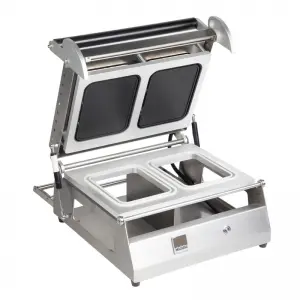
(YourDigitalWall Editorial):- Wenzhou, Zhejiang Apr 21, 2026 (Issuewire.com) – Understanding the Basics of Tray Sealing Technology
A semi-automatic tray sealer is engineered to apply a plastic film over pre-formed trays made of materials like PP, PS, or paperboard. Unlike manual heat sealers that often yield inconsistent results, these machines provide a uniform seal that locks in freshness and prevents leaks. The core of this technology lies in the precision of the heating element and the pressure applied during the sealing cycle. In the fast-paced world of food retail and catering, presentation and preservation are the twin pillars of success. For small to medium-sized businesses, transitioning from manual sealing to automated systems can seem daunting. However, professional packaging is no longer the exclusive domain of industrial-scale factories. The Semi-Automatic Tray Sealer Machine has emerged as a transformative solution, bridging the gap between manual labor and high-speed production. This guide is designed to help users navigate their new equipment, ensuring that every tray leaves the facility with a secure, airtight, and commercially appealing finish.
For businesses looking to optimize their workflow, DJPACK offers a range of models that balance technical sophistication with user-friendly interfaces. By understanding the mechanical synergy between the film, the tray, and the heat plate, operators can achieve a “factory-perfect” look that enhances brand perceived value while extending the shelf life of the contents.
Step-by-Step Operation Guide for New Users
Operating a semi-automatic tray sealer is straightforward, but consistency is key to maintaining quality. Follow these steps to ensure a seamless packaging process:
Step 1: Material Preparation and Loading
Ensure that the trays and the sealing film are compatible (e.g., matching PP trays with PP-compatible film). Place the film roll onto the machine’s spindle. Thread the film through the tension rollers and under the sealing head. It is vital that the film is pulled taut to avoid wrinkles during the heat application.
Step 2: Powering Up and Temperature Calibration
Switch on the machine and set the temperature on the digital control panel. Most standard films require a temperature range between 150°C and 180°C. Allow the machine to preheat for approximately 5 to 10 minutes. A stable temperature is essential for a leak-proof seal.
Step 3: Positioning the Tray
Place the filled tray into the bottom mold (the “drawer”). Ensure the tray is seated firmly and that the rim is clean and dry. Any food residue on the rim will compromise the seal’s integrity.
Step 4: Executing the Sealing Cycle
Push the drawer into the machine. In a semi-automatic setup, the machine will automatically detect the drawer’s position and lower the heat plate. Hold for the designated dwell time–usually 1 to 3 seconds–depending on the material thickness.
Step 5: Film Trimming and Removal
Depending on the model, the machine will either perform a “Horizontal-Cut” (trimming one side for speed) or a “Circular-Cut” (contouring the film exactly to the tray’s edge). Once the cycle is complete, pull the drawer out and remove the finished product.
Step 6: Maintenance and Cleaning
After the production run, wait for the machine to cool down. Wipe the heating plate with a soft cloth to remove any film residue. This prevents carbon buildup, which can cause uneven heating in future batches.
Choosing the Right Cutting Style for Your Brand
Selecting a tray sealer often involves a choice between two primary cutting styles: Horizontal-Cut and Circular-Cut. This decision should be based on your specific product and retail environment.
Horizontal-Cut systems are the workhorses of the industry. They are designed for speed and simplicity, trimming excess film along one straight edge. This style is ideal for rectangular or square trays used in high-volume environments like supermarkets or fast-food retail lines where efficiency is the primary goal.
Conversely, Circular-Cut systems offer an “edge-following” trim. This is the preferred choice for premium retail displays where aesthetics are paramount. If you are packaging sushi platters, specialty desserts, or irregularly shaped trays (round or oval), this method ensures the film aligns perfectly with the tray contours, leaving no overhang and providing a sleek, professional finish.
Case Study: The High-Efficiency Desktop Solution
For businesses with limited floor space, desktop semi-automatic models serve as a prime example of high-efficiency engineering. These machines are designed for “standard packaging”–providing a basic airtight seal without the complexity of vacuum or modified atmosphere systems.
Despite their compact size, these desktop units can handle various tray materials, including eco-friendly paperboard. They are particularly effective in bakeries and delis where the output is medium-level, and the flexibility to change molds quickly is required. The ability to customize packaging equipment according to specific customer requirements allows businesses to scale their operations without investing in massive industrial lines prematurely.
Engineering Excellence and Global Standards
The reliability of a tray sealer is a direct reflection of its manufacturing heritage. Wenzhou Dajiang Vacuum Packaging Machinery Co., Ltd., founded in 1995, has spent nearly three decades refining these technologies. With production facilities in Wenzhou and Nanjing, the company integrates research and development to ensure that equipment is not only functional but also energy-efficient and durable.
Modern semi-automatic machines, such as the DS-series, are built to meet rigorous international standards, including CE, MET, and TUV certifications. This global compliance ensures that the machinery meets strict safety and performance benchmarks required in markets like Europe, North America, and Australia. By focusing on a “quality first” philosophy, the engineering behind these machines emphasizes a reasonable structure and stable performance, which minimizes downtime for the end-user.
Maximizing Profit Through Professionalism
The shift to semi-automatic sealing is an investment in a business’s bottom line. Manual sealing is labor-intensive and prone to human error, which can lead to wasted materials and returned goods. By utilizing advanced packaging technology, businesses can achieve a higher packaging output with lower energy consumption.
A professional seal does more than just protect the food; it builds consumer trust. When a customer picks up a tray from a refrigerated shelf, the clarity of the film and the precision of the trim act as silent indicators of the quality of the food inside. Whether it is a simple deli meat tray or an intricate pastry box, the consistency provided by a dedicated tray sealer helps small producers compete with larger brands on equal footing.
Mastering the use of a semi-automatic tray sealer is a significant milestone for any food-related enterprise. By following proper operational protocols and choosing equipment that aligns with your aesthetic and volume needs, you ensure a product that is both safe and visually compelling. As the industry evolves, the integration of professional packaging solutions remains the most effective way to improve comprehensive strength and win market recognition.
For more information on professional packaging solutions and equipment specifications, visit the official website: https://djvacpack.com/

This article was originally published by IssueWire. Read the original article here.