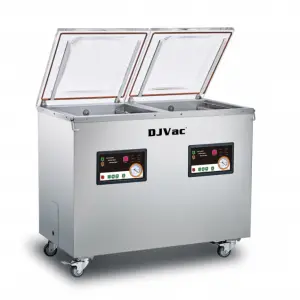
(YourDigitalWall Editorial):- Wenzhou, Zhejiang Apr 21, 2026 (Issuewire.com) – In the fast-paced environment of a high-volume meat processing facility in Nebraska, the clock is the fiercest competitor. As the morning shift begins, thousands of pounds of premium beef cuts await preservation. Traditionally, using a single-chamber system meant a rhythmic but slow cycle: load, seal, unload, repeat. The “dead time” during the vacuum and sealing process created a bottleneck that trickled down the entire production line. However, the transition to a Double Chamber Vacuum Packaging Machine transformed this workflow into a seamless, continuous motion. While one chamber executes the precision vacuum seal, operators are already loading the second side. This leap in operational synchronization is not just about speed; it is about redefining the ceiling of industrial output.
The Evolution of Throughput in the Food Processing Industry: From Single-Chamber Bottlenecks to Dual-Chamber Efficiency
In the context of modern industrial food production, throughput is more than just a physical measure of capacity; it is the core variable determining a company’s profit margins. From coastal export processors handling massive deep-sea catches to urban central kitchens supplying tens of thousands of prepared meals daily, all mid-to-large scale food producers face a common “industry paradox”: how to exponentially increase assembly line output while ensuring the absolute integrity of every vacuum seal.
The packaging stage–the final gate before food leaves the production line and enters cold-chain logistics–is often the “bottleneck” that determines the success of the entire operation. The emergence and widespread adoption of the Double Chamber Vacuum Packaging Machine represent a fundamental innovation in mechanical structure and operational logic that elegantly addresses this challenge.
1. Eliminating “Waiting Costs”: The Hidden Losses of Single-Chamber Systems
In a traditional single-chamber operating mode, the packaging process is linear: the operator places the product, closes the lid, the machine pulls a vacuum, heat seals, cools, opens the lid, and the operator unloads the goods. In this long sequence of actions, the most expensive cost is not electricity or packaging materials, but the operator’s “waiting time.”
In a standard eight-hour shift using a single-chamber machine, the operator is forced into a standby state while the vacuum pump is working at full capacity. Motion capture analysis on production sites reveals that in every cycle of a single-chamber model, approximately 30% to 40% of the time is “ineffective idle time.” Cumulatively, this means more than two hours of human resources are wasted per shift. For modern factories pursuing lean production, this “rhythm break” caused by equipment limitations not only reduces labor efficiency but also prevents upstream processes (like cutting and seasoning) from operating at full tilt.
2. The “Ping-Pong” Workflow: A Logical Leap in Double-Chamber Design
The core logic of the double-chamber vacuum packaging machine lies in “exchanging space for time” and “parallel processing.” It utilizes a symmetrical double-platform design sharing a single vacuum system. This design facilitates a highly continuous workflow known as the “Ping-Pong” method:
- Synchronous Parallelism: While the left vacuum chamber is closed and beginning the vacuum cycle, the right work platform is completely exposed to the operator.
- Seamless Transition: The operator does not need to wait; they can immediately arrange and align products on the right platform.
- Continuous Cycle: The moment the left cycle ends, the vacuum lid (typically a swing or sliding type) shifts seamlessly to the right. At this point, the operator turns to the left to unload finished products and reload new ones.
This mode completely eliminates equipment “standby periods” and worker “idle gaps.” Technical assessments show that when processing products of the same specification (e.g., 400mm sealing bar standard bags), the actual hourly output of a double-chamber model typically sees a 40% to 50% explosive growth compared to single-chamber models. In some high-intensity manual food operations, this efficiency gain can nearly double as the machine’s rhythm reaches near-perfect synchronization with the operator’s hand speed.
3. Balancing High Throughput with High Quality
For mid-to-large producers, high throughput is a disaster if it comes at the expense of sealing quality. In meat and seafood processing, even a 1% seal failure rate means the loss of expensive raw materials and damage to brand reputation. The double-chamber machine’s competitiveness lies in:
- Pressure Stability: Industrial-grade vacuum pumps maintain constant suction under heavy loads, ensuring every bag–from bone-in steaks to fragile dry goods–reaches the preset residual vacuum value.
- Heat Seal Consistency: Continuous operation places extreme demands on heating bars. Double-chamber models are usually equipped with advanced cooling systems and voltage-stabilized sealing technology to ensure the seal remains flat and firm even after hundreds of consecutive cycles.
- Versatility: These machines easily switch between 150g small pouches and multi-kilogram primal cuts, providing the flexibility central kitchens need to handle complex product lines.
4. Deep Drivers of Economic Benefit
From a long-term operational cost perspective, the introduction of double-chamber technology is key to achieving economies of scale. Although the initial investment is slightly higher than that of a single-chamber machine, the labor and energy costs amortized over each package are significantly lower.
Case Study: A meat processing center producing 5,000 bags per day might require two single-chamber machines and two full-time operators, often requiring overtime. By switching to one efficient double-chamber machine, a single skilled worker can achieve the goal within regular hours.
The reduced floor space, lower maintenance frequency, and optimized power consumption form a “moat” for corporate competitiveness.
The double-chamber vacuum packaging machine is more than just a tool upgrade; it is a microcosm of the food processing industry’s evolution from “point-based tasks” to “systemic synergy.” By subtly adjusting physical structures, it resolves the contradiction between production efficiency and process precision, providing a robust and highly persuasive solution for global food enterprises on their quest for high output.
Conclusion: Partnering for Profitability
In the competitive landscape of food production, the difference between profit and loss often resides in the efficiency of the final stage of the process: packaging. By adopting the Double Chamber Vacuum Packaging Machine technology, businesses can ensure high-speed results, consistent sealing quality, and a lower total cost of ownership.
Wenzhou Dajiang Vacuum Packaging Machinery Co., Ltd. continues to strive for professional excellence, offering customized equipment solutions tailored to specific customer requirements. Through a combination of mature technology, a comprehensive service system, and a sincere spirit of cooperation, the company remains dedicated to helping its global partners win market recognition and improve their comprehensive strength.
For more information on the full range of vacuum packaging solutions, visit: https://www.djvacpack.com/
This article was originally published by IssueWire. Read the original article here.