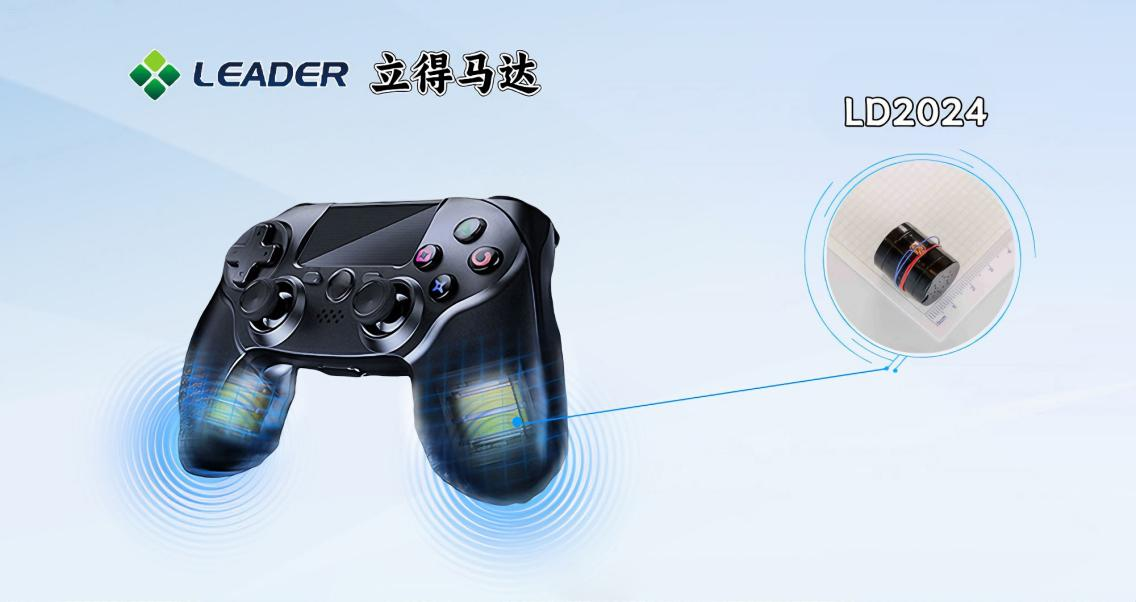
(YourDigitalWall Editorial):- Huizhou, Guangdong Jun 10, 2026 (Issuewire.com) – Designing a modern gaming controller is a balancing act between ergonomic comfort, battery efficiency, and immersive tactile response. When engineering a next-generation game pad, developers frequently ask: what is the most reliable way to deliver nuanced physical sensations that match on-screen action without depleting the power budget or creating excessive mechanical noise? Partnering with a specialized China Leading Game Controller Vibration Motor Factory ensures that these multi-layered engineering challenges are met with precision-engineered hardware components. For any product design team, selecting the ideal game controller vibration motor manufacturer is a critical first step. This technical guide outlines the strategic framework for evaluating a rumble motor / haptic motor solution from a manufacturer’s perspective, mapping out critical considerations such as component architecture, physical placement, structural integration, power constraints, and acoustic performance.
Project Lifecycle Checklist: The Manufacturer’s View
Before finalizing a component specification, engineering and procurement teams must align on core system boundaries. Miscalculating any of these variables can lead to weak haptic feedback, shortened battery runtime, or structural resonance issues.
- Haptic Goal Definition:Is the project aiming for traditional, high-amplitude “rumble” or high-definition, localized tactile effects?
- Physical Layout Constraints:Is there adequate clearance in the grip housings or beneath the trigger mechanisms to accommodate the chosen form factor?
- Electrical and Driver Mapping:Does the system architecture support standard DC drive voltages, or will it integrate dedicated H-bridge or high-resolution AC haptic drivers?
- Acoustic Thresholds:What is the maximum acceptable decibel level for mechanical noise during peak vibration cycles?
- Power and Energy Budgets:How many milliamperes (mA) can the battery allocate to the haptic subsystems during heavy gameplay sequences?
Motor Route Selection: ERM vs. LRA for Game Controllers
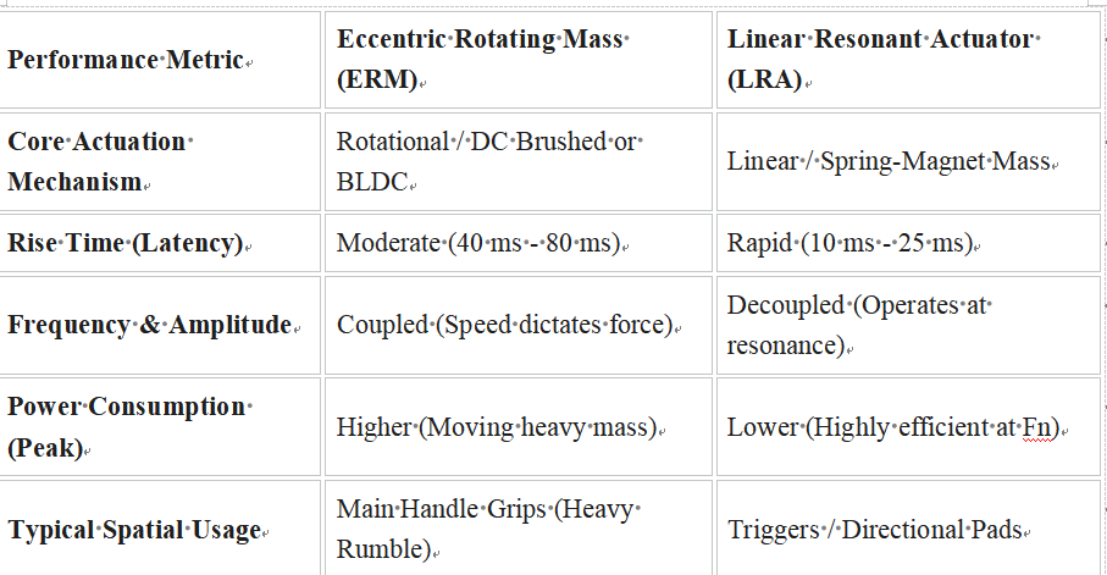
Quick Take: Selecting the right motor technology dictates the entire sensory architecture of your controller. Traditional Eccentric Rotating Mass (ERM) motors excel at deep, high-amplitude rumble effects, whereas Linear Resonant Actuators (LRAs) deliver rapid rise times, crisp transient stops, and subtle, high-frequency textural feedback.
When evaluating ERM vs LRA for Game Controllers: Which One Fits Your Haptic Goal?, engineers must look closely at how the internal mass moves. ERM motors utilize an offset weight attached to a rotating shaft. When voltage is applied, the mass spins, creating a multi-directional force that vibrates the entire controller chassis. This architecture is perfect for simulating heavy impact shocks, explosions, or vehicular terrain rumbles.
However, because the vibration frequency is intrinsically tied to the rotational speed of the motor, you cannot alter the frequency without altering the amplitude. To achieve low-frequency rumbles, the motor must spin slowly, which automatically lowers the output force.
Conversely, a Linear Resonant Actuator moves a mass in a straight line along a precise axis, driven by a voice coil and a calibrated suspension spring. Because the mass moves linearly, the haptic sensations are much crisper and highly directional. LRAs operate at a fixed resonant frequency, meaning they can output maximum force even with minimal power input, making them highly efficient.
For modern game pads targeting competitive e-sports or immersive simulation, a hybrid approach is increasingly popular. Utilizing large ERMs in the primary handles for low-frequency structural rumble, combined with precise, small-format LRAs or coin-type motors near the buttons or triggers, provides a complete, multi-tiered haptic experience.
Structure and Placement: Optimizing Spatial Rumble
Direct Answer: To achieve maximum haptic transfer efficiency, large-mass ERMs must be securely anchored inside the lower handle grips using high-durometer rubber boots. Small-format haptic actuators should be mounted directly to the structural framework of the triggers or the main PCB to prevent cross-axis dampening and isolation loss.
An examination of Game Controller Vibration Motor Placement: Why Position Changes Rumble Feel reveals that structural transmission is heavily influenced by the internal geography of the controller housing. If a game controller vibration motor is mounted loosely or decoupled from the primary contact points where the player’s hands rest, the mechanical energy dissipates into the internal dead space of the plastic enclosure. This results in an uneven, hollow feel and creates unnecessary ambient rattle.
In standard asymmetrical controller configurations, the layout is carefully optimized for spatial distribution:
- Left Trigger & Right Trigger Subsystems:Integrated with localized coin-type motors or small LRAs to provide micro-textures directly to the fingertips during braking or acceleration.
- Main PCB Center:Serves as a mounting point for central haptic indicators that communicate UI selections or system alerts.
- Left Grip Assembly:Houses a heavy ERM with a large mass to generate powerful, low-frequency structural impacts.
- Right Grip Assembly:Houses a lighter ERM with a smaller mass to deliver higher-frequency, fast-pulsing buzzes.
To maximize the efficiency of this layout, the motor brackets must be molded as integral extensions of the inner structural frame rather than the outer aesthetic shell. This ensures that the generated kinetic energy flows directly into the player’s palms. Furthermore, wrapping the motors in precision-molded silicone or rubber dampening sleeves isolates high-frequency micro-vibrations, ensuring they do not bleed into analog thumbsticks or gyro sensors, which could otherwise introduce unwanted stick drift or sensor calibration errors.
Power and Noise Trade-Offs in Haptic Systems
Every milliampere allocated to driving a controller haptic motor is a milliampere subtracted from the overall wireless operational lifespan of the device. High-performance rumble setups can easily consume a significant percentage of a controller’s active power draw during intense action sequences. Therefore, managing the power budget requires a precise combination of driver optimization and component selection.
Using a low-resistance brushed DC motor will yield an impressive, high-amplitude rumble, but it will also deplete the lithium-ion battery quickly. To mitigate this, hardware engineers are increasingly turning to advanced brushless DC (BLDC) vibration components or low-power LRAs. These advanced components reduce internal friction, resulting in a significantly lower nominal current draw while simultaneously extending the operational lifespan of the motor to millions of cycles without degradation.
Acoustic management is another critical variable. A rumble motor for controller applications must be felt, not heard. Mechanical noise is usually caused by axial play in the motor shaft or micro-gaps between the motor body and the housing bracket. By utilizing motors built with precision internal sleeve bearings, custom internal balance weights, and high-damping lubricants, manufacturers can drastically reduce high-frequency acoustic emissions. This keeps the ambient noise floor well below standard living room thresholds, ensuring players remain fully immersed in their game audio without the distraction of a loud mechanical buzz.
Commercial Context and Manufacturing Excellence
Implementing these intricate hardware optimization strategies requires a manufacturing partner with extensive scale, deep technical experience, and rigorous quality control protocols. Founded in 2007, LEADER (Leader Micro Electronics [Huizhou] Co., Ltd.) has spent nearly two decades positioning itself at the absolute forefront of the global micro-vibration component industry. As an advanced, high-tech enterprise, the company seamlessly integrates specialized research and development, automated volume manufacturing, and international consultative sales.
Operating with an annual manufacturing capacity of nearly 80 million units, the company has successfully delivered close to one billion vibration motors to global consumer electronics brands. Their comprehensive component catalog spans four primary architectural categories: coin vibration motors, high-definition linear resonant actuators (LRAs), high-durability brushless motors, and traditional cylindrical coreless motors. This diverse product portfolio enables engineering teams to source the exact haptic solutions required for their specific device envelopes.
Beyond the gaming market, these precision micro-components are widely utilized across approximately 100 distinct product types globally, including premium wearable devices, medical massagers, smart home interfaces, and advanced personal electronics. By leveraging automated assembly lines, deep material science expertise, and rigorous environmental stress testing, the company ensures that every haptic component delivers consistent torque, reliable rise times, and stable current draw across its entire operational lifespan. This structural consistency provides global engineering teams with the reliable hardware foundation needed to build immersive, durable, and highly responsive user experiences.
For further technical specifications, custom engineering requests, or to explore the complete product catalog, please visit the official corporate portal at https://www.leader-w.com/
Media Contact
Leader Micro Electronics (Huizhou) Co., Ltd
This article was originally published by IssueWire. Read the original article here.