(YourDigitalWall Editorial):- Shucheng, Anhui Jul 8, 2026 (Issuewire.com) – Industrial operators across heavy manufacturing, power generation, and chemical processing are confronting a convergence of regulatory deadlines that compress the available response window considerably. Compliance schedules are shortening across major emitting regions. Whether the pressure originates from the European Union’s revised Industrial Emissions Directive, China’s strengthened concentration limits on stack pollutants, or tightening nitrogen oxide (NOx) and carbon dioxide (CO2) thresholds across Gulf Cooperation Council markets, the regulatory signal reads consistently: reduce emissions on a defined timeline, not at industry’s convenience. Against this backdrop, selecting a Professional Fuel Gas Treatment Equipment Supplier has shifted from a routine purchasing decision to a core infrastructure commitment. The question is no longer whether to invest in emissions control technology. It is which technology pathway delivers verified compliance without dismantling the economics of existing production operations.
Regulatory Pressure Is No Longer a Future Risk — It Is a Present Capital Decision
Compliance timelines are compressing faster than most facility planning cycles anticipated. What regulators framed as 2030 emission targets three years ago now appears as 2025 permit conditions in several key jurisdictions. This acceleration fundamentally changes how facility managers structure capital expenditure. Historically, emissions abatement equipment occupied a separate budget category from core production infrastructure, reviewed on different cycles and held to different return criteria. That separation is no longer practical. Facilities that approach compliance as a one-time procurement trigger — rather than a continuous engineering commitment — consistently encounter retrofit costs that exceed original estimates by a substantial margin. The more productive framing treats emissions control as a long-cycle infrastructure decision, subject to the same technical due diligence applied to any critical production asset.
Why Hydrogen Belongs in the Emissions Control Stack, Not Just the Energy Transition Narrative
Hydrogen plays a functional role in industrial emissions management that extends well beyond its identity as a clean fuel alternative. As a chemical reductant, hydrogen enables selective catalytic and non-catalytic reduction of nitrogen oxides in high-temperature industrial stacks. As a combustion fuel replacement, it eliminates carbon dioxide and sulfur dioxide (SO2) at source, removing the need for downstream capture and treatment. On-site hydrogen generation further removes the purity variability and logistics dependency associated with delivered industrial gas supply.
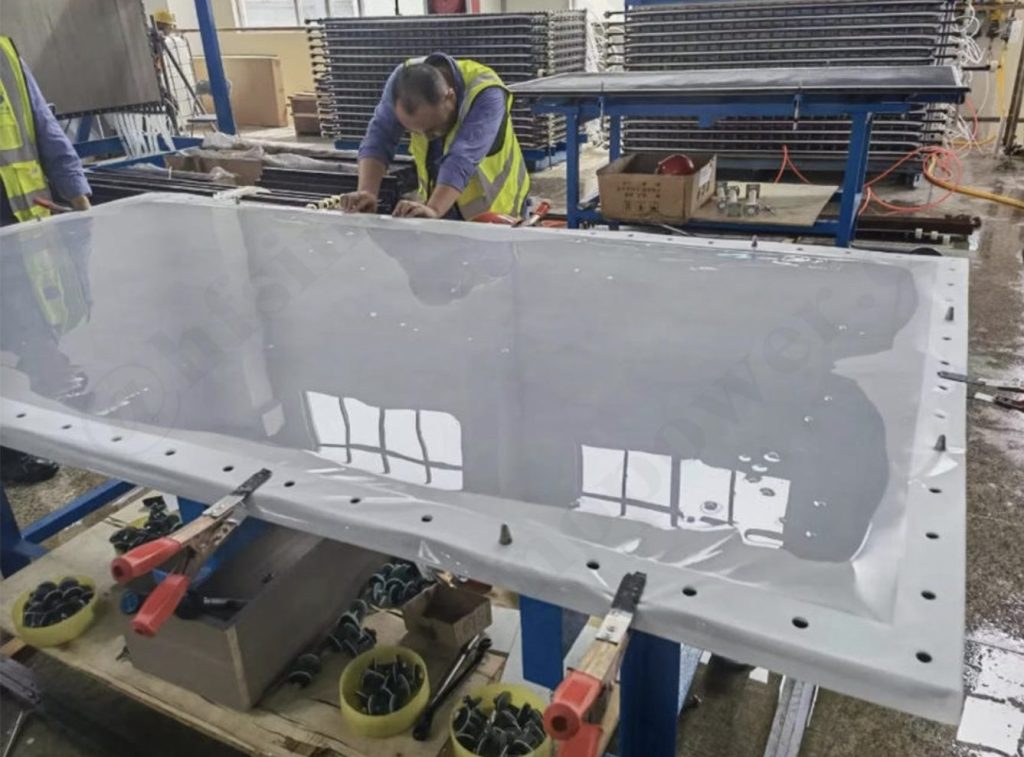
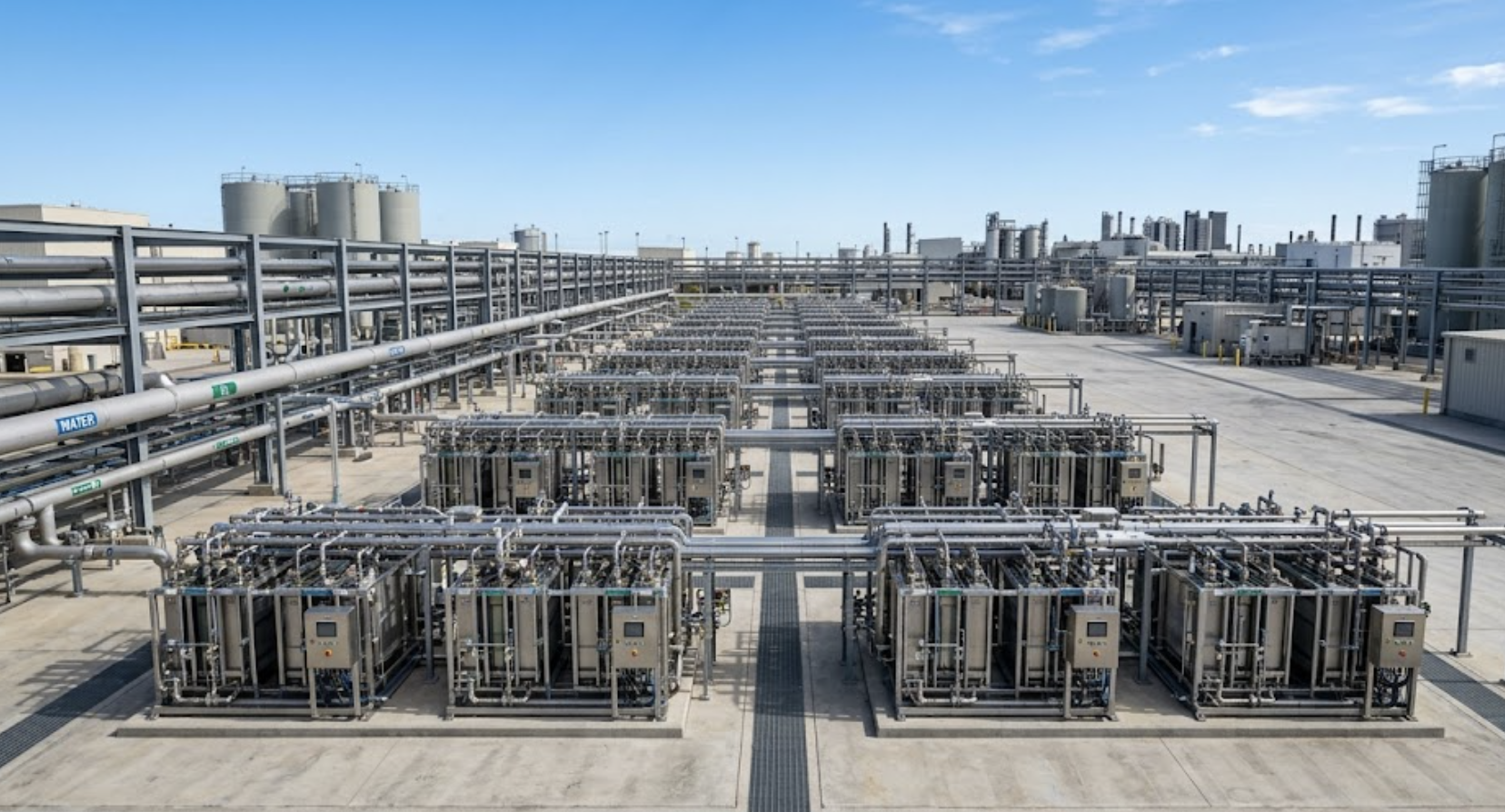
Rubri (Hefei Sinopower Technologies Co., Ltd.) manufactures water electrolysis equipment that addresses each of these application scenarios. The alkaline electrolyzer range spans from 1 Nm3/h compact units to 1,000 Nm3/h industrial-scale systems, covering the full output spectrum from laboratory-scale validation through continuous high-volume operation. The PEM electrolyzer lineup, from 0.1 Nm3/h to 300 Nm3/h, serves applications where faster dynamic response to variable power input and higher output purity are the primary engineering constraints. Together, these product lines allow facilities to generate hydrogen on demand, at the purity grade and volume that a specific emission reduction application requires.
Matching Electrolyzer Technology to Emission Profile — A Selection Framework
Technology selection in this space follows a logic that begins with the downstream application, not the equipment catalog. Alkaline electrolysis suits continuous baseload hydrogen production in facilities with stable grid-supplied power and moderate purity requirements. PEM systems perform more effectively where intermittent renewable energy is the primary input, or where purity specifications at or above 99.999% are non-negotiable for catalytic processes. AEM technology offers a third pathway for specific small-scale and emerging deployment scenarios.
Beyond the electrolyzer stack type, the gas conditioning subsystem determines whether hydrogen delivered to the application point actually meets process specification. Hefei Sinopower Technologies Co., Ltd. integrates dedicated gas-water separation systems and downstream purification modules as standard components within its electrolyzer packages. These subsystems handle moisture removal, trace oxygen elimination, and pressure regulation. In practical terms, the result is a validated gas stream delivered to the process interface — not simply a production volume figure. This distinction matters considerably when the downstream application is a catalytic process with tight contaminant limits.
From Point Source to System Integration — Managing the Gas Conditioning Chain
Producing hydrogen at the required purity grade is only part of the engineering challenge. Moving that hydrogen from electrolyzer output to the point of application — reliably, at the required pressure, and in alignment with real-time consumption patterns — demands coordinated infrastructure. Compression, storage, and distribution each carry their own engineering complexity, and mismatches between production rate, buffer capacity, and consumption profile rank among the most common causes of underperformance in hydrogen-integrated industrial facilities.
Rubri addresses this through a product portfolio that extends well beyond electrolysis into compression and storage infrastructure. The hydrogen compressor module range includes diaphragm, piston, gas-driven, and stationary configurations, covering both small-flow and medium-flow applications across different site conditions. Stationary hydrogen storage systems complement the compression infrastructure, providing buffer capacity that decouples hydrogen production scheduling from real-time process demand. This integrated architecture allows facilities to manage hydrogen supply as a planned operational resource, rather than reacting to fluctuating process requirements with insufficient buffer.
Compliance Documentation, Certification, and the Supplier’s Role Beyond Hardware
Equipment performance in operation is only one dimension of regulatory compliance. The documentation trail — covering equipment certification, operational data traceability, and carbon accounting records — increasingly determines whether a facility can substantiate its emission reduction claims to regulators and ESG stakeholders. Supplier selection carries direct financial consequences here. A weak documentation foundation exposes projects to audit risk at precisely the moment that regulatory scrutiny is intensifying.
Hefei Sinopower Technologies Co., Ltd. produces equipment aligned with CE and ISO certification frameworks. This quality system gives procurement teams the documentation baseline needed to support regulatory submissions, carbon credit applications, and third-party verification audits. A supplier whose production system lacks traceable quality records creates compliance exposure that equipment performance alone cannot offset.
Evaluating a Supplier’s Readiness for Emission-Driven Scale
Four questions frame a rigorous evaluation for emission-driven hydrogen projects. Does the supplier’s product range scale alongside the facility’s emission reduction roadmap — from initial pilot volumes through full industrial deployment? Does the supplier maintain vertical integration across key subsystems, including electrolysis, purification, compression, and storage? Does the supplier carry deployment experience across different industrial sectors and application types? And can the supplier support projects operating under different regulatory frameworks across international markets?
Rubri (Hefei Sinopower Technologies Co., Ltd.) operates across more than forty countries, with a client base that encompasses research institutions, energy developers, original equipment manufacturers, and large-scale industrial enterprises. The product matrix spans alkaline, PEM, and AEM electrolyzers alongside hydrogen compression, storage, and refueling infrastructure. For project teams managing complex compliance requirements across multiple facilities or jurisdictions, that integration reduces coordination risk and consolidates technical accountability at a single supplier level.
Compliance defines the minimum threshold. The facilities that treat emissions infrastructure as a long-term strategic investment — rather than a mandated cost — convert regulatory requirements into operational and competitive advantage. The right equipment partner contributes to both outcomes. For technical specifications and product information, visit https://www.hfsinopower.com/.
Media Contact
Hefei Sinopower Technologies Co.,Ltd.
+86 400228199
6 floor, block A, Xiangfeng Creative Park, 211 Hongfeng Road, Shushan District, Hefei, Anhui.
This article was originally published by IssueWire. Read the original article here.