(YourDigitalWall Editorial):- Tianjin, China Jul 2, 2026 (Issuewire.com) – Ultra-High Molecular Weight Polyethylene (UHMWPE) stands out as an exceptional engineering plastic known for its remarkable toughness, chemical resistance, and incredibly low coefficient of friction. However, as global demand increases, the market has become saturated with products of varying grades, making procurement a complex task for engineering and purchasing professionals. Navigating through countless suppliers requires a rigorous framework centered on raw material purity and manufacturing integrity. Utilizing a comprehensive Selection Guide for High Quality UHMWPE Sheet is essential for recognizing true industrial-grade performance. To secure components capable of enduring extreme operational stress, working with a certified High Quality UHMWPE Sheet Factory ensures that the delivered material complies with strict international metrics and exhibits the exact physical properties demanded by heavy industries.
UHMWPE is characterized by its exceptionally long molecular chains, typically possessing a molecular weight ranging from 3 million to over 9 million grams per mole. This molecular structure gives the polymer its unique characteristics, including superior impact strength, excellent energy absorption, and a self-lubricating surface that prevents material adhesion. Despite these inherent advantages, the final performance of the sheet depends heavily on how the polymer resin is processed. Poor thermal management, inadequate consolidation pressure, or the introduction of recycled cross-contamination can significantly degrade the polymer’s performance, leading to premature cracking, accelerated wear, or mechanical deformation under load. Therefore, assessing a manufacturer requires evaluating their internal processing standards and quality control protocols. Examining the rigorous manufacturing methodologies established by BEYOND provides valuable insights into how processing standards directly influence the structural integrity and field longevity of the material.
Step 1: Evaluating Raw Material Selection and Molecular Weight Verification
The structural foundation of any high-performance polymer sheet is determined at the very beginning of the production cycle. When evaluating how to select a premium UHMWPE sheet, the initial step must focus exclusively on raw material sourcing and the verification of molecular weight. Industrial applications require a minimum molecular weight of 3 million to 5 million g/mol to achieve sufficient wear resistance, while ultra-heavy-duty environments, such as mining chutes or port fenders, frequently require specialized grades exceeding 9 million g/mol.
A reliable manufacturing process begins with 100% virgin resin powder. Substandard sheets often contain regrind or low-density polyethylene additives that lower production costs but compromise the material’s long-term performance. Advanced processing standards involve strict incoming material inspection, utilizing gel permeation chromatography and viscometric testing to confirm the exact molecular chain length. High-purity resin ensures that the resulting sheet maintains a homogeneous structural matrix free from voids, internal stress concentrations, or weak molecular zones that could lead to premature failure.
Step 2: Optimizing the Sintering and Hydraulic Compression Molding Parameters
Because of its incredibly high melt viscosity, UHMWPE cannot be processed using conventional extrusion or injection molding techniques without degrading its long-term molecular structure. Instead, the material must be formed via high-pressure compression molding or specialized ram extrusion. This stage represents the core technical threshold where manufacturing expertise directly dictates product quality.
The compression molding process requires a precise balance of temperature, pressure, and time. During the sintering phase, the virgin resin powder is subjected to temperatures exceeding 200 degrees Celsius while simultaneously being compressed under hydraulic pressures reaching up to 20 MPa. The critical requirement here is to ensure complete fusion of the polyethylene powder without causing thermal degradation of the ultra-long polymer chains. Advanced technical standards utilize multi-zone thermal monitoring systems within the press molds to guarantee uniform heat distribution. If the temperature is too low, the resin powder fails to fuse completely, leaving microscopic boundaries that weaken impact resistance; if the temperature is too high, the polymer chains begin to break down, drastically reducing the material’s wear resistance and structural load-bearing capacity.
Step 3: Controlled Annealing and Stress Relief Interventions
Once the high-pressure sintering process is complete, the molded UHMWPE block or sheet must undergo a controlled cooling phase. Polyethylene is a semi-crystalline polymer, meaning its physical properties are highly dependent on the crystallization process that occurs during cooling. If a sheet is cooled too rapidly or unevenly, severe internal thermal stresses become trapped within the material.
To eliminate this risk, advanced processing standards incorporate a dedicated annealing stage. The sheets are brought down to ambient temperature slowly and uniformly within specialized cooling presses over an extended period, which can last from several hours to more than a day depending on the thickness of the sheet. This slow thermal stabilization allows the polymer chains to align correctly into a stable crystalline structure, eliminating residual stresses. Sheets that skip or shorten this critical step will inevitably warp, twist, or twist out of shape when subjected to secondary CNC machining or when exposed to fluctuating operational temperatures in outdoor environments.
Step 4: High-Precision Calibrating, Sizing, and Surface Finishing
The final step in producing a premium UHMWPE sheet involves bringing the raw molded material to its exact commercial dimensions while ensuring a pristine surface finish. Industrial installations, particularly those involving tight mechanical tolerances or automated lining systems, require sheets with excellent thickness uniformity and minimal surface defects.
Modern production facilities utilize heavy-duty planing and milling machinery to calibrate sheet thickness, achieving tolerances as tight as +/- 0.2mm. Concurrently, the surface is treated to meet specific application requirements. For bulk material handling and lining applications, a perfectly smooth, low-friction finish is necessary to eliminate material plugging and carryback. Conversely, for applications requiring rubber bonding or structural adhesion, the sheet surface may undergo mechanical scuffing or corona treatment to enhance bonding strength. This stage also includes automated ultrasonic testing to inspect the interior of the finished sheets, verifying that no sub-surface voids or density variations passed through the molding cycle undetected.
Comprehensive Performance Analysis and Material Metrics
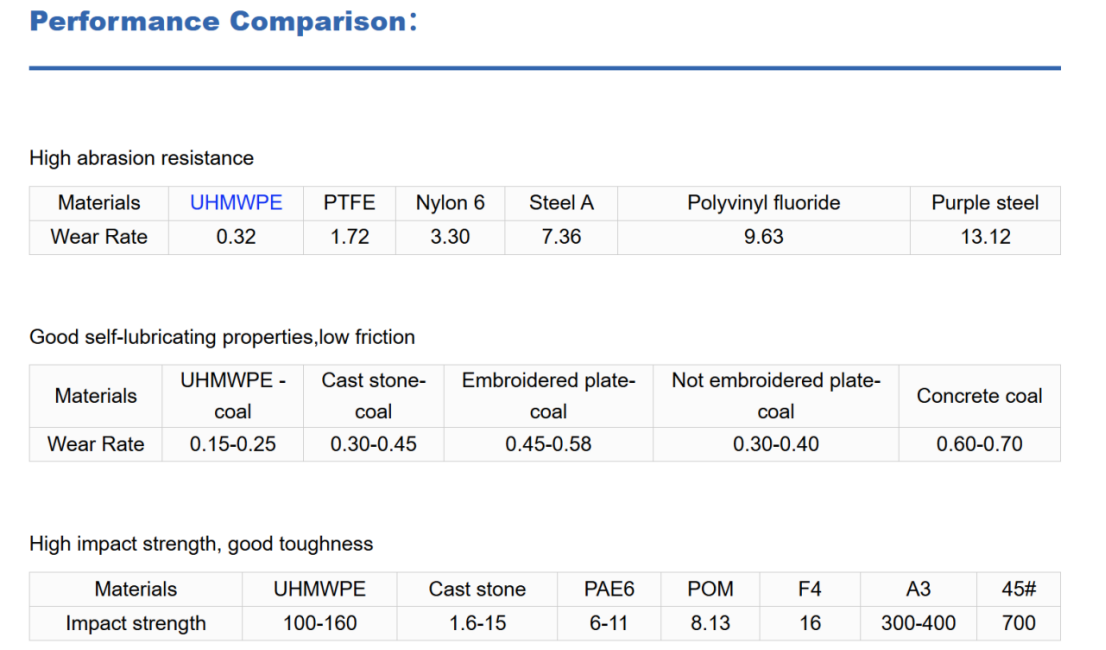
When comparing sheets that have undergone these rigorous processing steps against alternative industrial materials, the differences in physical performance are quantifiable. According to the data, a verified performance comparison highlights why processed UHMWPE functions as a superior material across several critical vectors:
1. High Abrasion Resistance
Abrasion tests demonstrate that UHMWPE achieves a remarkably low wear rate compared to traditional metals and other polymers. In standardized testing, the material achieves a wear rate of 0.32, which significantly outperforms alternatives like PTFE (1.72), Nylon 6 (3.30), Steel A (7.36), Polyvinyl fluoride (9.63), and Purple steel (13.12). This high abrasion resistance translates directly into a longer operational lifespan when handling abrasive media.
2. Good Self-Lubricating Properties and Low Friction
In bulk material handling environments, such as coal transport and lining systems, the material maintains highly stable wear characteristics due to its self-lubricating surface. When evaluated in a coal contact environment, UHMWPE exhibits an exceptionally low wear rate of 0.15-0.25. This performance remains vastly superior to Cast stone (0.30-0.45), embroidered plate (0.45-0.58), not embroidered plate (0.30-0.40), and Concrete (0.60-0.70), effectively minimizing material carryback and chute blockages.
3. High Impact Strength and Good Toughness
Structural resilience under sudden mechanical load is another hallmark of properly processed UHMWPE. The material exhibits an impact strength rating of 100-160. This provides a massive structural advantage over brittle alternatives such as Cast stone (1.6-15), PAE6 (6-11), POM (8.13), and F4 (16). While specialized structural steels like A3 (300-400) and 45# (700) show higher absolute impact values, UHMWPE provides a unique combination of lightweight toughness, zero corrosion, and energy absorption that metals cannot replicate.
Strategic Industrial Applications and Enterprise Synthesis
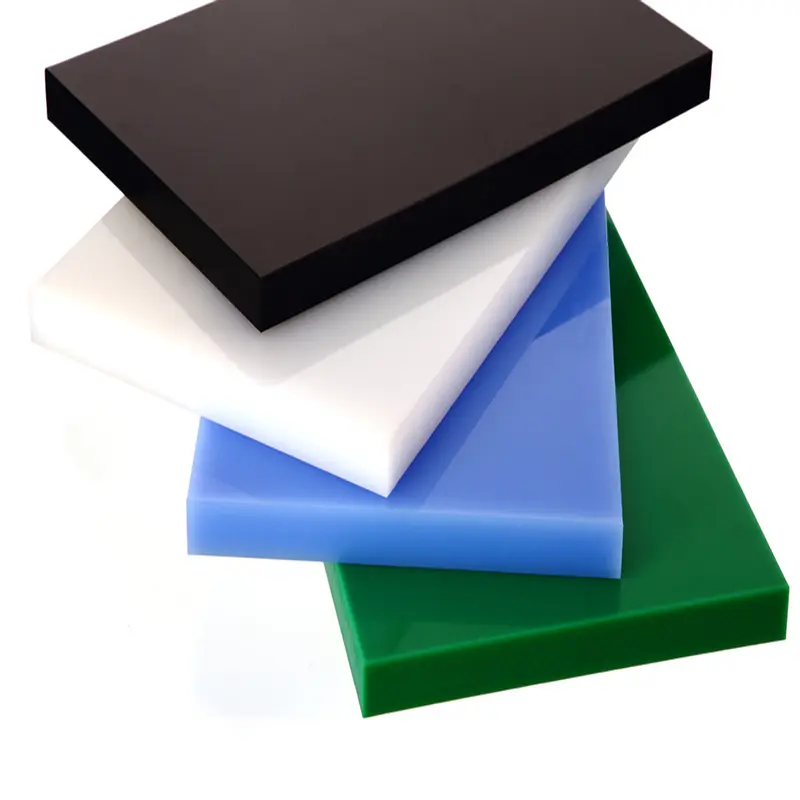
The practical value of maintaining such stringent manufacturing standards is demonstrated by the performance of the material in demanding, high-wear applications. In the mining, bulk handling, and heavy transport industries, components face continuous abrasion and high impact from materials like minerals, coal, gravel, and grain. For these challenging environments, utilizing a highly durable product like the Wear Resistance 1220x2440mm Black UHMWPE Sheet provides a reliable solution. This optimized standard dimension is specifically engineered to serve as a high-performance liner for heavy-duty truck beds, industrial hoppers, bins, and transfer chutes. By implementing processed UHMWPE liners instead of traditional steel alternatives, operations benefit from an approximate 30% to 40% reduction in acoustic noise levels, while the lifespan of the liner system can increase by up to three times compared to conventional manganese steel sheets, reducing maintenance-induced downtime.
The ability to consistently manufacture materials capable of achieving these operational outcomes reflects the technical expertise and infrastructure of the producer. As an established leader in the engineering plastics industry, the enterprise combines advanced hydraulic molding machinery, multi-axis CNC profiling tools, and strict quality assurance protocols to deliver high-performance polymer products worldwide. Beyond standard protective sheets, the company’s core product portfolio includes custom CNC machined wear components, conveyor guide rails, fender panels for marine ports, and specialized low-friction components tailored to unique industrial specifications. By maintaining strict control over every stage of production–from raw resin validation to precision surface calibration–the organization ensures that heavy industry receives dependable materials designed to lower operational costs, eliminate blockages, and improve mechanical reliability.
For detailed technical data, material samples, or custom project inquiries, please visit the official enterprise platform at https://www.beyondplas.com.
This article was originally published by IssueWire. Read the original article here.