(YourDigitalWall Editorial):- Shucheng, Anhui Jul 8, 2026 (Issuewire.com) – Energy storage procurement conversations often begin with the wrong question. Many stakeholders ask, “Which technology is best?” This inquiry implies a universal answer, yet the global energy market offers no shortage of suppliers eager to provide one. As a leading Advanced Hydrogen Energy Storage System Manufacturer, specialists note that the more productive question is actually conditional. Decision-makers must ask: under what specific combination of technical requirements, geographic constraints, and economic parameters does each storage technology cross the threshold from a viable option to the optimal choice? This article maps those crossover conditions across the full spectrum of energy storage applications, moving from minute-scale frequency regulation to multi-month seasonal reserves, while drawing on engineering analysis from project experiences at both ends of the scale.
Why “Which Storage Technology Is Best?” Is the Wrong Starting Question
Most industry discussions frame energy storage selection as a head-to-head technology competition. However, this perspective overlooks a fundamental engineering reality. Lithium-ion batteries, pumped hydro, thermal storage, and hydrogen energy storage each hold a genuine performance advantage within a specific envelope of conditions. Conversely, each technology loses that advantage once it moves outside that envelope. The practical task for grid operators and industrial users involves condition mapping rather than technology advocacy. Success depends on identifying which crossover thresholds apply to a specific deployment context. By analyzing four primary crossover comparisons and capital expenditure profiles, planners can move beyond single-solution thinking toward a more robust, decision-oriented framework.
The Hydrogen-vs-Battery Crossover: Where Storage Duration Reverses the Economics
A critical duration threshold exists where hydrogen energy storage shifts from appearing more expensive than lithium-ion to delivering a structurally lower levelized cost of storage. This crossover mechanism operates through three interacting variables. First, battery capital costs scale linearly with energy capacity. Each additional hour of storage requires proportional additional battery hardware. In contrast, hydrogen storage costs scale primarily with the volume of the storage vessel rather than the capacity of the electrolyzer. This creates a cost structure that flattens significantly as duration extends.
Second, lithium-ion systems suffer from cycle degradation over time. This physical reality reduces usable capacity and eventually necessitates replacement investment. Hydrogen storage systems do not experience degradation through the storage process itself, providing a more stable long-term asset. Third, self-discharge imposes a carrying cost on battery systems during multi-day holding periods. Hydrogen storage, utilizing sealed vessels with negligible self-discharge, avoids this cost entirely. While the exact crossover point varies by project, it typically appears when discharge duration exceeds eight to twelve hours. Consequently, hydrogen becomes increasingly competitive as applications move beyond simple daily cycling.
The Hydrogen-vs-Pumped-Hydro Crossover: When Geography Decides the Winner
Pumped hydroelectric storage currently offers high round-trip efficiency and an impressive asset lifespan. Nevertheless, it requires specific topographic and hydrological conditions. These requirements limit its deployable geography to a small fraction of locations where long-duration storage is actually needed. This geographic constraint represents the primary crossover condition. Where suitable reservoir sites exist near renewable generation, pumped hydro often retains a cost advantage. However, where those conditions are absent–such as flat terrain, arid regions, island grids, or industrial sites–hydrogen energy storage fills the gap that pumped hydro structurally cannot reach.
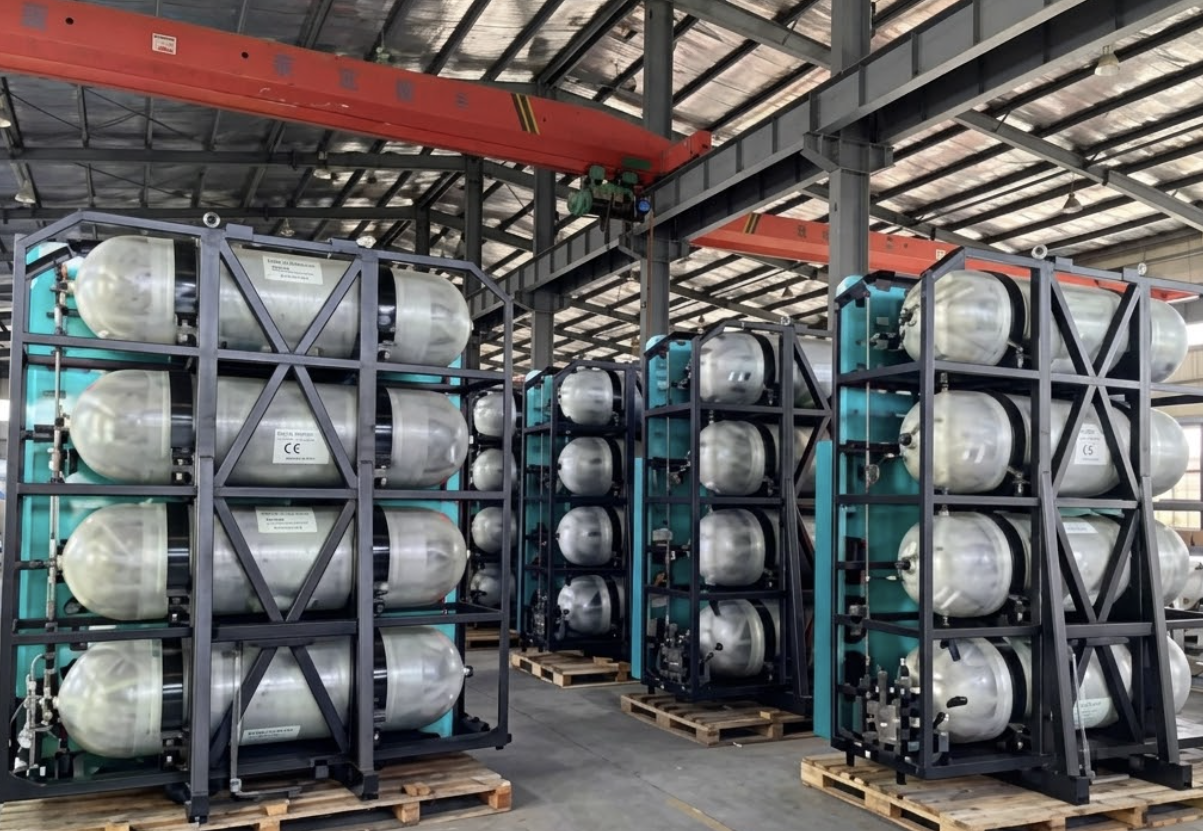
Beyond geography, hydrogen storage offers modular scalability. Capacity scales through additional vessel volume rather than massive civil construction. This enables incremental capacity additions that align better with project financing stages. Rubri manufactures stationary hydrogen storage modules and metal hydride hydrogen storage systems designed for site-flexible deployment. These systems require no hydrological or topographic prerequisites. This modularity shifts the relevant crossover question from “is the site suitable?” to “what storage volume does the application require?” This transition creates a much more tractable engineering problem for most modern project contexts.
The Hydrogen-vs-Thermal Storage Crossover: When Output Flexibility Determines Technology Fit
Thermal energy storage competes effectively in applications where heat serves as the primary output. Its crossover limitation emerges in applications requiring electrical output, fuel supply, or industrial feedstock alongside thermal energy. Hydrogen energy storage produces a chemically versatile energy carrier. Stored hydrogen can reconvert to electricity through a fuel cell, supply industrial process heat through combustion, or serve as a chemical feedstock for industrial synthesis. It can even fuel hydrogen-compatible transport fleets within an industrial campus.
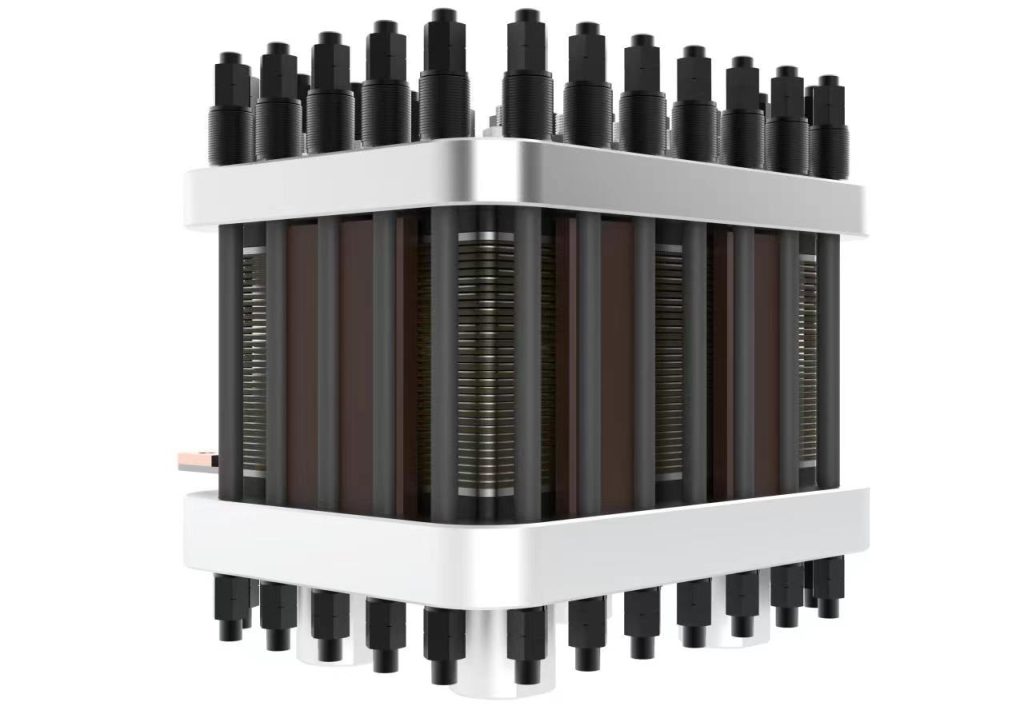
This output flexibility creates a genuine crossover advantage in multi-energy supply contexts. Typical examples include industrial parks, combined heat and power installations, or renewable complexes serving mixed industrial and grid loads simultaneously. Rubri (Hefei Sinopower Technologies Co., Ltd.) manufactures both air-cooled and liquid-cooled hydrogen fuel cell systems alongside its electrolyzer and storage product lines. This span from production to end-use enables multi-output configurations. Thermal storage, as a fundamentally heat-output technology, simply cannot replicate this versatility.
Capital Expenditure Profiles Across Three Deployment Contexts
To understand the economic viability of hydrogen, one must move from comparative analysis to deployment-specific capital expenditure (CAPEX) structures. Three contexts define the dominant procurement scenarios for hydrogen energy storage systems today.
In renewable energy plant co-location, the electrolyzer scales to absorb curtailed generation during surplus periods. Storage vessel volume determines the multi-day holding capacity, while fuel cell capacity determines the peak discharge rate. CAPEX concentrates heavily in electrolyzer and storage hardware. The economic driver here is curtailment value recovery–converting otherwise wasted generation into a storable, high-value asset.
Industrial site standalone storage presents a different profile. Here, the electrolyzer typically operates on grid tariff arbitrage logic, charging during low-tariff periods and discharging during peak demand. The CAPEX structure shifts toward fuel cell capacity relative to storage volume because the application prioritizes dispatch flexibility. Metal hydride storage options become particularly relevant in this context due to their space efficiency in constrained industrial footprints.
Finally, grid-side long-duration peaking requires the highest capital intensity but offers the broadest value stack. Revenue can come from frequency regulation, capacity market payments, peak energy arbitrage, and curtailment absorption. Hefei Sinopower Technologies Co., Ltd. supports OEM and ODM customization across its product range. This capability allows for system configurations tailored to the specific revenue stack and dispatch profile of grid-side deployments, rather than forcing a standardized hardware format onto unique requirements.
Round-Trip Efficiency in Context: Why Losses Are Not Always the Decisive Variable
Round-trip efficiency figures prominently in most technology comparisons. Hydrogen energy storage systems typically achieve lower round-trip efficiency than lithium-ion batteries. When presented without context, this suggests a straightforward disadvantage. In practice, however, the relevant question is efficiency relative to the value of the stored energy. When the electricity being stored is curtailed renewable generation with zero market value, the efficiency of conversion matters less than the total value recovered. Furthermore, when storage duration extends to weeks, the compounding self-discharge of battery systems can erode their efficiency advantage. If the final output is a chemical feedstock or fuel rather than electricity, the conversion back to power becomes irrelevant, changing the efficiency calculation entirely.
Hydrogen Storage Vessel Design and System Scalability
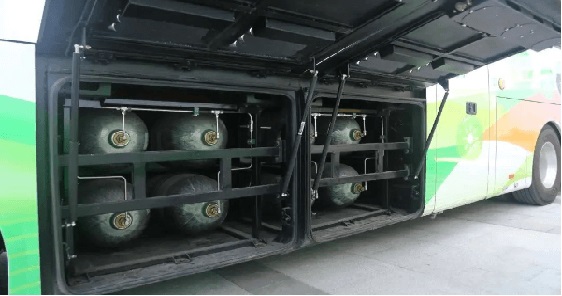
Storage vessel design directly shapes project economics and site compatibility. Gaseous stationary hydrogen storage operates at high pressure, requiring robust vessel walls and specific safety perimeters. These factors influence site layout and regulatory approval timelines. In contrast, metal hydride storage absorbs hydrogen into solid alloys at much lower operating pressures. This reduces high-pressure management complexity but adds thermal management requirements during charging and discharging.
The choice between these approaches represents an engineering trade-off specific to each project’s space envelope and regulatory context. Rubri manufactures both stationary hydrogen storage modules and metal hydride systems, covering the full spectrum of storage design options. Additionally, hydrogen compressor modules–spanning diaphragm, piston, and gas-driven configurations–manage the pressure transitions between the electrolyzer and storage vessels. System scalability depends on the modularity of production, compression, and storage. A manufacturer whose range spans all three elements enables capacity additions without architectural redesign.
Rubri‘s Project-Informed Portfolio: Products Built for Crossover Conditions
The product portfolio of Hefei Sinopower Technologies Co., Ltd. functions as an engineering response to these identified crossover conditions. The PEM electrolyzer range, covering 0.1 to 300 Nm3/h, addresses applications requiring fast dynamic response and a compact footprint. Meanwhile, the alkaline electrolyzer range, scaling from 1 to 1,000 Nm3/h, serves large-volume production scenarios where capital cost per unit of output drives economics.
This dual-platform capability reflects an understanding that the crossover between PEM and alkaline technology occurs at different points for different applications. Similarly, the variety of hydrogen compressor modules addresses the compression crossover between low-pressure metal hydride storage and high-pressure vessels. The fuel cell product line, featuring both air-cooled and liquid-cooled configurations, addresses the output crossover between electrical dispatch and thermal efficiency. Through R&D-backed technical instruction and customization, the focus remains on system integration that respects the project-specific nature of these thresholds.
A Decision Framework: Matching Technology to Condition
To simplify technology selection, grid operators and industrial users can utilize a diagnostic framework structured around four questions:
Duration: Does the required discharge duration exceed ten hours? If so, hydrogen often favors the economic case over batteries.
Geography: Is there access to suitable pumped hydro infrastructure? If not, hydrogen storage provides the necessary geographic flexibility.
Output: Does the application require heat, fuel, or feedstock in addition to electricity? Multi-output needs favor hydrogen’s chemical versatility.
Scale: Does the project plan for phased expansion? Modular hydrogen systems support incremental scaling better than civil-construction-based alternatives.
Conclusion: Replace Single-Solution Thinking With Condition-Based Selection
The energy storage market contains substantial noise regarding technology comparisons. Each technology class has its advocates, and each position contains genuine engineering truth–within the specific conditions where that technology holds its advantage. The productive path forward replaces the search for a “universal best” with condition-based selection. Hydrogen energy storage occupies a specific and expanding portion of the energy map. It excels in long-duration, geography-flexible, and output-versatile applications that competing technologies cannot replicate. Rubri (Hefei Sinopower Technologies Co., Ltd.) continues to develop its integrated hydrogen energy portfolio around this philosophy, helping stakeholders navigate crossover decisions from peak shaving to seasonal storage.
For technical consultation and product information, visit https://www.hfsinopower.com/.
Media Contact
Hefei Sinopower Technologies Co.,Ltd.
+86 400228199
6 floor, block A, Xiangfeng Creative Park, 211 Hongfeng Road, Shushan District, Hefei, Anhui.
This article was originally published by IssueWire. Read the original article here.